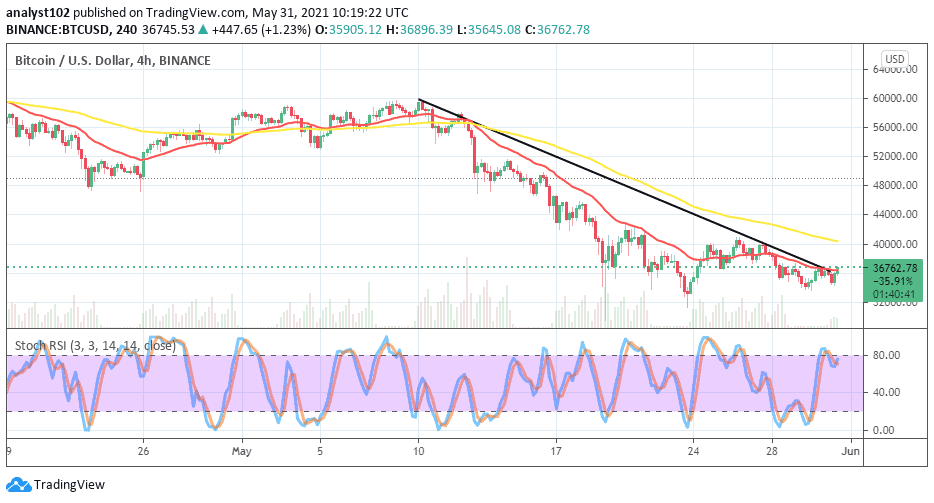
Bitcoin Price Prediction – May 31 The present downward movement in the market exhibits that BTC/USD struggles finding support around a lower trading zone below the level of $35,000. Quite about a couple of days’ sessions back, the crypto has continually hovered around the level to now trade at a point of $36,744 at a 1.23% hike.
BTC/USD – Daily Chart A variant featuring candlesticks has been made on the BTC/USD daily chart to show the BTC/USD struggles to find support deep below the major resistance value of $40,000. The bearish trend-line remains drawn downward to place a mark at the point mentioned earlier. The 50-day SMA indicator is situated over the 14-day SMA. And, they both point toward the south. The Stochastic Oscillators have moved upward from the oversold region to position around range 80 nearing into the overbought region. That suggests that the chief crypto is less active in the pushes against the fiat counter trading instrument as of writing.
BTC/USD struggles finding support, how soon will it swing high? The main point that the BTC/USD price struggles finding support has technically been observed at the level of $35,000. Some falling forces have featured in the crypto market operations below the immediate resistance line of $40,000 only to allow Bitcoin to rebuild its energy from a lower area. As a result of the current trading style, a point in between the point earlier mentioned and the lower level of $30,000 has been the major area where bulls regain their lost capacity.
Up till the present technical downside analysis of this crypto market bears still have a lot to do between the points of $40,000 and $35,000. The moment there is a bullish engulfing candlestick formed against the $40,000 resistance line, then, the potential of having back a continual series of upswings will be more heightened than having downswings afterward. But, in the meantime, that sentiment seems not achievable in a near trading operation. BTC/USD 4-hour Chart The market trend on the BTC/USD chart still showcases that the market valuation trades under selling pressure. The bearish trend-line drew closely along with the smaller SMA. The 50-day SMA indicator is yet located above the 14-day SMA trend-line. The Stochastic Oscillators have sprung up from the oversold region to now attempt opening of haors toward the north at range 80. That shows that bulls are attempting to make a re-launch of their position in the market. Therefore, traders are enjoined to enter a buy order when price goes dip. Like wisely, investors may consider joining the crypto economy now that it is at a lower point than most of the previous higher values it achieved.
Those with skin in the game are reiterating that comparing Bitcoin to Ethereum is a pointless and potentially costly exercise.
Bitcoin (BTC) is at risk of a “flippening” from Ethereum (ETH), mainstream media claims as some familiar “FUD” returns to the spotlight.
As BTC/USD continues to flag below $40,000, an old argument has resurfaced — but major investors are fighting back.
Bloomberg: ETH “will likely exceed Bitcoin”
In an article on May 31, Bloomberg cited multiple sources claiming that in future, Ethereum will overtake Bitcoin as the world’s cryptocurrency of choice.
The largest altcoin “will likely exceed Bitcoin at some point in the future, as Ethereum will be superior when it comes to innovation and developer interest,” Tegan Kline, co-founder of Blockchain firm Edge & Node, told the publication.
Another executive added that Ethereum has a “better growth story.”
The argument is far from new and has appeared regularly throughout Ethereum’s existence. The Ethereum network’s recent major upgrade has kept its profile afloat as ETH has outperformed Bitcoin over the past year and formed the backbone of the DeFi phenomenon.
ETH/BTC, long on a losing streak, reached its highest in three years earlier this month.
ETH also managed to preserve more of its price gains in recent days than Bitcoin — as Cointelegraph reported, a key moving average remains intact for ETH/USD, while BTC/USD has failed to recapture “lines in the sand.”
For all its impressive performance, however, claiming that Ethereum will replace Bitcoin at the top is nonsensical, many argue — and not only staunch Bitcoin supporters.
The only flippening happening this year pic.twitter.com/cY0necJ3GM
— William Clemente III (@WClementeIII) May 29, 2021
In an interview with The Hustle last week, billionaire investor Stanley Druckenmiller became the latest non-technical figure to cast aside doubts about Bitcoin’s staying power.
“I think BTC has won the store of value game because it’s a brand, it’s been around for 13-14 years and it has a finite supply,” he said.
“Is it going to be gold? I don’t know. It’s sure as hell doing a good imitation of it the last year or two.”
For Druckenmiller, Ethereum is to Bitcoin what MySpace is to Google.
“I’m a little more skeptical of whether it can hold its position. It reminds me a little of MySpace before Facebook,” he continued.
“Or maybe a better analogy is Yahoo before Google came along. Google wasn’t that much faster than Yahoo, but it didn’t need to be. All it needed to be was a little bit faster and the rest is history.”
Others have long pointed out that technically, Bitcoin and Ethereum have little in common. Bitcoin’s finite supply and years of resistance to attacks place it in a different league to any other cryptocurrency, and comparing it two them is an apples and oranges comparison.
“I generally think all the other digital currencies don’t really compete with Bitcoin and are in no way similar to Bitcoin,” Saifedean Ammous, author of The Bitcoin Standard, famously told the Unchained Podcast in August 2017.
“I think their real competition is, if I’m generous, I’ll say Amazon Web Services and these kinds of platforms.”
The warning comes in response to Bybit’s marketing campaign that reportedly targeted Japanese investors.
Singapore-based Bybit, the world’s fifth-largest cryptocurrency derivatives exchange by trading volume, has allegedly been running unregistered crypto services in Japan, according to an official warning.
The Japan Financial Services Agency issued a formal warning letter to Bybit stating that the firm is not registered to operate crypto services in the country.
The warning comes in response to Bybit’s marketing campaign that reportedly targeted Japanese investors, according to Norbert Gehrke, founder and representative director of tech hub Tokyo FinTech.
“Such public reprimand for running an unregistered business has not occurred for a while, so one is to assume that the FSA has witnessed aggressive marketing by Bybit to Japanese investors that goes beyond the common transgressions of presenting their website in Japanese and not blocking Japanese IP addresses,” Gehrke wrote in a blog post.
Gehrke claimed that Bybit’s Japanese website makes no mention that local investors are not allowed to access the platform and does not block local IPs from accessing it. He noted that other exchanges, like Panama-based crypto derivatives exchange Deribit, have blocked Japan-based IP addresses.
According to a notice on Deribit’s Japanese Telegram channel, Deribit restricted Japanese users from accessing its platform on May 1, 2020.
Bybit and the FSA did not immediately respond to Cointelegraph’s request for comment.
In March, Bybit suspended services for customers in the United Kingdom following a blanket ban by the Financial Conduct Authority of retail crypto derivatives trading.
AI and blockchain are rarely utilized together — but combining these technologies could unlock a plethora of use cases.
Artificial intelligence and blockchain are both touted as technologies that will lead our future. But here’s the problem: They’re like oil and water. While innovative in their own right, there’s a noticeable lack of interconnectedness — projects that tightly combine AI and blockchain, unleashing the full potential of both emerging technologies.
Technical hurdles have been largely to blame for this. Integrating AI into the smart contracts that exist today is practically impossible. The two often rely on entirely different programming paradigms — and while smart contracts use data sparingly to reduce transaction fees, many AI models process vast amounts of data as well as a large amount of computing resources to make decisions.
Smart contracts are also incredibly strict, meaning that an outcome can only be achieved when a range of strict parameters are met. As a result, they can be ill-suited to the world of AI, where 100% accuracy is hard to achieve, especially when it comes to image and audio recognition. This demand for flexibility has created the need for a new generation of smart contracts, able to handle highly accurate (albeit imperfect) input and receive a perfect output.
As the EU Blockchain Forum noted in a recent report, combining these two technologies isn’t just desirable… it is a necessity. The authors wrote: “In the real world, especially in large-scale use cases, blockchain, AI and IoT are likely to work in concert. In a smart city, blockchain could be combined with IoT and AI on an infrastructure level to manage critical systems that cities depend upon, as well as improve quality of life for residents through safer and better designed urban environments.”
The use cases
But what exactly would bringing blockchain and artificial intelligence together mean in practice? What are the tangible applications that end users would have to look forward to?
Projects involved in the space argue that decentralized apps have an opportunity to become far more advanced than they are now. Trading strategies could be informed by AI — and smart contracts could become infinitely more flexible. Blockchain platforms have the chance to offer a more convenient alternative to private keys — which can often be cumbersome to remember and store securely — with users gaining access to balances through facial recognition.
Together, AI and blockchain can also be leveraged in many other fields such as big data and IoT, insurance, manufacturing, healthcare, logistics, and many more. In all cases, AI plays an important role in processing data or automating human tasks to feed information into blockchain.
Experts have argued that AI can be just as effective as people are at many tasks — and better still, they can operate 24/7 without suffering from fatigue or becoming susceptible to human error. Likewise, blockchains are increasingly being deployed to provide transparency transactions and data to consumers. The possibilities are endless as long as there’s a way for blockchain developers to implement AI into their platforms.
AI and blockchain ecosystems at Oraichain
Oraichain is one of the companies that has been making a concerted effort to bring AI into the blockchain — unlocking compelling use cases in the process.
The data oracle platform says it enhances smart contracts by enabling them to securely access AI through APIs — unlocking reliable data in the process. Together with the launch of Oraichain Mainnet, more than 100 of these APIs are already open to the public in February.
A developers platform called Oraichain Studio helps integrate those APIs into smart contracts was launched in April 2021 — verifying the correctness of AI output, and then distributing the data generated across multiple blockchains without centralized control. In time, this could broaden access to highly trained AI models, enabling greater numbers of people to benefit from what this technology has to offer.
Oraichain has created a marketplace where experts can sell their services — ranging from AI-enhanced yield farming to price prediction and face authentication tools. As well as enabling specialists to monetize their work, executives argue that this allows smaller firms to enjoy a more level playing field with the industry titans who dominate the space.
The business is about to launch a new system, aiRight. Described as the world’s first all-in-one NFT creation and copyright management platform, it offers a complete set of services for the nonfungible token market — including generating NFTs with AI and securing copyrights on-chain. AI services also allow users to easily verify the uniqueness and authenticity of NFTs.
The company was launched by Dr Chung Dao, who has a PhD in computer science and lectures at Hanoi University of Science and Technology. In the last six months, Oraichain announced that it had formed a number of strategic partnerships with Rikkeisoft, KardiaChain, VAIOT, and OCEAN Protocol.
Rikkeisoft is a Vietnam-based IT firm with more than 1,000 employees, that would provide Oraichain necessary human resources to enhance some of Oraichain’s flagship projects — including the DeFi-focused service yAI.finance, and its AI marketplace, aiRight, and more to come.
Rikkeisoft’s CEO and co-founder Phan The Dung said at the time: “At Rikkei, we have been tracking the developments of Oraichain right from the start. We found it unique as it merges the untapped potential of AI and blockchain technologies.”
Overall, it is hoped that those partnerships will serve as a stepping stone to scale the business, and help Oraichain gain a greater presence in the U.S. and Japan with its AI and blockchain technology.
Learn more about Oraichain
Disclaimer. Cointelegraph does not endorse any content or product on this page. While we aim at providing you all important information that we could obtain, readers should do their own research before taking any actions related to the company and carry full responsibility for their decisions, nor this article can be considered as an investment advice.
Long-term Bitcoin holders remain unfazed by the recent sell-off, but there is still one alarming sign.
A recent run-down in Bitcoin’s (BTC) price from about $65,000 to as low as $30,000 did not force long-term holders into selling, Glassnode data shows.
The on-chain analytics platform revealed a spike in Bitcoin reserves held in wallets with lower unspent output just as BTC/USD’s bids were crashing.
Meanwhile, the data also shows a Bitcoin collecting spree among miners — the entities that produce and supply newly minted cryptocurrencies for retail markets. As a result, the active BTC supply started declining in recent sessions.
New Bitcoin supply squeezed-in by miners and long-term holders. Source: Glassnode
Short-term Bitcoin holders — the entities that hold the flagship cryptocurrency for less than a week after accumulating it — were the biggest sellers during the BTC/USD rate decline. Glassnode data suggested that newer market entrants panic-sold BTC during the May downturn, a month during which BTC lost 38% from its all-time high price.
Bitcoin price volatility, meanwhile, continues to exploit short-term traders with double-digit percentage up/down moves. The 24-hour Bitcoin Volatility Index on TradingView settled around 19.70 on May 20 after bottoming out at 1.90 on April 2 — that marked a 936% climb during the period, wherein BTC/USD rose to hit an all-time high near $65,000 and corrected lower to reach $30,000.
Elevated price fluctuations served as a signal that investors remained fearful or uncertain about Bitcoin’s next market bias. The intraday candles in the chart above showed persistent higher volatility — the one on Sunday closed 34% lower than the previous session. But overall, the trend appeared on its way to the downside.
Except, there is one catch
Glassnode anticipated that long-term holders realize their profits or losses at some point in time (PnL). The analytics portal cited a proprietary metric that checks on long-term holders’ exhausting levels — the point at which their ability to hold BTC breaks, and which prompts them to realize their profits or losses in the market.
Bitcoin’s entity-adjusted long-term holders’ net unrealized profit/loss. Source: Glassnode
“The current degree of net unrealized PnL held by LTHs tests the 0.75 level, which has been the make or break level between past bull and bear cycles,” wrote Glassnode analysts.
“Only in the 2013 ‘double pump’ scenario did this metric see a recovery. Should LTHs continue to see their paper gains fall, this too may create a new source of overhead supply. On the other hand, higher prices and a supply squeeze from buying the dip would begin to resemble the ‘double pump’ scenario from 2013.”
Bitcoin macroeconomically bullish
The only factor that separates the current Bitcoin holding scenario from the previous ones is the United States’ trillion-dollar deficits. The world’s largest economy has returned to its highest debt-to-GDP ratio since World War II. And on Friday, President Joe Biden announced another $6-trillion spending plan for 2022.
In total, the plan would raise government spending to $8.2 trillion per year by 2031. It would mean annual fiscal deficits of over $1.3 trillion and $1.8 trillion in 2022.
One of the biggest fears in the market is that increased government spending would lead to a dramatic rise in inflation.
Demand for Bitcoin has surged among institutional investors for its anti-inflation narrative. Supporters note that there can only be 21 million BTC tokens in supply, making it an ideal store of value against an infinitely printable U.S. dollar.
Corporates including Tesla, Square, MicroStrategy and Ruffer Investments have added Bitcoin to their balance sheets as an alternative to cash. Billionaire investors, including Stan Druckenmiller, Paul Tudor Jones and Mike Novogratz have also allocated a considerable portion of their investment portfolio to Bitcoin.
Fundamentals continue to provide Bitcoin a bullish backstop.
“Bitcoin was made for this moment,” noted Dan Held, director of growth marketing at Kraken. “We’re in the biggest money printing operation ever in human history, and Bitcoin is the only way out.”
Coincheck has announced its plans to carry out an Initial Exchange Offering (IEO) this summer. The IEO will be of Hashpalette, a firm that Coincheck had partnered with in August last year as part of the plan to start its venture through the IEO.
IEO of Coincheck
An IEO is a process where a crypto exchange platform helps the broader crypto community and investors by issuing tokens. An IEO is almost the same as an initial coin offering (ICO). The tokens issued by the firms will allow the launch of more decentralized projects and support investors, users, developers, and other members of the community. IEOs and ICOs have become highly popular in recent years as they give incentives to participants on the network.
According to the official statement, the firm stated that “Coincheck has long supported companies and projects in their efforts to issue tokens. To contribute to the further growth and development of cryptocurrency exchanges, Coincheck began considering entering the IEO business and, in August 2020, joined forces with Hashpalette with the goal to realize Japan’s first IEO.
Upholding its corporate mission to “offer easy access to new means of exchanging values,” Coincheck is striving to add new cryptocurrency in their exchange, increase its usability and develop new services.”
Attributed to Boom in Crypto Demand
This year has been marked by a high demand for cryptocurrencies and other digital assets. The last few years have especially been quite promising, which has led to more IEOs. Coincheck is venturing into the crypto service sector as one of the main ways of meeting this high demand.
This is not the only move for Coincheck towards developing the crypto sector. In February this year, the firm acquired Metaps Alpha, a blockchain company behind the ‘miime’ NFT marketplace. The firm will use the acquisition as an opportunity to venture deeply into NFTs.
Coincheck’s parent company, Monex Group, has also reported increased growth in the financial service sector. In the recently released financial report, Monex Group stated that its crypto service sector has been doing quite well and had achieved significant profitability margins.
Before venturing fully into the cryptocurrency sector, Monex Group had completed a survey dubbed ‘Global Retail Investor Survey.’ The survey details stated that the number of crypto investors in Japan who had cryptocurrency investments had reached 16.2%, a record high in the country. The same survey also revealed that the number of US0based crypto investors had also increased significantly.
Ed Carpenter, a renowned US automobile race driver, has just emerged fifth on the Indianapolis 500. He competed in the race using his Chevrolet that he had pimped with the Bitcoin logo.
Indianapolis 500, shortly known as Indy500, is a popular racing event in the United States. The race was the 105 season of the event and was dubbed ‘Greatest Spectacle in Racing.’
The incorporation of Bitcoin in such a race is quite iconic, and it comes at a crucial time when the currency is struggling to regain its lost value. Coming out fifth in the race is quite remarkable as the race has 33 other racers.
Advocating for Bitcoin
Ed Carpenter has come out as a promising race driver, given that he has been a popular participant in previous events. Before the race commented, Ed Carpenter made remarks praising the cryptocurrency, and some form of excitement could be detected from his tone.
Dear #Bitcoin,
Today, we make history.
Today, @ECRIndy is proud to race for human freedom, financial inclusivity, savings technology, and Bitcoin open-source development.#Bitcoin is the hardest money mankind has ever conceived.
There is nothing more I’d rather suit up for. pic.twitter.com/9W8xj1JsO0
— Ed Carpenter (@edcarpenter20) May 30, 2021
“Today, we make history. Today, ECRIndy is proud to race for human freedom, financial inclusivity, saving technology, and Bitcoin development. Bitcoin is the hardest money mankind has ever conceived. There is nothing more I’d rather suit up for.” Ed Carpenter stated.
When he was speaking during the announcement at the beginning of the month, Carpenter stated that he was supportive of Bitcoin. He stated that in the same way that Bitcoin was changing the financial sector, the digital asset could also revolutionize the motorsport sector.
The race was quite symbolic, given that at one point, it almost revealed the competition that is ongoing between traditional financial sectors and the crypto sector. This happened when the BTC Chevrolet 21 was in a tight race with another racing car sponsored by PNC Bank. Interestingly, the other race car ran out of gas and had to refuel while Ed carpenter passed the car at full speed and progressed with the race.
Cryptocurrencies and the Sports Sector
This is not the only instance when Bitcoin has created a spectacle in the sporting sector. Last summer, Darrel ‘Bubba’ Wallace also used the symbol during the NASCAR racing competition. Wallace is a great figure in racing as he is the first and only African-American to win in that particular race.
Other than taking over the motorsport world, Bitcoin is slowly creeping into the soccer sector. In 2019, Watford FC, an English football club, used the BTC logo on their jersey shirts. Watford FC also stated that the club was building more awareness towards Bitcoin and integrating crypto payments when purchasing merchandise.
Ripple’s legal battle with U.S. regulators continues.
Ripple has scored another win in its ongoing legal battle against the United States Securities and Exchange Commission as the court has denied the SEC access to Ripple’s legal advice.
Magistrate Judge Sarah Netburn of the District Court for the Southern District of New York ruled Sunday to deny the SEC’s motion to compel Ripple to produce memos discussing XRP sales with the firm’s lawyers.
According to the SEC, Ripple could have been aware that XRP could be a security from its legal advisors before moving forward with its token sale back in 2013. The SEC filed a motion on May 7 to compel Ripple to produce all communications discussing any legal advice Ripple sought or received as to whether its offers and sales of XRP would be subject to federal securities laws.
In the latest ruling, Netburn referred to the attorney-client privilege that is meant to “encourage full and frank communication between attorneys and their clients and thereby promote broader public interests in the observance of law and administration of justice.” The judge noted that Ripple has not waived its attorney-client privilege despite defendants being able to waive it in certain circumstances.
The ruling also pays special attention to the rule of fair notice, which requires the courts to construe ambiguous criminal statutes in favor of the defendant. In asserting this defense, Ripple claims that the SEC failed to provide market participants with fair notice that the regulator considered XRP a security.
“In support, it cites to the SEC’s eight-year delay in pursuing enforcement action against Ripple for its alleged securities violations — even after XRP was listed on over 200 cryptocurrency exchanges, billions of dollars of XRP sales transactions had taken place, and Ripple had entered a settlement with the U.S. Department of Justice and FinCEN that described XRP as a ‘convertible virtual currency,’” Netburn wrote.
The judge noted that the SEC may renew its motion application if Ripple “raises its beliefs or relies upon its privileged communications in support of its fair notice defense.”
The latest ruling is yet another milestone in the SEC’s battle against Ripple after the regulator filed a lawsuit against Ripple Labs, CEO Brad Garlinghouse and executive chairman Chris Larsen in December 2020, alleging that XRP was a $1.3-billion unregistered securities offering. Ripple has managed to achieve a series of legal victories, including winning access to internal SEC discussion history regarding cryptocurrencies in April. The court also denied the SEC the ability to disclose the financial records of Garlinghouse and Larsen.
Last week, Garlinghouse confirmed Ripple’s plans to go public after the firm resolves its case with the SEC, stating that the likelihood of this scenario was “very high at some point.”
Chinese “crypto dad” and ex PBoC director Yao Qian insists digital yuan is not a surveillance tool for the government.
China’s digital yuan will utilize smart contracts, and will be built to counter Alipay-like payment platforms designed by the privately-owned conglomerates, former People’s Bank of China director Yao Qian said.
Speaking at the International Finance Forum in Beijing, Qian argued that simply simulating its physical counterpart would not be enough for the digital yuan to succeed. To fully benefit from being digital, it will move toward the “smart currency” by making use of smart contracts, he added, according to local sources.
Central banks need to innovate the legal fiat money to keep up with the tides of digitalization, he said. Qian then listed the European Central Bank, Bank of Japan and the central bank of Canada as examples of how to work on smart contract-based digital currencies.
Qian reportedly said that China’s initial idea of a digital yuan was to counter the impact of private payment platforms that have become increasingly popular, possibly implying the country’s ubiquitous payments service Alipay. However, he insisted that the Chinese government did not develop the digital yuan as a surveillance tool to track all transactions in real-time:
“The digital yuan needs to achieve a balance between protecting users’ privacy and cracking down on crimes such as money laundering, tax evasion and the financing of terrorism.”
Central banks can provide users digital currencies without intermediaries “if the digital dollar and digital yuan run directly on blockchain networks like Ethereum and Diem,” Qian further explained. Layered operations can enable the central bank’s digital currency to better benefit bankless people and achieve financial inclusion, he added.
Yao Qian is the director of the Science and Technology Supervision Bureau of the China Securities Regulatory Commission. Formerly, he was the director of PBoC’s Digital Currency Research Lab. He is known for his works on digital yuan since its initial steps in 2014. His friendly attitude toward crypto as an official of China’s SEC counterpart earned him the moniker “Chinese crypto dad.”
Cryptocurrency investors should be ready to lose all their holdings, according to Ireland’s central bank financial conduct director.
Ireland’s central bank director general for financial conduct is the latest official to point out issues of Bitcoin (BTC) and the cryptocurrency industry following a major market sell-off.
The growing popularity of cryptocurrencies like Bitcoin is “of great concern,” the Central Bank of Ireland’s Derville Rowland warned, Bloomberg reports Monday.
“Crypto assets are quite a speculative, unregulated investment,” and investors should be “really aware they could lose the whole of that investment,” Rowland stated after crypto markets shed nearly $1 trillion in a matter of days in one of the biggest historic crypto sell-offs.
Rowland’s perspective on the crypto is set to contribute to the global regulation of the space as the official will take over as chairwoman of the European Securities and Markets Authority’s investment management standing committee in July. Earlier this year, the financial authority outlined the same concerns around crypto, stating that these types of assets are not regulated and pose significant risks for investors due to its highly volatile nature.
One of the top executives at Ireland’s central bank, Rowland is known for her stringent stance on financial violations as well as involvement in major enforcement investigations. In March, the central bank fined Ireland’s largest stock broker, Davy, for breaching market rules, eventually pushing the firm to put itself up for sale.
Aside from pointing the finger at crypto, Rowland also reportedly outlined the problem of “gamification” of stock investing, referring to coordinated trading via social media platforms, including Reddit-driven GameStop short squeeze. The official said that the ESMA and Ireland’s central bank have held discussions on the issue. While there’s not yet a time-line for any new rules, regulations need to be “technology neutral, so that you’re not getting better protections in older paper-based processes then you are in more online processes,” Rowland said.
A number of central bank officials have raised the alarm on crypto investment recently. In early May — prior to a downturn on crypto markets — the Bank of England governor Andrew Bailey warned that cryptocurrencies have no intrinsic value and that people should only buy them if they’re prepared to lose their money. Last week, Bank of Japan governor Haruhiko Kuroda slammed Bitcoin, arguing that most of the trading was speculative.
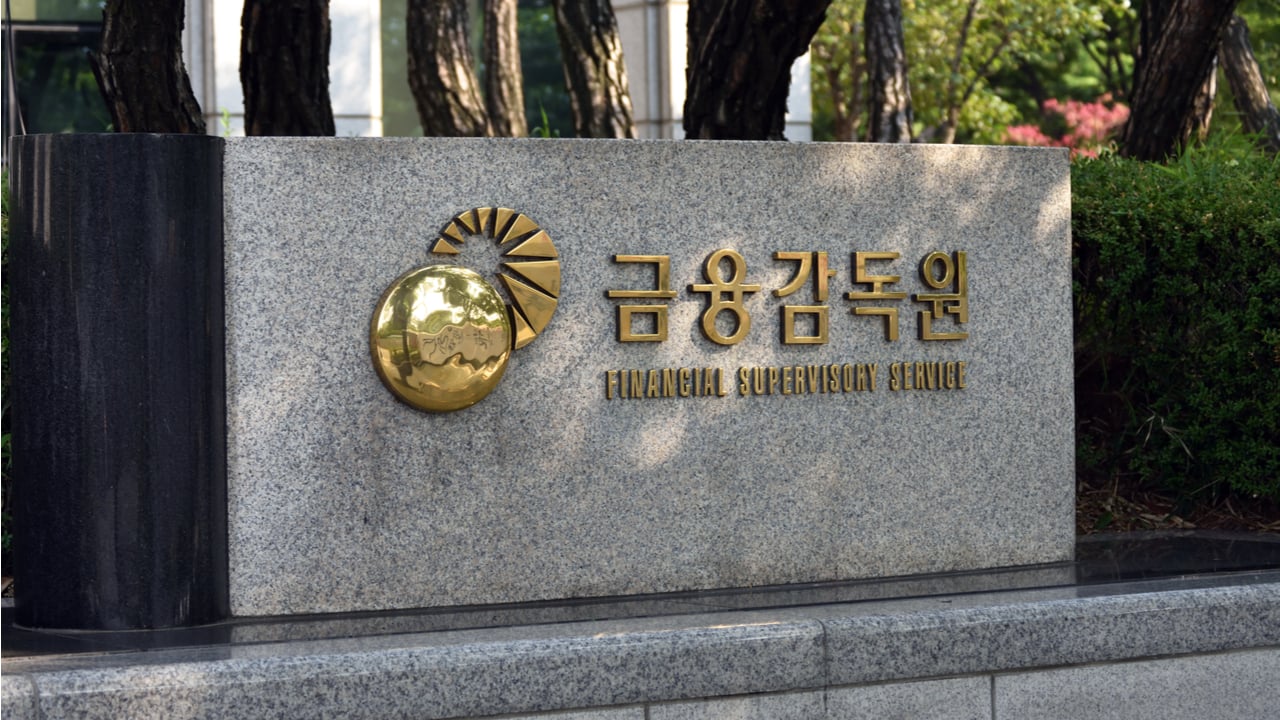
The Financial Supervisory Service of South Korea will lead government efforts to oversee the country’s expanding cryptocurrency market. The agency has been tasked with the job after prolonged discussions over which Korean regulator should be responsible for the industry.
Financial Supervisory Service Takes Responsibility for Crypto Sector in Korea
It took the government months to determine who’s going to take charge of crypto market oversight, the Korean Herald noted in an article published this weekend. The executive power in Seoul announced Friday that the task has been assigned to the Financial Supervisory Service (FSS), one of the country’s financial regulators.
The agency will be monitoring closely the implementation of previously introduced regulatory measures, the newspaper elaborated. These include the Act on Reporting and Using Specified Financial Transaction Information. The latter imposes certain restrictions on cryptocurrency exchanges operating in South Korea.
The Korean government has also delegated powers to the Ministry of Science and Information and Communication Technology to steer the development of the blockchain industry in the country. The department has already dealt with issues related to the crypto space. Earlier in May, Korean media reported that in the past three months the ministry has found and blocked over 30 phishing websites trying to obtain login details from crypto exchange users.
South Korean Government Confirms Plan to Tax Crypto-Related Gains
In this week’s announcement, the South Korean authorities have also maintained their commitment to impose income tax on gains from cryptocurrency transactions. Crypto investors who make 25 million won ($22,400) or more during next year will be required to pay 20% on their profits. Not all Koreans have welcomed the proposal.
Another development concerns crypto trading platforms working in the Asian country. The Korean government has decided to prohibit cryptocurrency operators from direct engagement in providing transactions or brokerage services. Korean ministers say the move aims to enhance transparency in the operation of digital asset exchanges.
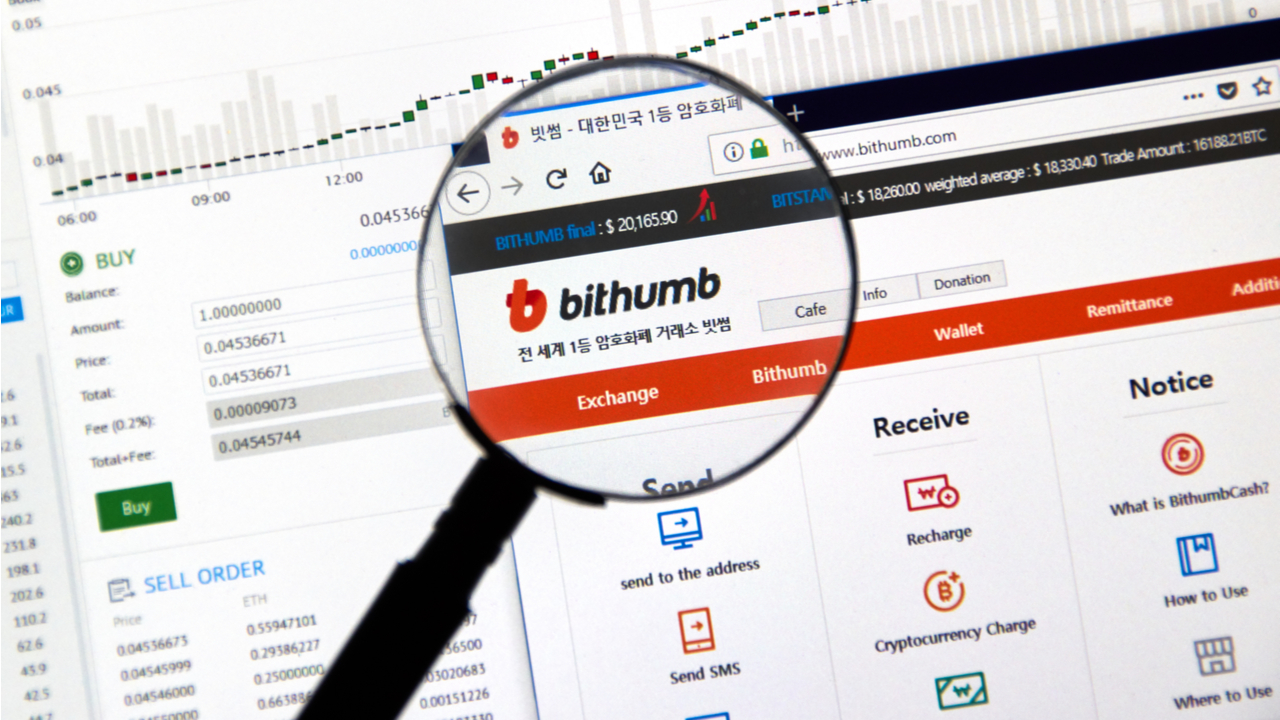
Crypto investing and trading has gained significant popularity in South Korea where prices have often exceeded global rates. The phenomenon known as ‘kimchi premium’ has been observed again over the past weeks since markets started moving downwards. At the time of writing, the price of bitcoin (BTC) at Bithumb, one of Korea’s largest crypto exchanges, hovers above $38,000, while the global rate is closer to $35,000.
Seoul’s latest decisions add to a string of regulatory announcements that have negatively affected cryptocurrency markets. Authorities in China have been cracking down on bitcoin miners and have reiterated previously introduced restrictions on crypto trade and exchange. Meanwhile, the U.S. has announced new measures to curb tax evasion involving cryptocurrencies including a requirement for companies to declare any crypto receipts of over $10,000 of market value.
What do you think about the latest regulatory developments in South Korea? Share your thoughts on the subject in the comments section below.
The Central Bank Of Brazil, the highest monetary authority of the country, has released a note listing the general guidelines for the design of a hypothetical central bank digital currency (CBDC) for the country. While there are still no concrete steps taken in this direction, at least the document recognizes there have been discussions about this possibility in the institution.
Central Bank of Brazil Issues General CBDC Guidelines
The Central Bank of Brazil, the economic authority of the South American country, has released a document where it specifies the general guidelines of a future Brazilian central bank digital currency (CBDC). The note, titled “Banco Central do Brasil releases general guideline for a Brazilian CBDC,” details the characteristics and traits that a hypothetical CBDC emitted by the institution will have in the future.
Among the characteristics detailed in the document, apart from mentioning its use as a money substitute, its compliance with AML and anti-terrorism regulations, and also its issuance by the same bank, there are other more interesting attributes. First, the bank cites the coin will feature an:
Adherence to all privacy and security principles and rules determined, in particular, by the Bank Secrecy Law, and by the General Law for the Protection of Personal Data (LGPD);
As a fundamental part of the currency. CBDC’s have been criticized for the total control that the issuers can have over the spending information and personal data of their users, so the bank is already dealing with this kind of criticism early. Another important specification the bank mentions is the relation its currency will have with smart contracts. The document also states the currency will have an:
Emphasis on the development of innovative business models based on technological advances, such as smart contracts, internet of things (IoT), and programmable money;
Which may enable the future currency to be interoperable with smart money features.
This CEDB initiative is part of the program called Agenda BC#, an initiative of the bank to modernize some of its operations, including fintech startups in the banking business and introducing some sandbox regulations. However, this is just an initial design draft and the bank recognizes this might change in the future, including or excluding some traits of this list after a more open dialogue is established with private sectors of the Brazilian society.
CBDC Study Not so Common in LATAM
The Central Bank of Brazil has been one of the pioneers in proposing and issuing the guidelines for its CBDC in the continent. Most of the countries in the region have made no announcements of having an interest in investigating this kind of currency to deploy it in their territories.
In contrast, the Bahamas, an island country, is on the verge of launching the Sand Dollar, its own CBDC. Also, China is already using its own CBDC for cryptocurrency payments, having transacted 3 million operations worth over a billion yuan during last year.
What do you think of the advances the Centra Bank of Brazil is making on CBDC? Tell us in the comment section below.
Ever since government officials in China started talking about cracking down on bitcoin mining and reiterating crypto guidelines from 2017, digital currency proponents and the media have been focused on this region. Just recently, a Chinese state-backed online publication revealed that the Sichuan Energy Regulatory Office plans to hold a meeting on June 2, 2021, to discuss the implications of bitcoin mining.
Sichuan Energy Regulatory Office to Meet on June 2 to Discuss Crypto Mining
In recent times, the Chinese government has been discussing the crypto economy to a greater degree and much of the conversation has been directed at bitcoin mining.
China’s officials hope to get the country carbon neutral by the year 2060 and capture a good percentage of carbon neutrality by 2030. Following a few meetings from the country’s Financial Stability Board and other Chinese politicians, a number of crypto firms stopped offering services to mainland citizens.
Companies that started severing services from China included Huobi, Btc.top, Hashcow, and Okex. Three days ago, Bitcoin.com News reported on statements about the situation from a number of executives from China’s pool operators and mining rig manufacturers.
A recently published report this weekend details that the Sichuan Energy Regulatory Office plans to hold a meeting next week in order to tend to the implications of bitcoin mining.
The columnist from the nation-state backed publication the Global Times states:
The Sichuan Energy Regulatory Office announced on Thursday that the office will hold a meeting on June 2 to fully understand the situation of crypto-currency mining activities in the southwestern province, which is required by the National Energy Administration.
The regional reporter, Colin ‘Wu’ Blockchain, further noted on Twitter before the weekend that there were “rumors that China will introduce a crackdown policy on Friday night.”
However, these rumors never came to fruition and instead, the Sichuan Energy Regulatory meeting was disclosed to the public. Estimates say that the Sichuan province and Xinjiang region in China is a deeply concentrated area of bitcoin miners.
On Sunday, May 30, 2021, the Bitcoin network’s hashrate has been hovering just above 165 exahash per second (EH/s). Stats show that the top mining pools with the most hashrate stem from China.
Today’s top mining pools dedicating hashrate to the BTC chain include F2pool, Antpool, Viabtc, Btc.com, and Poolin. The aforementioned mining operations that reside in China command roughly 66.32% of the global hashrate on Sunday.
What do you think about the upcoming Sichuan Energy Regulatory Office meeting to discuss bitcoin mining? Let us know what you think about this subject in the comments section below.
Strong hands are hodling stronger than ever as May 2021 lines up to be the worst May ever for Bitcoin.
Bitcoin (BTC) starts a new week bearish or as a firm “buy” depending on the source — what happens next?
After a week of uninspiring price performance, the largest cryptocurrency is still stuck in the lower $30,000 range.
With inflation worrying traditional markets and summer months traditionally good for bulls, there may yet be cause for celebration. In Bitcoin, anything can happen, however, and surprises swing both ways.
Cointelegraph Markets takes a look at five factors to consider when charting where BTC/USD might head next.
Inflation spooks macro mood
It’s a quiet day for stocks and commodities thanks to holidays in the United States, United Kingdom and elsewhere in the West.
That said, Asian markets are mostly stable anyway, as traders gear up for the beginning of the traditionally slower summer period.
Zooming out, however, and the picture gets decidedly less steady. The reason, sources are telling mainstream media, is inflation.
Long a concern amid the international rebound from coronavirus fuelled by huge central bank liquidity creation, the long-term impact of engineered “recoveries” worldwide is looming large in the horizon.
Some telltale signs are already here, such as spiralling manufacturing costs which may not be fully reflected.
“Policy makers have committed to accepting a higher level of inflation, higher volatility in inflation and as that happens you will see inflation moving structurally higher,” Mixo Das, an equity strategist at JPMorgan Asia, told Bloomberg.
“I don’t think this is in the prices yet.”
Federal Reserve balance sheet annotated chart. Source: PlanB/ Twitter
Inflation is by its very nature the antithesis of a Bitcoin standard, given the cryptocurrency’s fixed supply and diminishing issuance curve which cannot be manipulated.
As such, demand from institutions and those with large exposure to cash should continue to expand in line with inflation, which is being increasingly tolerated by central banks at higher levels.
In a debate about Bitcoin’s energy usage earlier this month, Saifedean Ammous, author of “The Bitcoin Standard,” suggested that around 10% of global wealth is already eradicated by inflation every year.
Weak hands can’t stop selling
It’s a somewhat gloomy picture for Bitcoin hodlers on Monday as the weekend failed to produce signs of a bullish price rebound.
At the time of writing, BTC/USD is under $36,000, having slowly drifted downwards since hitting local highs of $41,000 last week.
Those highs came soon after another retest of $30,000 support which saw Bitcoin bounce at $31,000, reestablishing the familiar trading corridor it has moved in since the capitulation event earlier in May.
Depending on who you ask, this setup is either a golden accumulation opportunity or a nightmare — and the split seems to match with market experience.
According to fresh data from on-chain monitoring resource Glassnode, at current levels, old hands are adding to their BTC stack, while recent buyers continue to sell to them.
This classic “weak-hands-to-strong” direction is nothing new, but its pace is increasing.
Miners, too, are back to buying, reversing a brief cascade of selling which accompanied the first dip to $30,000.
Bitcoin accumulation vs. BTC/USD annotated chart. Source: Glassnode/ Twitter
“This chart is INSANE!” popular Twitter account Lark Davis responded, highlighting the sense of excitement among longtime market participants.
“Miners and long term holders accumulating, only short term holders selling. Nothing new under the sun!”
Bitcoin’s weekly relative strength index (RSI), a key metric for divining overbought and oversold territory, is also circling lows which have only been beaten by the March 2020 crash and the $3,100 capitulation in December 2018.
Key price averages cause headaches for bulls
In terms of bull or bear, there are “lines in the sand” for traders which Bitcoin still needs to preserve to retain its bull market crown.
In its latest market update, trading suite Decentrader highlighted the 200-day moving average (DMA) and 20-week moving average (WMA) as significant levels to watch.
The 200 DMA currently sits at just above $40,000 — the place at which BTC/USD saw rejection last week — while the 20 WMA is higher at near $49,000.
“Should Bitcoin find sufficient demand in the low 30s, the 20 WMA would be expected to act as resistance,” Decentrader summarized.
“A drop lower would likely make the low $20s or the 78.6% retracement a likely target. As such, price action over the next week particularly important.”
The idea that Bitcoin could return to its 2017 high of $20,000 is unpopular for many, including PlanB, the creator of the stock-to-flow-based (S2F) price models.
While acknowledging that his models were still being “tested” by price swings, the idea of a fresh capitulation down to $20,000 is not something he considers likely.
“Of course I disagree, S2F and on-chain point to much higher prices ($100-288K). Time will tell,” he said during Twitter discourses last week.
He added that Bitcoin’s “realized price” — a calculation of BTC/USD based on the price at which each coin last moved — is now $23,000. During the 2013 and 2017 bull runs, realized price shot up by an order of magnitude, and this year is yet to copy them.
“At $23K we have some way to go IMO,” he commented alongside a chart showing realized price against the 200 WMA.
Bitcoin realized price vs. BTC/USD vs. months to halving events. Source: PlanB/ Twitter
Worst May ever?
Is this the worst May ever? In terms of monthly returns for Bitcoiners, it definitely looks like it.
On the last day of May 2021, the mood is likely anything but positive, as monthly losses for hodlers total almost 40%.
By comparison, May tends to be a lucrative month for BTC/USD — in 2017 and 2019, for instance, the pair gained more than 50% in May.
2018 was an outlier with 19% losses, but even these pale in comparison to this year. May 2021 is currently on track to be the worst month since 2013 in terms of both Q1 and Q2 performance.
And yet, doom and gloom are far from everywhere. Beyond Bitcoin, altcoin markets are showing signs of life, led by a continued rebound for XRP, up 13% on the day.
As traders note, volumes for largest altcoin Ether (ETH) in particular are promising, and contrast bear market behavior which tends to see little trading activity.
“We shouldn’t bother too much about a weaker BTC as it might follow the stronger alt/usd pairs or continue its chop/sideways while alts go up,” trader Cypto Ed concluded.
Another day, another BSC DeFi protocol gets hacked.
Belt Finance has become the latest Binance Smart Chain-based decentralized finance, or DeFi, protocol to lose millions to an opportunistic hacker.
The Rekt Blog, which post mortems DeFi exploits, stated that an attacker exploited a flaw in the way the protocol’s vaults calculates the value of its collateral which helped to “add another notch to the now infamous flash loan exploit season on the BSC,” adding:
“Yet another fork of a fork has rolled off the conveyor belt with $6.3M falling straight into the hands of the hacker.”
Rekt revealed that a total of eight flash loans were made on PancakeSwap for $385 million BUSD. The beltBUSD vault’s “Elipsis” strategy was exploited as it was the most undersubscribed strategy on the platform.
Belt Finance uses an optimal yield aggregator to offer passive yield generation to depositors. Elipsis is a decentralized exchange that enables swapping of stablecoins with low slippage on the Binance Smart Chain. The beltUSD vault also deploys capital on the BSC-based protocols Venus, Alpaca, and Fortube for yield generation.
On May 30, SushiSwap core developer Mudit Gupta posted a Twitter thread examining the incident, describing the flash loan attack as one of the “more complex hacks.”
Belt’s vaults operate with a target balance for each strategy employed, he explained. When a user deposits money into a vault, the capital is allocated to the most undersubscribed strategy. When someone withdraws money from the vault, it withdraws it from the most oversubscribed strategy.
Gupta asserted the attacker exploited this system to make several transactions across multiple strategies, inflating the value of its pools before repaying the flash loan and pocketing more than $6 million in profits. Gupta concluded:
“Basically, the issue happened because Belt incorrectly integrated with Elipsis. A similar issue happened last month as well in belt finance but at that time, the problem was a buggy integration with Venus. I wonder if belt has any bug-free integration.”
Venus is another BSC protocol for lending and borrowing via the minting of synthetic stablecoins.
Belt Finance is the latest in a lengthening list of BSC DeFi protocols to get exploited. On May 28, the BurgerSwap DEX was attacked resulting in the draining of $7.2 million.
So far this year, Cream Finance, bEarn, Bogged Finance, Uranium Finance, Meerkat Finance, SafeMoon, and Spartan Protocol have all suffered exploits on Binance Smart Chain. Binance has now turned to blockchain intelligence company CipherTrace for analytics support in a bid to mitigate further incursions.
We use cookies on our website to give you the most relevant experience by remembering your preferences and repeat visits. By clicking “Accept”, you consent to the use of ALL the cookies.
This website uses cookies to improve your experience while you navigate through the website. Out of these, the cookies that are categorized as necessary are stored on your browser as they are essential for the working of basic functionalities of the website. We also use third-party cookies that help us analyze and understand how you use this website. These cookies will be stored in your browser only with your consent. You also have the option to opt-out of these cookies. But opting out of some of these cookies may affect your browsing experience.
Necessary cookies are absolutely essential for the website to function properly. These cookies ensure basic functionalities and security features of the website, anonymously.
Cookie
Duration
Description
cookielawinfo-checkbox-analytics
11 months
This cookie is set by GDPR Cookie Consent plugin. The cookie is used to store the user consent for the cookies in the category "Analytics".
cookielawinfo-checkbox-functional
11 months
The cookie is set by GDPR cookie consent to record the user consent for the cookies in the category "Functional".
cookielawinfo-checkbox-necessary
11 months
This cookie is set by GDPR Cookie Consent plugin. The cookies is used to store the user consent for the cookies in the category "Necessary".
cookielawinfo-checkbox-others
11 months
This cookie is set by GDPR Cookie Consent plugin. The cookie is used to store the user consent for the cookies in the category "Other.
cookielawinfo-checkbox-performance
11 months
This cookie is set by GDPR Cookie Consent plugin. The cookie is used to store the user consent for the cookies in the category "Performance".
viewed_cookie_policy
11 months
The cookie is set by the GDPR Cookie Consent plugin and is used to store whether or not user has consented to the use of cookies. It does not store any personal data.
Functional cookies help to perform certain functionalities like sharing the content of the website on social media platforms, collect feedbacks, and other third-party features.
Performance cookies are used to understand and analyze the key performance indexes of the website which helps in delivering a better user experience for the visitors.
Analytical cookies are used to understand how visitors interact with the website. These cookies help provide information on metrics the number of visitors, bounce rate, traffic source, etc.
Advertisement cookies are used to provide visitors with relevant ads and marketing campaigns. These cookies track visitors across websites and collect information to provide customized ads.