The crypto crash continues, but this shouldn’t be too surprising given the risky nature of virtual currencies. Crypto crashes have of course happened before, and each time tokens have regained their momentum after a period.
However, this year’s crash that began towards the end of April has been different. Not only is the crypto market crumbling, but it is also having greater impact on the stock market.
Indeed, movements in the crypto market could also be acting as signals for movements in stock sectors such as high-growth tech stocks.
How Tesla Helped Trigger Crypto Market Crash
Crypto assets across the board have been rapidly losing value, with Bitcoin down nearly 50% from its earlier $63,500 all-time high in mid-April. Bitcoin almost touched $30,000 at one point and again this weekend this month, although it regaining some momentum today. Ethereum has also tumbled, to around $2,500 at the time of writing.
The crypto crash has been attributed to several developments in the market, including Tesla’s announcement to no longer accept Bitcoin payments, a crypto payments crackdown in China and closure of mining firms in China.
The crash has prompted many retail traders to sell off their holdings in fear that the prices would fall even further. The crash has also been felt on Wall Street, where many stocks are losing their value.
Buy Bitcoin Now
Crypto Trading Influencing Stock Market and Vice Versa
The recent market movement has shown an interdependence between the stock market and the crypto market. When the crypto market tumbles, stock markets also struggled, causing a jittery period on Wall Street.
Equally, when the crypto market recovered slightly, stock markets also seemed to recover in what can be seen as an unusual trend. According to Jim Cramer, a reporter on CNBC, this influence of cryptocurrencies on the US stock market is not expected. “It’s Insane. It’s insane,” Cramer lamented.
The stock market and the crypto market are influencing each other because major companies listed on NASDAQ have invested in cryptocurrencies.
Amidst the crypto boom, a number of companies diversified into crypto and launched crypto products to meet the increased demand from investors.
What’s the Impact of Crypto Product Launches and BTC on Balance Sheets
Some of those companies have even gone as far as actually adding bitcoin to their balance sheets alongside cash. Also, with increasing numbers of investors holding cryptocurrencies in their portfolio, investors can get jittery every time the stock market falls and want to adjust their investments to manage risk.
A similar trend is emerging when the stock market rises. When the stocks of companies that have invested in cryptocurrencies also increase, it causes cryptocurrencies to increase in value. This is because crypto tokens can be seen to derive some of their value from how well the company’s shares are performing.
Opportunity to profit from Crypto As a Leading Indicator?
This trend shows that the crypto market’s influence in financial markets is increasing. To some extent crypto could be acting as a leading indicator, with stock falls following in crypto’s wake, at least in certain sectors. Savvy investors could take advantage of such insights to make profits.
With the highly volatile nature of cryptocurrencies, this interdependence could cause instability in the stock markets – it may have led the US Treasury to call for more regulation of the crypto market over fears that crypto trading may cause financial instability.
Looking to buy or trade Bitcoin (BTC) now? Invest at eToro!
Buy Bitcoin Now
75% of retail investor accounts lose money when trading CFDs with this provider
Student Coin (STC) is Now Live On KuCoin Exchange! The first-ever educational token in history named Student Coin (STC) has been created at the world’s best universities, for the huge academic tokenization that is already supported by over 500 universities.
Recently, the STC platform has ended its ICO, however 9 days before the planned date. This is due to the fact that they sold all their 5 million tokens dedicated to their Launchpad. More so, 2.4 million, 1.6 million, and 800 billion tokens for development, marketing, and distribution wallet respectively.
Distribution of STC Token (Source: Whitepaper)
The platform consists of many products for users. Firstly, the STC wallet is a secured digital wallet. However, users can access the wallet after registering. In addition, users can get the announcement and news about the platform. Also, the weekly insights allow users to view the number of STC users.
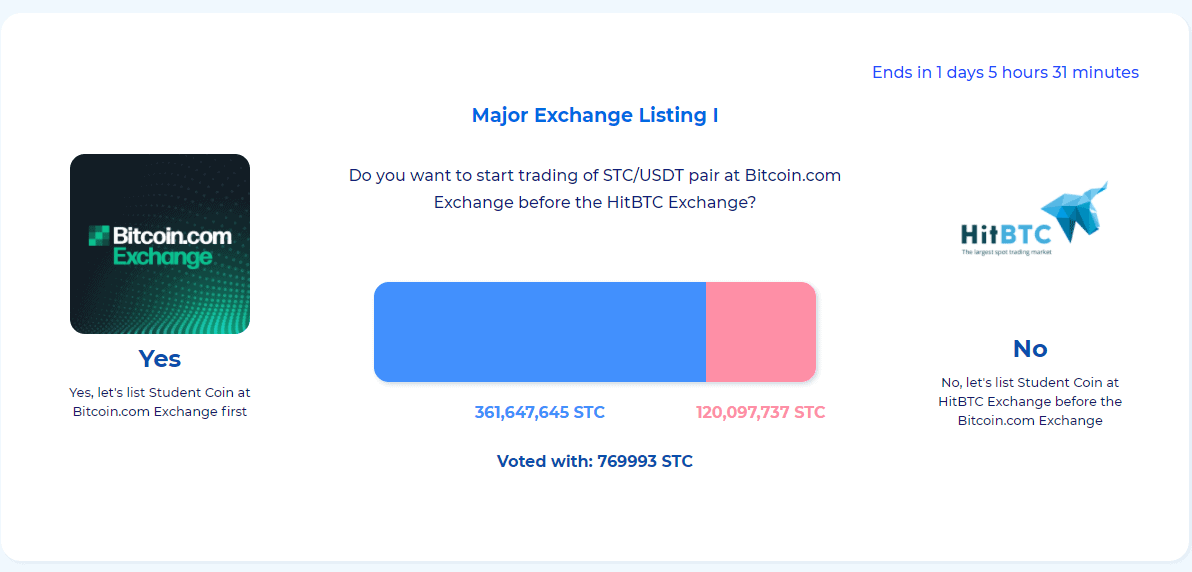
Even more, Smart Marketing Token (SMT) is the first token that tokenizes on the STC ecosystem. SMT will help to promote tokens on the STC platform through some marketing strategies. In addition, STC users can also stake their tokens which will be available by the end of May. Also, STC voting available to vote for future development of the project.
STCVoting
What is more, STC Terminal will be available by the end of July. Through this terminal users can develop their own tokens. Added to this, the STC exchange will be available in the third quarter of 2021. The platform application is now available on the Google play store and App store. There are over 140,000 user downloads.
Now let’s discuss in deep about the exchange listing of the Student Coin (STC) token.
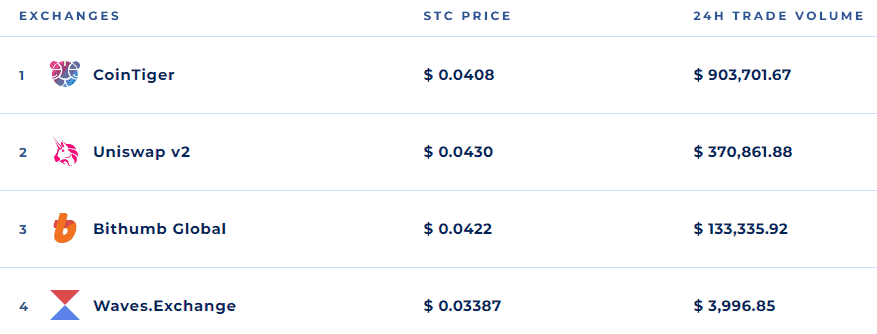
STC Listing On Top Crypto Exchanges Many would-be wondering how to get this STC token. This is simple, users can get the token from the top crypto exchanges namelyUniswap,Waves Exchange,Bithumb Global andCoinTiger. Recently, the STC token listed on the KuCoin exchange on May 09, 2021.
STC Exchange Listing (Source: Coinranking)
All users can deposit, withdraw, buy, and sell STC tokens through the above-listed top cryptocurrency exchanges. As shown in the above table, the price of STC varies from one exchange to another.
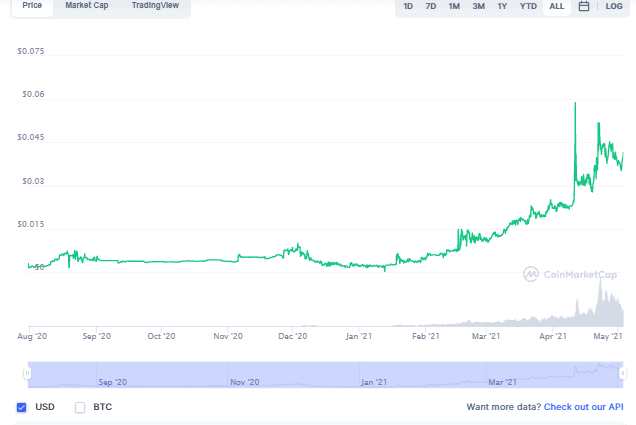
According to CoinMarketCap, the STC price is $0.017 with a 24-hour trading volume of over $1.76 million, at the time of writing.
STC Price Chart (Source: CoinMarketCap)
In addition, the platform is planning to list the token in other exchanges namely HitBTC, Changelly, Changelly Pro, CrossTower, and Bequant.
Quick Background Wojciech Podobas is the CEO and Founder of Student Coin who has written two books one academical about finance and other one educational about cryptocurrencies. Moreover, Daniel Bihun is the CMO who is responsible for managing marketing of STC. The company’s CTO is Cezary Tabota, a crypto enthusiast experienced in managing developers.
The company also consists of students from other universities and countries like Harvard University or NYU. Further, the advisory board team consists of Andrzej Kusmierz, Karolina Marzantowicz, and many more.
To know more: https://docs.studentcoin.org/team-documentation/advisory-board
Below is the roadmap of the Student Coin platform:
StudentCoinRoadmap (Source: Website)
With recent upgrades, listing, and developments happening within the platform, the STC might reach great heights. Also, the platform has many upcoming plans, that makes it to be a better and great company in the crypto world.
Users can purchase STC token directly through Student Coin website app.StudentCoin.org/buy Notably, this is the easiest way to buy STC tokens. Soon the platform will update on all exchanges and also add other payment options for users.
Witnesses Price Convergences – May 24 Ethereum market witnesses price convergences under the $2,500 level after a long downward-moving manner that recently surfaced in the crypto trading space. The ETH/USD market now trades around the value of $2,298 at a rate of 9.49% increase.
Witnesses Price Convergences: ETH Market Key Levels: Resistance levels: $2,500, $3,000, $3,500 Support levels: $1,500, $1,300, $1,100
ETH/USD – Daily Chart The ETH/USD daily trading chart depicts that the crypto market witnesses price convergences below the level of the $2,500 market level. During yesterday’s session, price pushed more southwardly ever since the start of the current sell-off to average the immediate support level. Today’s session presently sees a rallying movement a bit over the level of $2,000. The 14-day SMA trend-line is above the 50-day SMA with a slight-bending posture towards the south. The Stochastic Oscillators are in the oversold region with conjoined hairs to consolidate within it. That simply signifies that Ethereum isn’t yet far from being pushed again southwardly by the US fiat currency.
Will ETH/USD witness price convergences more? The Ethereum market price against the US Dollar appears to still potentially witness price convergences mostly around the level of $2,500 in the near sessions. As the crypto’s value got a downswing in the crypto-market underneath the bigger SMA indicator to now make a pull-up toward the point earlier mentioned shows that the ETH/USD bulls are in top form struggling to make a notable rebounding in the near time.
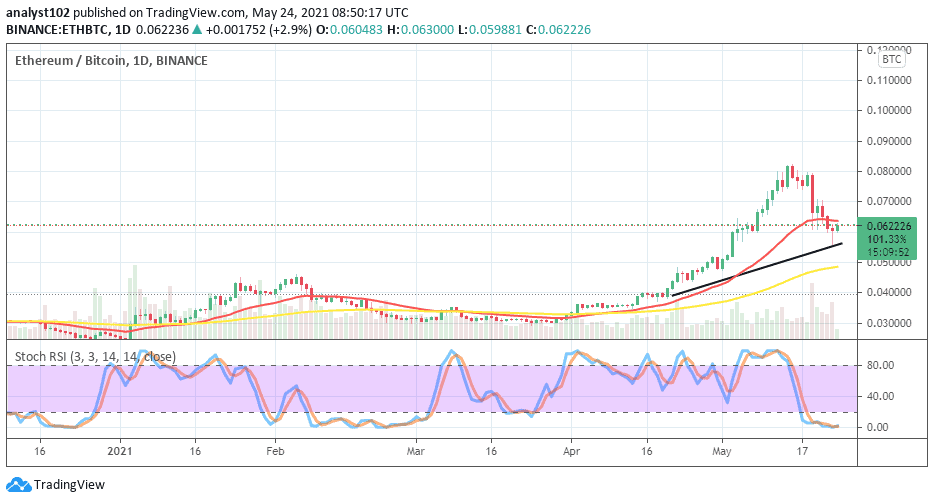
Regarding the downside of this crypto economy, the market line at $2,500 will be highly instrumental in the determination of a definite direction of the market especially as it has come to be the key area of price convergences. A pull-up for reversal moves will suffice to signify a sell entry at that level. Meanwhile, a sudden forceful break out of the will most likely be to nullify that sentiment in no time. ETH/BTC Price Analysis There has continued to be pressure on the base trading instrument by the counter tool until now as shown on the ETH/USD price chart. However, it appears that very soon there may be a less-active motion between the two paring cryptos for a while. However, if such a move is prolonged, there will also be a tendency that the market line may hover around the smaller SMA indicator to cause an indecision situation between the instruments. The 50-day SMA indicator is underneath the 14-day SMA trend-line with the bullish trend-line placed in between them. The Stochastic Oscillator are in the oversold region very lightly bent towards the south with conjoined hairs to indicate the possibility of witnessing price convergences at a lower bullish trend zone of Ethereum and Bitcoin on the scale of comparison.
It looks like you have got to know about the secret of changing Bitcoin into Monero for disappearing in cyberspace with your money.
For those of you who don’t know what I am talking about, here is the thing:
Bitcoin isn’t completely anonymous when you own and transact it. To supplement this lack of anonymity, many BTC users convert their bitcoins into Monero because Monero is completely anonymous. One cannot even know how much value was transacted between two parties, forget about their identities least.
However, I understand, your reason for exchanging or converting BTC to XMR might be something else. But whatever it is, you need to do this exchange with extreme caution because crypto transactions are irreversible, and with Monero’s anonymity, it becomes even more complicated.
So to help you out precisely with that we have come up with this step by step guide on converting your BTC into Monero in the least possible time with safety.
We have chosen, Cryptmixer cryptocurrency swap service for this tutorial because it is one of the most user-friendly services to exchange one currency to another.
Let’s jump right into the step by step process:
How & Where To Exchange Bitcoin (BTC) To Monero (XMR)?
Step #1. Go to Cryptmixer.com [No KYC & No Sign-up]
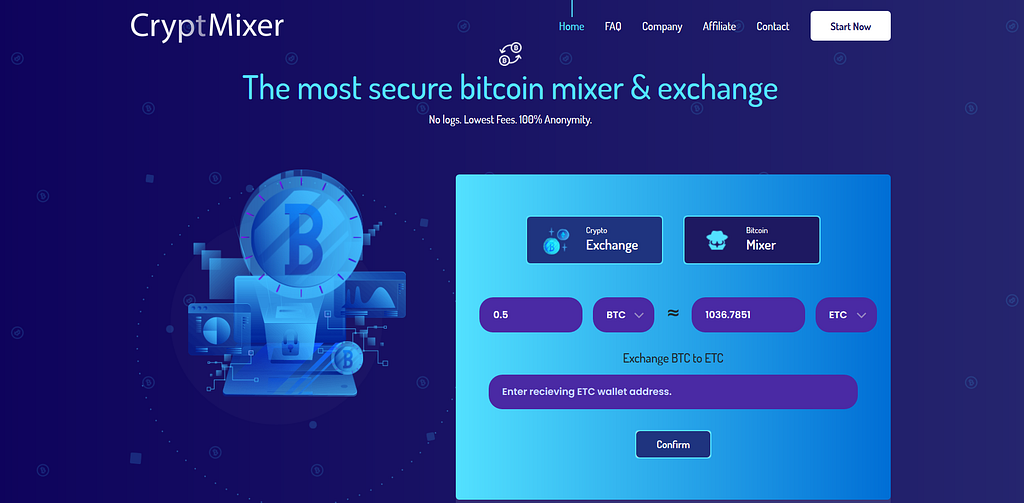
You should see this screen where you can select XMR and BTC pairs as shown in the below image. Do mention the correct amount of BTC you want to exchange for XMR. Doing this will automatically show you the amount of XMR you will be receiving after the conversion is complete.
Step #2. Here click on the ‘Exchange’ option shown in the above image to see the below-shown screen. You can even change the amount of BTC you wish to exchange here too. The exchange fee is set to 0.05% of the transaction.
Here they will ask you for your Monero address. If you don’t have the Monero address, we suggest you choose a wallet from some of these best Monero wallets and get a Monero address for yourself. This is the XMR address on which you will get your Monero coins in exchange for Bitcoin.
Step #3. After adding the Monero address, click on the ‘Next’ button shown in the above image. Once you do that you will be shown details of your conversion such as XMR address, fees, time for conversion, etc. Verify the details intently on this page before moving forward for the actual exchange.
Step #4. Once you have checked all the details, click on ‘Start’ shown in the above screen.
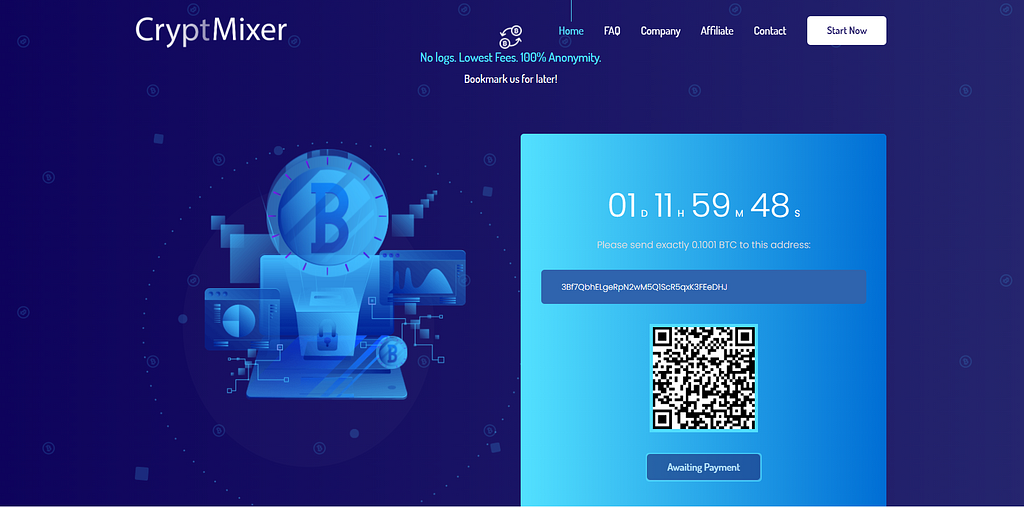
You should now see a screen asking you to send the BTC first on a given address. Don’t worry; this is how it is supposed to work when you use Cryptmixer. You need to provide the relevant currency first after which you receive the other currency. Take out your Bitcoin wallet and put the shown address to send your bitcoins on it.
Note: You have 24 hours to send funds otherwise the transaction will be canceled automatically, but I suggest you send it ASAP before the exchange rate of BTC/XMR pair changes.
Step #5. As soon as you send your bitcoins to the shown address, you will start seeing this screen ‘transaction is being confirmed.’ It means your transaction is processing and will be confirmed by the Bitcoin blockchain soon. Usually, it takes 6 confirmations for depositing Bitcoin which can take up to an hour in case of congestion on the blockchain.
The swapping process itself happens almost instantaneously, but the blockchain network takes the rest of the time. Typically, the exchange comprises of these three stages:
Getting confirmations
Exchanging BTC to XMR
Sending Monero to your wallet
Step #6. Wait with patience, and as soon as your conversion from BTC to XMR is completed, you will see this screen showing you all the details of the transaction.
You can check your transaction details on the respective blockchain also.
Congratulations, Tada….!!! You have done it
Is It like Sending Bitcoin To Monero?
Some people mistake this for sending Bitcoin to Monero network and think that its Monero’s blockchain that is doing the conversion for them.
But that’s far from reality.
In this conversion powered by Cryptmixer, it acts like a mediator who facilitates the conversion of BTC to XMR. Moreover, Cryptmixer is worth relying on such exchanges because it has made a name for itself doing the same for last 5 years in this industry
So what are you thinking?
Check Out Cryptmixer for free now
Note: We have used the example of BTC and XMR in this tutorial, but the process of converting any other currency to another one is the same, so feel free to try out Cryptmixer for that too !!
If you liked this guide, please share it with your friends & family member who wishes to exchange BTC to Monero or vice versa !!
How To Convert Bitcoin (BTC) To Monero(XMR)? [Safely] was originally published in The Bullish on Medium, where people are continuing the conversation by highlighting and responding to this story.
Cryptmixer is the first cryptocurrency and altcoin exchange aggregator. We have integrated many leading exchanges across the globe to provide best exchange rates to our customers. Currently, they support over 30 cryptocurrencies. Here is the list of all coins which we support:
Select XMR in the exchange tab and BTC on the right, enter the amount of XMR you want to exchange. This will show the quantity of BTC at the current exchange rate. Enter the receiving address and click start. Cryptmixer will provide you with an address to deposit the funds to perform the exchange.
Once the exchange receives your XMR then it will initiate the Bitcoin(BTC) conversion. You can always track your transaction on the blockchain with our easy to access links, below is your transactions status.
For a step by step video, I’ve provided a video that will show you the process.
https://www.youtube.com/watch?v=A3G7S0YNr0k
Happy switching 🙂
How To Convert Monero (XMR) To Bitcoin (BTC) From Cryptmixer was originally published in The Bullish on Medium, where people are continuing the conversation by highlighting and responding to this story.
I regret to inform you Bitcoin transactions are far from being anonymous. If this news was not a surprise to you, you’ve most likely used tumbler services and mixed your coins to make them untraceable.If you’re new to tumblers or looking for reliable ones here are our top mixing websites; where you can choose the best Bitcoin mixer personally for you. You will agree that it is a necessity to keep in mind a reliable platform to access any time when you need to clean your tinted coins or make them untraceable.
This article will tell you about 5 best tumbler services operating online for your comfortable choice. Bitcoin mixing has become incredibly popular since the time when the first evidence of coin traceability has been presented. A pseudo-anonymous character of crypto transactions led to the fact that crypto holders began to look for cheap and effective ways of how to increase the level of confidentiality and Bitcoin mixing platforms have become one of them.
A mixer, scrambler or tumbler is a website that is used by Bitcoin holders to disconnect the sender and recipient of the transaction. It is performed by mixing user’s coins in the general pool with coins of other users and private reserves of the service. The procedure is simple and cheap though it requires some time to complete — on most of the services, users select the time of delay themselves and it can take up to several days until clean coins are delivered to the address provided.
Today, more and more websites start offering mixing services to crypto holders, but not all of them can be trusted. We have selected 5 best scramblers suitable for mixing coins.
Transaction fee: 0.05% service fee no up charge for payout addresses
Minimum Deposit: 0.001 BTC
Multiple Addresses: 5
Confirmations Required: yes
No Logs Policy: yes
Exchange: yes
Registration Required: no
Referral Program: no
Letter of Guarantee: no
This mixer and exchange is one of a kind. They offer mixing services for everyone at a very low cost, just 0.05%. CryptMixer has a massive reserve of 2000 coins so you’ll never have to wait more than 1 confirmation or 30 minutes max to send your coins. It is one of the finest cryptocurrency tumbler which is used by most of the Bitcoin owners. The best thing about this bitcoin mixer that it provides instant mix. 650 of those coins are dedicated to BTC which have never been tainted. Moreover, CryptMixer offers an exchange service as well for Bitcoin, Ethereum, Litecoin, Bitcoin Cash and Monero. It’s a one stop when it comes to converting your coins to an unknown coin origin.
The next page will show you the amount of fee to pay for the transaction, a wallet address to send coins to or scan a QR code, and a code to write down for any further transactions via the platform.
Other benefits of this mixer are no logs policy and a 7-day retention period for a better confidentiality level. There is also a referral program which allows earning 50% of the service fee for every mix completed with the referral link. The minimum withdrawal amount is 0.002 BTC.
How We Picked
Since the number of scrambler services grows incessantly, it was not easy to select only ten of them. However, the main factors we have considered compiling this list were the following ones:
Popularity of tumbler on the Web;
Domination of positive reviews;
Higher rating among users;
A variety of features and benefits offered to users;
Number of crypto coins mixed;
Simplicity of the mixing process;
Affordability;
Anonymity level.
How We Tested
Each of the following services was analyzed by our team to ensure that they operate at the moment and are not scams. We have sent a minimum amount to every service to check their work and received clean untainted coins back paying a minimum commission. Moreover, our team has analyzed reviews of these services and feedback provided by other users as well as learned all the features of these platforms to select only the best of them.However, it is our obligation to warn you that we are not responsible for the work of these tumblers. Despite our positive experience, mixing is a risky process which can lead to unpredictable consequences and even loss of your coins. Therefore, we recommend all our readers to invest only that amount which is not critical for them.
Why You Should Trust Us
It is natural that the best way to use bitcoin mixer is to avoid registration and perform a minimum of steps during the process. However, it is important to remember of the fact that the number of scams increases together with the number of reliable platforms, so sometimes it is better to spend more time on mixing and minimize risks.
Our team of specialists in the crypto industry has much experience and follows all the latest trends in this sphere. We communicate with hundreds of crypto holders as well as make our own experiments to understand if one or another platform is worth your attention and investment. Our team has spent days to conduct a detailed analysis of every platform so that this list of best tumblers was reliable and trusted. We hope that our work will help you to make the right choice of the scrambler and get clean coins in case you decide to use its services.
When Bitcoin Tumbling is Necessary?
Digital money, as well as fiat money, is traceable and despite much information about Bitcoin anonymous character, there is more and more evidence that crypto transactions can be traced and it is even possible to find out who is the holder of the certain wallet on the basis of the transactions made from or to it.
It is a widely known fact that blockchain makes records of the history of transactions and they are available to the public. Nowadays, we face many examples of analysis software which helps to connect two parties of every transaction, make up the history of transactions of a certain wallet, and even compare personal data from the Internet with it. As a result, we can see that crypto transactions are pseudo-anonymous and need additional steps to achieve privacy. Mixers, tumblers, scramblers, and laundry services have been created with the goal to disconnect a sender and a recipient of the transaction as well as clean tinted coins received from unreliable sources. These services perform this function for a minimum commission and add users’ coins to the general pool to mix them or work in a different way like Cryptmixer, but they are meant to improve the anonymous character of coins and they cope with this task perfectly.
Summing up
There are many reasons to make crypto transactions anonymous and mixing platforms help to achieve this goal. At the same time, it is important to choose only those tumblers which have confirmed their reliability and served a big number of users successfully. Every online transaction involves some percentage of risk, but there are much more chances to get your coins cleaned successfully if you use the best mixing services listed in this article.
#2 SmartMix
Links:
https://smartmix.io/
https://smartmixnjmuoixj.onion/
Supported cryptocurrencies: Bitcoin, Bitcoin
CashTransaction fee: 0.5% plus 0.0001BTC for every Extra Address Minimum
Deposit: 0.001 BTC
Multiple Addresses: 5 Confirmations Required: from 2 to 30
No Logs Policy: yes
Registration Required: no
Referral Program: yes
Letter of Guarantee: no
What is ‘easy mixing’, you may wonder. In fact, it is a process performed on SmartMix platform where you can tumble both Bitcoin and Bitcoin Cash. There is no need to sign-up for the platform to start a mixing process — the only thing you should do is to select a coin. As soon as you do that, the platform will ask you to perform the following steps:
Provide a final address or up to 5 possible addresses to deliver coins to;
Select a payment type each with a certain number of confirmations (from 2 up to 30);
Insert a SmartClub Code (given to users who have already used a service at least once);
Press ‘Start Mixing’ button.
The next page will show you the amount of fee to pay for the transaction, a wallet address to send coins to or scan a QR code, and a code to write down for any further transactions via the platform. There are two mixing modes to choose from: fast mixing will guarantee you an almost instant delivery of funds, while a delayed mode will make you wait for a certain period of time you have selected.Other benefits of this scrambler are no logs policy and a 7-day retention period for a better confidentiality level. There is also a referral program which allows earning 50% of the service fee for every mix completed with the referral link. The minimum withdrawal amount is 0.002 BTC and BCH.
#3 BitBlender
https://bitblender.io/
http://bitblendervrfkzr.onion/
Supported cryptocurrencies: Bitcoin
Transaction fee: 1–3%
Minimum Deposit: 0.01 BTC
Multiple Addresses: 10
Confirmations Required: yes
No Logs Policy: no
Registration Required: no
Referral Program: yes
Letter of Guarantee: no
BitBlender is one of the oldest mixing platforms on the web which was launched by a Bitcoin enthusiast who wanted to help other crypto owners to keep the privacy of their transactions. What differs this service from others is the simplicity of its design and the tumbling process. It is one of a few platforms which are hidden by Tor browser and guarantee a higher level of anonymity. The service does not ask its users to provide any other personal information but it is necessary to register an account to start tumbling. Crypto holders need to open the onion link through a Tor browser, sign up for the website, and select ‘Quick mix’ to complete the process as fast as possible. There are several features which make BitBlender outstanding in the modern market of mixing services:
Quick Mix Using a restorable session ID, guests of the website can return to the session any time within 48 hours since the initiation.
Several destination addresses is possible to provide up to 10 additional addresses to randomize mixed coins.
Time delay Users can select the desired time delay themselves. They are offered several variants no matter whether they sent coins to one or several addresses.
Logs are deleted automatically logs are stored within 48 hours and then are deleted in an automatic manner. The platform does not leave any information connected with the transaction.
Quick processing as soon as a user gets a notification about the delivery of coins, they are ready for withdrawal and any other operations.
BitBlender works similar to other tumbler services since a user sends coins to the address generated. They are added to the so-called ‘pot’ where all other coins are stores and mixed with them within the period of time delay indicated. In this way, any chain between a sender and a recipient is broken.
#4 ChipMixer
Links: https://chipmixer.com/
http://chipmixerwzxtzbw.onion/
Supported cryptocurrencies: Bitcoin
Transaction fee: pay what you want
Minimum Deposit: 0.001 BTC
Multiple Addresses: unlimited
Confirmations Required: from 1 to 6
No Logs Policy: yes
Registration Required: no
Referral Program: no
Letter of Guarantee: yes
Being one of the mixers which guarantees a much higher anonymity level than others, ChipMixer is also a unique chip tumbler that works in an absolutely different way from other services. The service has wallets with chips that range from 0.01BTC to 8.192BTC which can be split and merged according to the wishes of their holder. These chips are delivered to the wallets earlier than a crypto holder sends funds to the platform, so it is impossible to connect the following transactions in any way. Moreover, every user has up to 7 days or even more (on request) to send coins after the initiation of the mixing process. However, the private keys to the wallet with chips are given to a user only when funds are delivered to the service. From this moment, a user can split and merge coins in the necessary amounts, send them to addresses required, or just store them waiting for their value to grow. All the processes are performed manually, so users are not dependent on any services and can distribute funds as they wish.
Since mixing is performed by the user, there is no standard fee for this process and crypto holders can decide themselves what amount to donate. It is worth mentioning that deposits are counted till three decimal points and a platform gives every user a signed receipt as a reliable source of coin origin. Moreover, there is a betting option to have fun and even increase your crypto assets if you are lucky.
#5 Cryptomixer
https://cryptomixer.io/
cryptomixns23scr.onion
Supported cryptocurrencies: Bitcoin
Transaction fee: from 0.5% to 3%
Minimum Deposit: 0.001 BTC
Multiple Addresses: 10
Confirmations Required: yes
No Logs Policy: yes
Registration Required: no
Referral Program: yes
Letter of Guarantee: yes
The platform began to offer mixing services in 2016 and is actively used by crypto owners today. It features a reserve of 2,000 coins which allows to make tumbling almost instant and helps to decrease their traceability to the minimum. All the data about the transaction is deleted in 7 days. This service says about proven on Bitcoin Talk reserves and marks every coin which been already cleaned on the platform to prevent it from the return to the customer’s wallet again. It is performed via providing a unique CryptoMixer code during the first transaction.The mixing procedure on the platform is very simple and quick. There is no need to register since you can start mixing when you open the website landing page and press the ‘Start’ button. You will be redirected to the page where you need:
To provide a CryptoMixer code (invent and write it down if you use this service for the first time);
To enter bitcoin forward to address or several of them (up to 10). Funds are distributed by percentages indicated next to each address. It is possible to adjust them on the bar under the service fee bar:
Set a delay (optional). The system determines a delay time automatically and shows it next to each destination address. It can be adjusted on the bar at the bottom of the page too;
Select a service fee by dragging the bar. The minimum fee is 0.5% plus 0.0005 HTC for every transaction. It can be lower if you mix a bigger amount of cryptocurrency (for example, 0.25% for mixing 1,000BTC).
When all this information is provided, it is necessary to press ‘Continue’ and accept two terms of the platform. After that, you will need to send funds to the platform to the address generated or scanning a QR code provided. This page will also offer you to download a Letter of Guarantee for your security.
The platform offers a calculator on the first page for every user to see how much cryptocurrency is sent and what amount is received after mixing. Other great features are a lifetime affiliate program which pays out up to 50%, mobile responsiveness, and easy-to-use API.
(Review) Best Top 5 Cryptocurrency Tumbler (Reliable Bitcoin Mixer 2020) was originally published in The Bullish on Medium, where people are continuing the conversation by highlighting and responding to this story.
It looks like you have got to know about the secret of changing Bitcoin into ETC for disappearing in cyberspace with your money.
For those of you who don’t know what I am talking about, here is the thing.
I understand, your reason for exchanging or converting BTC to ETC might be something else. But whatever it is, you need to do this exchange with extreme caution because crypto transactions are irreversible, and with Ethereum Classic’s functionality, you can do so much more with it.
So to help you out precisely with that we have come up with this step by step guide on converting your BTC into ETC in the least possible time with safety.
We have chosen, Cryptmixer cryptocurrency swap service for this tutorial because it is one of the most user-friendly services to exchange one currency to another.
Let’s jump right into the step by step process:
How & Where To Exchange Bitcoin (BTC) To Ethereum Classic(ETC)?
Step #1. Go to Cryptmixer.com [No KYC & No Sign-up]
You should see this screen where you can select ETC and BTC pairs as shown in the below image. Do mention the correct amount of BTC you want to exchange for ETC. Doing this will automatically show you the amount of ETC you will be receiving after the conversion is complete.
Step #2. Here click on the ‘Exchange’ option shown in the above image to see the below-shown screen. You can even change the amount of BTC you wish to exchange here too. The exchange fee is set to 0.05% of the transaction.
Here they will ask you for your ETC address. If you don’t have ETC, we suggest you choose a wallet from some of these best Ethereum Classic wallets and get a Ethereum Classic address for yourself. This is the ETC address on which you will get your Ethereum Classic coins in exchange for Bitcoin.
Step #3. After adding the Ethereum Classic address, click on the ‘Next’ button shown in the above image. Once you do that you will be shown details of your conversion such as ETC address, fees, time for conversion, etc. Verify the details intently on this page before moving forward for the actual exchange.
Step #4. Once you have checked all the details, click on ‘Start’ shown in the above screen.
You should now see a screen asking you to send the BTC first on a given address. Don’t worry; this is how it is supposed to work when you use Cryptmixer. You need to provide the relevant currency first after which you receive the other currency. Take out your Bitcoin wallet and put the shown address to send your bitcoins on it.
Note: You have 24 hours to send funds otherwise the transaction will be canceled automatically, but I suggest you send it ASAP before the exchange rate of BTC/ETC pair changes.
Step #5. As soon as you send your bitcoins to the shown address, you will start seeing this screen ‘transaction is being confirmed.’ It means your transaction is processing and will be confirmed by the Bitcoin blockchain soon. Usually, it takes 3 confirmations for depositing Bitcoin which can take up to an hour in case of congestion on the blockchain.
The swapping process itself happens almost instantaneously, but the blockchain network takes the rest of the time. Typically, the exchange comprises of these three stages:
Getting confirmations
Exchanging BTC to ETC
Sending Ethereum Classic to your wallet
Step #6. Wait with patience, and as soon as your conversion from BTC to ETC is completed, you will see this screen showing you all the details of the transaction.
You can check your transaction details on the respective blockchain also.
Congratulations, Tada….!!! You have done it
Is It like Sending Bitcoin To Ethereum Classic?
Some people mistake this for sending Bitcoin to Ethereum Classic network and think that its Ethereum Classic’s blockchain that is doing the conversion for them.
But that’s far from reality.
In this conversion powered by Cryptmixer, it acts like a mediator who facilitates the conversion of BTC to ETC. Moreover, Cryptmixer is worth relying on such exchanges because it has made a name for itself doing the same for last 5 years in this industry
So what are you thinking?
Check Out Cryptmixer for free now
Note: We have used the example of BTC and ETC in this tutorial, but the process of converting any other currency to another one is the same, so feel free to try out Cryptmixer for that too !!
If you liked this guide, please share it with your friends & family member who wishes to exchange Bitcoin to Ethereum Classic or vice versa !!
How To Instantly Convert Bitcoin (BTC) To Ethereum Classic(ETC)? [Safely] was originally published in The Bullish on Medium, where people are continuing the conversation by highlighting and responding to this story.
After banning crypto payments back in 2017, Indonesia is looking to allow payments in a digital rupiah currency.
The Bank of Indonesia is one of the latest global central banks to announce state digital currency plans amid a major spike in the country’s digital payments.
Governor Perry Warjiyo said Tuesday that Indonesia’s central bank is planning to launch a digital rupiah currency as a legal payment instrument in Indonesia, Reuters reports.
The official noted that the rupiah is the only legally accepted currency for payment in the country so far, and BI will be looking to regulate a digital rupiah the same way it regulates cash and card-based transactions.
According to Warjiyo, BI is now studying potential benefits of a digital rupiah including its impact on monetary policy and payment systems, as well as evaluating the readiness of the financial infrastructure. The bank is also assessing potential technology options for building a central bank digital currency, he noted. Speaking at a streamed news conference, the official did not specify on an exact timeline for a digital rupiah development.
At the time of writing, BI has apparently not released an official statement regarding its CBDC plans. According to a notice on an official website of the bank, BI is about to decide on the issuance of a digital rupiah in the near future as necessary preparations have been completed. “BI is currently still focusing on digital transformation as part of Indonesia payment systems blueprint 2025,” the statement notes.
According to the report, Indonesia’s entrance to the global CBDC race comes in response to a major surge in digital banking, with digital transaction frequency jumping over 60% on an annual basis. Digital payments represent one of the country’s main policy priorities after Indonesia saw strong growth in online transactions during the COVID-19 pandemic.
The latest news follows Indonesian financial authorities announcing potential tax schemes for capital gains generated from crypto last week. Previously, Indonesia’s Commodity Futures Trade Regulatory Agency was also considering levying a tax on all cryptocurrency transactions taking place on domestic crypto exchanges.
Indonesia is known for its mixed approach to regulating crypto as the country put a blanket ban on cryptocurrency payments back in 2017 despite keeping crypto trading legal.
Elon Musk, here we go again: It is not the first time his reckless tweeting has caused serious problems, but this time they’re for crypto.
Powers On… is a monthly opinion column from Marc Powers, who spent much of his 40-year legal career working with complex securities-related cases in the United States after a stint with the SEC. He is now an adjunct professor at Florida International University College of Law, where he teaches a course on “Blockchain, Crypto and Regulatory Considerations.”
These past few weeks have been tumultuous, especially for newbies to the crypto market. First, on May 8, Elon Musk, CEO of Tesla, was the host of Saturday Night Live where he promoted Dogecoin (DOGE) — a highly speculative, volatile cryptocurrency with present meaningful business model other than being a meme for tipping others. Then, a few days later, Musk dissed Bitcoin (BTC) in a tweet, stating that Tesla would no longer allow purchases of its electric vehicles with BTC because of its purported substantial, environmentally unfriendly energy usage.
This is, of course, only a half-truth, as on a relative basis, the current traditional financial industry reportedly uses twice the amount of energy, according to a new study by Galaxy Digital. The crypto industry also comes close to having 40% of Bitcoin mining powered by renewable energy sources, according to the latest study by the Cambridge Centre for Alternative Finance. And according to Skybridge Capital founder Anthony Scaramucci, the “future of #bitcoin mining is renewable energy.”
Energy problem as an agenda?
Also, leave it to The New York Times to never let the truth, or additional truths, get in the way of pushing its own political agenda, which is decidedly progressive and against most anything that benefits the upper-middle class, involves capitalism and investments that fail to advance its liberal positions, and the wealthy. The New York Times has published no less than four articles on the energy consumption of BTC, including an article in January 2018 by reporter Nathaniel Popper, then another in February 2018 by Binyamin Appelbaum, and then another in March 2021 by Andrew Ross Sorkin. Most recently, The New York Times published a fourth article on April 14 by Hiroko Tabuchi on the purported huge amount of energy consumed and carbon emissions caused by Bitcoin.
However, the many supposed “facts” in that most recent piece and a 2018 report upon which that position is in part supported were roundly rebutted by Nic Carter of Castle Island Ventures in a Harvard Business Review article published May 5. It is more than a coincidence, I suspect, that two of the NYT articles were published in early 2018 and two in early 2021, both being time periods when the price of BTC had been rising. Is the Gray Lady just reporting the news, or is it pushing an agenda voicing purported environmental concerns relating to the digital asset and opposition to the many crypto millionaires that BTC ownership has created?
Then, on May 19, the prices of BTC, Ether (ETH) and most cryptocurrencies swooned by over 25%. Now, for those in the space, like me, who were here pre-2018, they understand that such huge price swings are nothing new to crypto. Indeed, in 2017 alone, BTC dipped several times that year by over 30%. It has fallen over 50% several times in the last 10 years. While nerve-racking, such is the price one must pay for this not-yet-mature blockchain technology. From an investing perspective, Basic Finance 101 dictates that for large rewards, there are large risks.
Moreover, it is worth noting that anyone who bought BTC from any time period prior to Thanksgiving 2020 today still has — even with a BTC price of around $40,000 — a return of over 100%. Even if the price is cut roughly in half in the coming days, weeks or months from that level to $20,000, still not one investor who has held the currency from then till today would have lost a penny.
And what’s with bans on crypto?
Apart from Musk’s tweets about Tesla no longer accepting BTC, another speculated cause of the dive was China’s crackdown on crypto trading in the country. Yet, to those educated and within the space for a while, they know this was not the first crackdown of this kind by that country. More importantly, they know all prior efforts failed.
More and more people in China and elsewhere own digital assets, with the number surpassing 105 million worldwide as of February, despite sovereign efforts to curb, regulate or ban them. This is likely because there are many countries — like China, Greece and Venezuela — and continents — like Africa — in the world where citizens do not fully trust their governments or institutions. Either their fiat currencies have been devalued by rampant inflation, their governments are oppressing their people and prohibiting them from transfers of assets outside their borders, or their citizens worry their governments might “nationalize” their bank assets — like was done in Greece in 2014–2016 after the last financial crisis.
There are also around 1.7 billion people in the world that do not — for various reasons — have access to bank accounts or financial institutions where they can maintain stable savings or engage in financial and commercial transactions. The peer-to-peer system allowed by the invention of Bitcoin in October 2008 allows that; all you need now is a smartphone.
As soon as the large declines began early in the day on May 19, JPMorgan Chase showed its true colors. Remember, it was JPMorgan’s chairman, Jamie Dimon, who famously said a few years ago that BTC was a fraud. Yet, JPMorgan has been developing its own digital coin, JPM Coin. When the prices went down, JPMorgan again blasted the asset class. Also, one could almost sense the schadenfreude by some in the traditional media in reporting on the price declines that day.
Back to Musk
But I digress… What I really want to focus on is Musk and his tweeting. Because he does it regularly and, in my opinion, with a reckless abandon that has not only hurt the digital asset market but has probably caused a number of his Twitter followers to lose millions of dollars.
Many of you may remember, or will be surprised to learn, that Musk was accused of fraud by the United States Securities and Exchange Commission in September 2018 for issuing false and misleading tweets. Specifically, the SEC alleged he made “false and misleading” when claiming in tweets that Tesla had secured funding to take the company private at $420 per share. Tesla was also sued for failing to have proper disclosure controls in place to ensure that Musk, then the chairman and CEO of Tesla, did not mislead Tesla shareholders and the investing public.
Tesla and Musk in short order settled the charges the following month and agreed to pay penalties of $20 million each and to hire two independent directors and a securities counsel to review in advance all of Musk’s tweets involving Tesla to ensure that any material information, or information that reasonably could be considered material, is preapproved and accurate.
Despite this SEC settlement being approved by the court in October 2018, Musk was at it again in 2019, tweeting — according to the SEC — without pre-review and approval by Tesla’s new securities counsel and governance committee. The SEC thus brought a motion to hold him in contempt of court for violating the consent judgment he had signed just six months earlier. Musk claimed that the new tweeted information was not “material” and, in any event, was protected by his First Amendment rights. That case, too, was settled, with an amendment of the judgment to specifically identify nine kinds of Tesla-related information for which Musk must receive prior approval before issuing a tweet.
In March — just two months ago — a Delaware derivative lawsuit was unsealed that again accused Musk of violating the SEC settlement and his fiduciary duties by his “erratic tweets.” It has also been over two and a half years since Tesla and Musk paid the collective $40 million penalty. Yet, there is still no specific court-approved SOX Fair Fund plan in the SEC action to distribute the money to shareholders of Tesla who were financially harmed by Musk’s purported tweets about going private. As the adage goes, justice delayed is justice denied — in this case, it is the Tesla shareholders that may have lost out.
So, with Musk tweeting regularly about Bitcoin, Dogecoin and other cryptocurrencies, one can rightly ask: Are the SEC, the Commodity Futures Trading Commission (for commodities such as BTC) or the Federal Trade Commission listening? Or more technically correct, are they reading? Are any of his hundreds of tweets on these and other subjects potentially violating the SEC-amended judgment to which he consented? Are there any tweets involving the finances or business of Tesla that are possibly misleading or that have not gone through the agreed-upon preapproval process? Does Musk have some undisclosed personal or business interest in knocking BTC and promoting DOGE? Are his tweets, which contain what some would consider wild speculation on the prices of Dogecoin and other cryptocurrencies, mere puffery and permitted First Amendment speech, or are they violations of securities, commodities, consumer or other laws?
From the FTC’s perspective, one of its concerns is consumer fraud. It and the SEC have addressed in public announcements the oversized influence of social media influencers and celebrities. In November 2019, the FTC issued guidelines to remind influencers that if they are receiving any form of compensation for their recommendation of a product, it needs to be disclosed. The SEC has sued several celebrity endorsers, including Floyd Mayweather and DJ Khaled, for receiving undisclosed compensation for promoting cryptocurrencies. Is it perhaps time for the government to look into Musk and his tweets again?
This article does not contain investment advice or recommendations. Every investment and trading move involves risk, and readers should conduct their own research when making a decision.
Marc Powers is currently an adjunct professor at Florida International University College of Law, where he is teaching “Blockchain, Crypto and Regulatory Considerations.” He recently retired from practicing at an Am Law 100 law firm, where he built both its national securities litigation and regulatory enforcement practice team and its hedge fund industry practice. Marc started his legal career in the SEC’s Enforcement Division. During his 40 years in law, he was involved in representations including the Bernie Madoff Ponzi scheme, a recent presidential pardon and the Martha Stewart insider trading trial.
The opinions expressed are the author’s alone and do not necessarily reflect the views of Cointelegraph nor Florida International University College of Law or its affiliates. This article is for general information purposes and is not intended to be and should not be taken as legal advice.
The singer is collaborating with a historic gene sequencing company on a one-of-a-kind art drop.
It seems like everything’s a NFT these days, and your DNA could be next.
In a press release today, AkoinNFT — the nonfungible token platform from musician and budding blockchain entrepreneur Akon — announced the planned auction of a NFT that will contain a “high-res artistic representation” of the genetic data of Professor George Church, a renowned biology researcher and the first human to have their genome sequenced.
AkoinNFT will be using the Parcel development platform from Oasis Labs to store the metadata, and buyers will also have the option to receive a “30x whole genome sequencing” of their own DNA from project partner Nebula Genomics, a DNA sequencing company co-founded by Church himself.
The goal of the auction is “kick-starting a conversation around fair and transparent ways to monetize and share health data,” and it will take place on Thursday, June 10th.
“As we celebrate the artist within all of us, there is no better indicator than our own Genome Sequenced DNA to showcase the individuality that makes us who we are. This NFT drop will be groundbreaking in so many ways,” said Akon in the release.
In addition to being the first to have their DNA sequenced, Church is also considered a trailblazer for making his medical records and data publicly available. As a result, his data has been used in hundreds, if not thousands, of scientific studies.
The move into medical or genomic data stored as a NFT could be a precursor for more extensive medical record work for the Oasis Network. The network recently announced a major migration of a DeFi protocol as part of a patchwork of recent initiatives, but in 2018 raised $45 million with a pitch heavily centered on privacy-preserving computation that would include multiple medical record use cases.
Oasis COO Anne Fauvre said that the Parcel development platform could be used for other off-chain data sets.
“We envision Parcel and the Oasis Network, with its ability to tokenize numerous classes of off-chain assets, as the ideal platform for securing the next generation of NFTs.”
Because of Bitcoin, blockchain’s impact on the climate has come into sharp focus. But can this technology actually be part of the solution for saving the environment?
Elon Musk captured the world’s attention when he declared that Tesla would no longer accept Bitcoin as a payment method, citing the blockchain’s environmental impact.
Although this thrust the debate about cryptocurrencies and the climate into the spotlight, this has been an issue that has been rumbling on for many years.
Bitcoin’s proof-of-work consensus mechanism is exceedingly energy intensive, and it seems to be a problem that’s only getting worse — with vast data centers established as miners vie to get their hands on a supply of new coins that has dwindled further since the 2020 halving.
The latest figures from Digiconomist suggest that Bitcoin’s annual carbon footprint is now comparable to the whole of Portugal. A single BTC transaction uses as much CO2 as completing 1.26 million Visa transactions… or watching 95,000 hours of YouTube. Worse still, this single transaction also uses as much electricity as the typical U.S. household gets through in 40 days. Just a few short weeks ago, this figure stood at about 28 days.
It’s a problem that’s getting worse, not better. You know that you’ve got a problem on your hands when the environmental group Greenpeace says that it will no longer accept donations that are made using Bitcoin.
Worse still, some heavyweights in the crypto industry believe that, unless the issue is resolved as a matter of urgency, it could sink Bitcoin altogether as corporations and governments make concerted pledges to take action and mitigate the effects of climate change. The COP26 climate summit is due to be held in Glasgow later this year, and New York recently unveiled proposals to ban Bitcoin mining in the state for three years — with politicians fearful that the cryptocurrency could cause it to miss environmental targets.
Speaking to CNN recently, Ethereum’s co-founder Vitalik Buterin conceded Bitcoin’s energy consumption is “definitely huge” and a “significant downside” in the quest for mass adoption. He also made this stark warning: “If Bitcoin sticks with its technology exactly as it is today, there’s a big risk it will get left behind.”
Right now, Ethereum itself is making a big change of its own. The blockchain is currently based on a proof-of-work consensus mechanism, but is now making a concerted shift to proof-of-stake. Some cynics will argue that the main motivation for this ambitious transition lies in the scalability issues that have plagued the network, as there’s a firm belief that PoS will allow Eth2 to process considerably more transactions per second. There are environmental benefits too, however, with research suggesting that this algorithm will be up to 99% more energy efficient.
As Buterin said during that CNN interview: “[We’ll] go from consuming the same energy as a medium-sized country to consuming the same energy as a village.”
Climate: A hot-button topic
Blackrock is the world’s largest asset holder — and in a recent forward-thinking letter to business leaders, CEO Larry Fink said the climate transition “presents a historic investment opportunity.” He added: “No issue ranks higher than climate change on our clients’ lists of priorities. They ask us about it nearly every day.”
This laser-like focus on environmental, social and governance (ES&G) projects helps to change the narrative. Such initiatives are no longer regarded as a drain on profit margins, but an absolute necessity that the world’s biggest businesses need to embrace. Just like Bitcoin, they too risk being left behind unless they adapt… and fast.
Data from Morningstar suggests that the total assets under management in ES&G funds rose precipitously in the final quarter of 2020, surpassing $2 trillion for the very first time. This coincided with the election of Joe Biden as U.S. president, with his administration opting to make climate change a central theme of his presidency.
Carbon offsets, plastic offsets and other forms of climate credits have emerged as a new reality in the business world — meaning companies that fall below certain emissions levels can effectively sell their spare capacity to others for a profit. But this isn’t without challenges. Corporations cannot always be certain that what they are purchasing is genuine, and a real need for concrete data has emerged.
What’s the answer?
Although blockchain has regularly been castigated as part of the problem when it comes to the environment, one Albuquerque startup believes this technology has the power to be part of the solution.
Devvio has developed an innovative blockchain initiative that advances sustainability efforts — with ES&G infrastructure that provides for “Bitcoin and Ethereum with net-zero emissions.” It has already amassed a series of partnerships with companies focused on ES&G, including waste collectors, renewable energy producers and data analytics companies.
Tom Anderson, the company’s CEO, believes that the core strengths of blockchain can establish trust when it comes to verifying ES&G ratings and assets. He stressed that while these networks have become best known as being the home of cryptocurrencies and NFTs, these databases are particularly well-suited to tracking ownership of assets and records. Over time, it has the potential to become the ultimate destination for provable, auditable data — giving corporations a way of updating their progress on ES&G in a way that investors can verify.
“Blockchain and environmental sustainability can coexist,” says Anderson. “Distributed ledger technologies aren’t intrinsically wasteful, and blockchain can do far more good for the environment than harm. With Devvio’s efficiency at 1/1,000,000th the energy usage of Bitcoin, you have all the benefit without the environmental cost.”
He added: “Bitcoin was literally designed to waste energy in its consensus mechanism, but there are other ways to run a blockchain. I don’t think anyone could have realistically imagined what Bitcoin’s energy use would become, back in 2009. Although we have created a system that is dramatically more efficient, I think that is only the tip of the iceberg in what is needed given blockchain’s potential to become a trusted source of truth for all ES&G data and assets.”
Firmly focused on enterprise customers, Devvio says the world can no longer ignore ES&G issues. Anderson added that it is an “exciting time” for the businesses, and “enormous opportunities” have emerged as most of the world’s 1,000 biggest companies evaluate their impact on the environment.
“It’s rare to see an opportunity in one’s lifetime where there is such a strong business to be built while also being able to do so much good in the world,” he added.
Learn more about Devvio
Disclaimer. Cointelegraph does not endorse any content or product on this page. While we aim at providing you all important information that we could obtain, readers should do their own research before taking any actions related to the company and carry full responsibility for their decisions, nor this article can be considered as an investment advice.
Bitcoin slumped to fresh lows on the week as regulatory fears and clampdown in China saw a further unwind of positions. The price of BTC traded as low as $30k but has bounced to $37,000. However, another big-name investor is long the coin for its anti-dollar and inflationary prospects.
Ray Dalio, the billionaire founder of Bridgewater Associates, which is the world’s largest hedge fund, said that the US dollar is facing two clear risks. The first is an inflationary threat and devaluation risk not seen since the 1970s, while the second is a threat of being unsettled by China as the world’s reserve currency. The hedge fund titan also declared in an interview with Coindesk that he “owns some” Bitcoin.
Dalio previously said of BTC that:
Its own biggest risk is its success. No government wants to have an alternative currency.
That’s a point I made in these articles many times and have stated over the last weeks that the price bubble was heading into a collision with regulatory action from the likes of the Securities and Exchange Commission (SEC). The European Central Bank Chief Christine Lagarde also threatened a global regulatory approach.
The regulatory issue was brought home again last week as China moved to enforce a strict position on mining in the country.
Chinese Vice Premier Liu told a group of finance officials that the government would “clamp down on bitcoin mining and trading activity” as part of its goal to achieve financial stability. China has moved to regulate and clean up exchanges in the past but targeting the mining sector is a new policy.
The price of Bitcoin could see a further bounce if it gets above the $40,000 price level this week.
HT
HT Price Index
One of the biggest losers of the week was the Huobi Token (HT) which was hit by the China crackdown.
Huobi announced that it would scale back some of its products and services, while it also said that it would reduce its sale of mining equipment and hosting operations.
Due to recent dynamic changes in the market, in order to protect the interests of investors, a portion of services such as futures contracts, ETP, or other leveraged investment products are temporarily not available to new users from a few specified countries and regions.
The country’s Financial Stability Development Committee of the State Council called for a clampdown on crypto mining and trading, while three financial industry associations sent a more targeted message to Chinese banks and other institutions that have supported cryptocurrency firms.
The price of HT has crashed from highs above $30 to trade at $14 and the coin’s market cap has slumped from over $6bn to less than $2.5bn.
AVAX
Avalanche has lived up to its name with a drop to $18 on the week after the coin traded close to $60 earlier in the year.
AVAX Price Index
The coin was off another 50% on the week, but the point of these moves is that the coins are now trading at a discount and if you believe in a particular project then it is a good time to get involved. The regulatory picture has shown that there is risk in exchange tokens and pure currency plays as governments crack down on competition to their central bank digital currency (CBDC) dreams.
The best investments are probably going to be in projects that operate outside of government remits and that would include those with scalable technology or decentralized finance (DeFi) products such as loans. The CBDCs will want to be the currency in the same way that the US dollar is the currency, but a huge ecosystem of service providers and infrastructure companies support that. The digital world would likely work in the same way.
Avalanche is a suitable type of application because it is an open-source platform for building decentralized applications at scale. Stablecoin issuer Tether was a recent launch with the project putting its USDT token on Avalanche. Tether operates on nine networks, but the use of the blockchain is a seal of approval. ChainLink is another that works closely with Avalanche.
The Avalanche project also has a much faster transaction speed than the likes of BTC, ETH, or Polkadot and is also CPU-optimal for more energy efficiency.
The price if AVAX has found support at the $14 level and may look to bounce here, but the potential for consolidation at the lower levels is possible in cryptocurrencies in the short-term, with these prices may be looking like a bargain over time.
FTM
Fantom has seen a rollercoaster in recent weeks and the area of energy-efficient cryptocurrency projects is one that should be considered by investors.
Fantom is providing some of the lowest kWh per transaction in the crypto market and that is boosting demand. The recent change of heart by Tesla regarding crypto payments was based on the energy usage of BTC and it’s clear that “green coins” could be part of the next investment wave in the same way that companies are divesting from fossil fuel investments in the traditional finance world. Fantom has seen increased demand from developers after a recent upgrade.
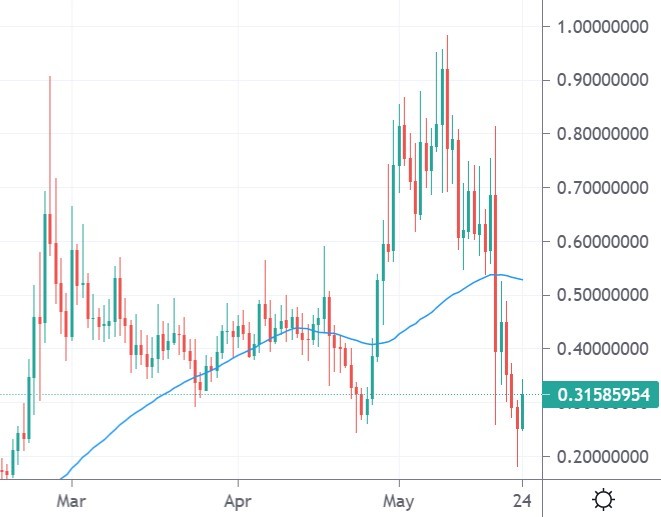
FTM Price Index
The price of FTM has slumped to $0.30 after a rollercoaster move from that level to almost $1.00.
Elon Musk has quickly become one of the most famous entrepreneurs to promote Bitcoin and other cryptocurrencies. His endorsement of crypto began with Tesla this year, but several other recent events have also shaped his position on cryptocurrency.
Tesla Turns to Bitcoin Alternatives
Musk announced on May 12 that Tesla is temporarily suspending Bitcoin payments due to the coin’s power consumption and seeking a low-energy alternative.
“Cryptocurrency is a good idea…but this cannot come at great cost to the environment,” Musk wrote. “We intend to use it for transactions as soon as mining transitions to more sustainable energy.” He added that Tesla is “also looking at other cryptocurrencies that use less than 1% of Bitcoin’s energy per transaction.”
Musk previously asked his Twitter followers if they would like to see Tesla accept Dogecoin, and approximately 80% of respondents replied that they would. However, the firm has not confirmed that it will accept the altcoin.
SpaceX Will Use Dogecoin In Next Mission
In an announcement on May 9, SpaceX announced that SpaceX will launch a “DOGE-1 Mission to the Moon.” The company will send its 40 kg satellite aboard a SpaceX Falcon 9 rocket and fund the payload with the Dogecoin cryptocurrency.
The mission will be carried out in partnership with Geometric Energy Corporation. Geometric CEO Samuel Reid noted in a press release that the upcoming mission will “[solidify] DOGE as a unit of account for lunar business in the space sector.”
Elon Musk confirmed on Twitter that the mission will be “paid for in Doge.” That follows on from a seemingly tongue-in-cheek joke that he made on April Fools’ Day, stating that “SpaceX is going to put a literal Dogecoin on the literal moon.”
Other crypto entrepreneurs have also taken note. Justin Sun, CEO of TRON and BitTorrent, says that he would like to fund another mission.
Previous rumors from Skybridge Capital CEO suggest that SpaceX has also invested in Bitcoin. However, neither Musk nor the company has confirmed that fact.
Saturday Night Live Disappoints Investors
Prior to both announcements, Musk appeared on Saturday Night Live in a highly-anticipated Dogecoin-themed sketch. However, the sketch seemingly disappointed investors, as the price of DOGE plummeted by one-third within hours of the sketch.
Despite rumors of an elaborate “Dogefather” sketch that would parody The Godfather film series, Musk simply appeared as a fictional financial expert named Lloyd Ostertag. He explained the coin in simple terms, called the cryptocurrency a “hustle,” and repeated Dogecoin catchphrases such as “to the moon.”
The sketch’s reception suggests that not only did many investors choose to sell off their DOGE holdings, but the sketch also failed to attract new investors to the coin.
The downturn has only had a modest impact on Dogecoin’s year-to-date performance. Over the past year, the cryptocurrency’s price has risen by 21,600%.
Prior to his appearance, Musk also put a more serious message on his Twitter feed: “Cryptocurrency is promising, but please invest with caution!” he said on May 6.
Tesla and Cryptocurrency
Prior to these recent announcements, Tesla became the testing ground for Musk’s cryptocurrency enthusiasm. The company invested $1.5 billion in Bitcoin in February, and in March, it added the ability for investors to pay for its vehicles with Bitcoin.
Recent updates from the end of April suggest that though Tesla has sold a fraction of its Bitcoin, the company’s investment is now worth approximately $2.5 billion.
Musk’s involvement in cryptocurrency has come a long way since he first tweeted about cryptocurrency in 2018. At that time, he recruited Dogecoin creator Jackson Palmer to help fight Bitcoin investment phishing scams that circulate widely on Twitter.
Later, Musk began to tweet about crypto more frequently, jokingly calling himself “the former CEO of Dogecoin” and posting memes related to the cryptocurrency. Today, he posts cryptocurrency-related content on an almost daily basis.
Despite Musk’s willingness to integrate cryptocurrency into his business, he does not seem to own much personally. In 2019, he stated that he owns 0.25 BTC, an amount that is worth less than $18,000 today. It is not clear whether he has made further investments.
It remains to be seen whether Musk’s other companies—OpenAI, Neuralink, and The Boring Company—will make use of cryptocurrency in the future.
Bitcoin slipped below the $43,000 level on Monday as the 2021 bull market comes under threat. A recent spread of investor flows into altcoins coincided with bearish BTC comments from Tesla founder Elon Musk.
BTC Price Index
The electric vehicle pioneer has backtracked on his support of crypto payments for electric cars due to environmental concerns. He also said that the world’s largest cryptocurrency by market value was not fully decentralized.
The founder of Uniswap, the popular crypto decentralized exchange, ridiculed Musk’s tweet by stating inconsistencies with Tesla battery production.
Adams said:
If we could make Tesla batteries last 10 times longer, with 10 times faster recharge times, at a fraction of the cost, wouldn’t that be great? Yes, but this is incredibly hard to do, and it may take many years of research to get there.
Ideally, Tesla batteries last 10x longer, recharge 10x faster & drops costs 100x. Then it wins hands down.
Musk also made a point that Bitcoin is actually “highly centralized, with supermajority controlled by a handful of big mining (aka hashing) companies.”
The tweet regarding Tesla’s position said:
Tesla has suspended vehicle purchases using Bitcoin. We are concerned about rapidly increasing use of fossil fuels for Bitcoin mining and transactions, especially coal, which has the worst emissions of any fuel.
We discussed on this news site previously that Bitcoin mining is actually proving itself to be green, with the majority of mining being done with renewable energy sources. Musk’s comments are yet another sign that the elite are circling their wagons around BTC and are using the energy and “dirty money” excuses to push future regulation. That will come ahead of the release of central bank digital currencies.
BTC is down 25% for the week and there is a risk of further losses if other corporates or whale investors decide to get involved.
MATIC
Polygon’s MATIC coin was the best-performing asset of the week with a gain of 78%. Polygon is marketed as a framework for building and connecting Ethereum-compatible blockchain networks. The project aims to allow fast scaling of ETH-based apps with lower fees and faster scaling.
MATIC Price Index
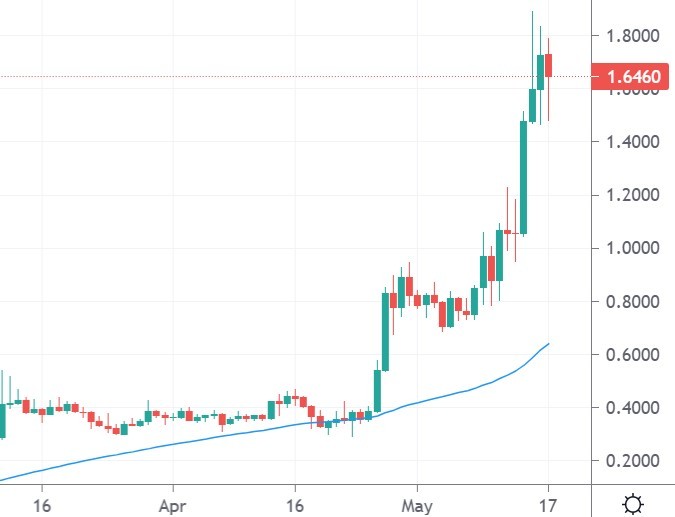
The recent move in the coin sees it rising into the top twenty coins at 19th position with a valuation of $10 billion and a price of $1.65.
Another reason for the rise in MATIC this week was Elon Musk’s comments about Bitcoin’s environmental footprint. Environmentally friendly coins have soared and MATIC, which is proof of stake coin, benefited from the move. Proof-of-stake algorithms allow the largest holders of coins to validate transactions.
The Bitcoin mining sector is said to use a similar amount of electricity as the Netherlands, according to Digiconomist. Bitcoin mining enthusiasts say that it is worth it in the short term, but much of the industry already relies on renewable energy. Bitcoin miners in China spend a lot of time and effort harvesting surplus hydroelectric supplies from Sichuan.
Polygon’s token has seen a strong surge since March and traded at $0.40 at the end of April.
The price of Polygon has been boosted by its own decentralized exchange, QuickSwap, which is gaining momentum with its total value locked (TVL) increasing strongly. QuickSwap was actually a fork of the Uniswap exchange, and it provides much of the same benefits and features.
QuickSwap also offers generous APYs for stakers of liquidity and recent Tweet by the project said that APYs are up to 216% for the ETH/MATIC pair, over 300% ETH/USDC pair, and 250% for DAI/ETH.
KSM
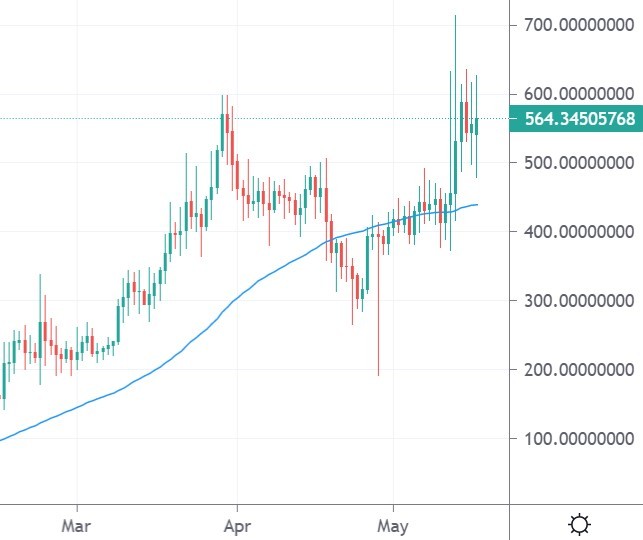
Kusama is another coin that’s been on a meteoric rise, with the coin trading at $1 in 2020 and now testing levels near $600.
KSM Price Index
KSM is also marketed as a scaling solution and was, “built by the same teams as Polkadot, using nearly the same code and tools.”
Kusama aims to attract developers that are interested in the Polkadot network, saying, “…other teams will join Kusama as a temporary preparation ground for deployment on Polkadot.”
The last year has seen the coin move into the top forty coins with a current rank of 35 and a market cap of $5bn.
CELO
CELO was 20% higher on the week as the coin makes slower progress with its price action.
Celo Network is a global payments infrastructure built for mobile devices. The coin started its recent gains after the news that German telecom giant Deutsche Telekom had invested in the coin.
The company purchased an undisclosed batch of CELO coins and has plans to stake them. The company’s subsidiary T-Systems MMS will then act as a validator using the Open Telekom Cloud (OTC), which is the company’s own scalable cloud infrastructure technology.
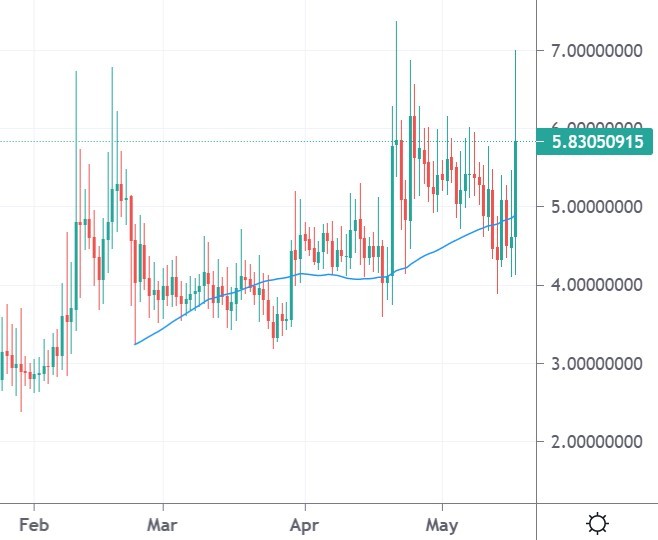
CELO Price Index
The price of CELO has now reached $6.00 but could get higher with a break of the resistance at $7.00.
The indisputable rise of Bitcoin has legitimized it in the eyes of big players. The accessible infrastructure has made even large transactions easy, opening the door for hedge fund entry.
So far, the returns on the investments have been impressive. However, the Bitcoin community is divided on whether this is a good thing. But what are Bitcoin hedge funds exactly, and how do they work?
What Is a Hedge Fund, Anyway?
To understand the mechanics behind a Bitcoin hedge fund, it’s essential to demystify the basic principles of any hedge fund. In short, a hedge fund is a type of investment that uses pooled funds and employs various strategies to maximize profits for investors.
The main goal of a hedge fund is to identify different market opportunities. They’re mostly private transactions constructed with limited partnerships, and they require large amounts of the initial investment.
Investors are also required to keep their money in the fund for a specific time, representing a lock-up period. During that time, they can’t liquidate their assets, and withdrawals are scheduled.
The first hedge fund was launched in 1949 but they didn’t really come to prominence until the 1980s. Today, there are thousands of hedge funds worldwide, and crypto hedge funds are among them.
How Do Bitcoin Hedge Funds Work?
As mentioned, the continuous growth of Bitcoin and its increased accessibility has won over many investors looking to avoid risks as much as possible. There are two basic ways a Bitcoin hedge fund functions.
The first approach involves a fund manager who makes all the important investment decisions. The other option is the systemic approach. This relies on various computer models for trading. The systemic approach reduces risk, as the entire process is more or less automated.
However, the discretionary approach is the preferred choice for most of these hedge funds as it statistically leads to better performance. There are other strategies as well. For example, the quantitative approach represents approaching the market in a directional and market-neutral manner.
The liquidity aspect is crucial here, therefore, the funds for trading are limited. Another possibility is using the multi-strategy approach, which, as the name implies, is a combination of all strategies mentioned. Given that Bitcoin is well-known for its volatility, this is often the approach that brings the best results.
The Two Types of Crypto Hedge Funds
When talking about Bitcoin hedge funds, there is another classification worth noting. There are two distinct types of crypto hedge funds in terms of what types of currency hedge funds manage.
Thus, we have a crypto hedge fund that manages Bitcoin and other cryptocurrencies, primarily Ethereum. The other type manages cryptocurrency as well as other asset classes.
Main Characteristics of Bitcoin Hedge Funds
The promise of great returns makes Bitcoin hedge funds an incredibly appealing idea. However, it’s not so easy to get in on the action.
In fact, Bitcoin hedge funds, like traditional hedge funds, have specific features and prerequisites one has to possess to benefit from them.
They Are Not Very Open
There’s a reason not everyone you know invests in a hedge fund of some kind. Bitcoin hedge funds, in particular, can only take money from “accredited” or “qualified” investors.
Some Bitcoin hedge funds will require the investors to provide over £100,000 of the initial investment. But there are those where the starting investment ranges between £10,000-£25,000.
Essentially, a suitable investor for a Bitcoin hedge fund is the one who has already made tremendous profits on the cryptocurrency exchanges. While there are many successful Bitcoin investors, many more have yet to hit that level.
More Latitude
One of the main perks of hedge funds, in general, is that they can essentially invest in anything. Stocks, land, real estate, and currencies are all on the table.
Unlike mutual funds that stick to bonds and stocks, hedge funds are only limited by mandate. Plus, hedge funds charge performance fees and the expense ratio, a structure known as Two and Twenty.
They Employ Leverage
As Bitcoin hedge funds have been reporting massive success over recent years, managers have also employed leverage as a strategy.
Borrowing money has the tendency to amplify the returns when it comes to hedge funds, making it a popular strategy. Not one without risk, though, as hedge funds can also be wiped out.
Bitcoin Hedge Funds and Regulatory Considerations
One of the most critical questions regarding Bitcoin hedge funds is what is the regulatory angle. Generally speaking, it’s the same as that which applies to traditional hedge funds and regulation.
That means the considerations are based on the fund’s origin jurisdiction and places where it operates. However, there is another aspect that needs to be considered in terms of Bitcoin hedge fund regulations. It applies to the investors who use the Initial Coin Offering (ICO) structure.
They are subject to the respective rules, which are considerably different depending on the jurisdiction. They’re also under plenty of scrutiny from various regulatory and governmental bodies around the world.
Bitcoin’s decentralized system is the main reason why there is plenty of urgencies to regulate everything about it, including Bitcoin hedge funds. But it’s also the reason why so much of the regulation doesn’t exist. A lot of consensus on how to approach the matter is still missing.
Bitcoin Hedge Funds – Investment or Gamble?
There is no doubt that the entire cryptocurrency space has been mostly speculative thus far. This is the main reason why many hedge funds are understandably cautious. Some hedge fund experts see it as a form of gambling, others see it as a major opportunity, regardless of how long it lasts.
The Bitcoin bubble is the buzzword of the day, and everyone seems to be scrutinizing it. However, that doesn’t change anything for hedge funds looking for new ways to make money.
Ultimately, investing in cryptocurrency is risky by default, and it’s crucial to enter the market with all the necessary information and reasonable caution.
Author Bio: Hitesh is a digital marketing strategist and entrepreneur with more than 15 years of experience in digital marketing, start-ups, branding, and customer acquisition strategies. Hitesh is the CEO and Founder of Reposition Group, which specializes in digital growth strategies for companies in the cryptocurrency market such as Bitamp.com.
We use cookies on our website to give you the most relevant experience by remembering your preferences and repeat visits. By clicking “Accept”, you consent to the use of ALL the cookies.
This website uses cookies to improve your experience while you navigate through the website. Out of these, the cookies that are categorized as necessary are stored on your browser as they are essential for the working of basic functionalities of the website. We also use third-party cookies that help us analyze and understand how you use this website. These cookies will be stored in your browser only with your consent. You also have the option to opt-out of these cookies. But opting out of some of these cookies may affect your browsing experience.
Necessary cookies are absolutely essential for the website to function properly. These cookies ensure basic functionalities and security features of the website, anonymously.
Cookie
Duration
Description
cookielawinfo-checkbox-analytics
11 months
This cookie is set by GDPR Cookie Consent plugin. The cookie is used to store the user consent for the cookies in the category "Analytics".
cookielawinfo-checkbox-functional
11 months
The cookie is set by GDPR cookie consent to record the user consent for the cookies in the category "Functional".
cookielawinfo-checkbox-necessary
11 months
This cookie is set by GDPR Cookie Consent plugin. The cookies is used to store the user consent for the cookies in the category "Necessary".
cookielawinfo-checkbox-others
11 months
This cookie is set by GDPR Cookie Consent plugin. The cookie is used to store the user consent for the cookies in the category "Other.
cookielawinfo-checkbox-performance
11 months
This cookie is set by GDPR Cookie Consent plugin. The cookie is used to store the user consent for the cookies in the category "Performance".
viewed_cookie_policy
11 months
The cookie is set by the GDPR Cookie Consent plugin and is used to store whether or not user has consented to the use of cookies. It does not store any personal data.
Functional cookies help to perform certain functionalities like sharing the content of the website on social media platforms, collect feedbacks, and other third-party features.
Performance cookies are used to understand and analyze the key performance indexes of the website which helps in delivering a better user experience for the visitors.
Analytical cookies are used to understand how visitors interact with the website. These cookies help provide information on metrics the number of visitors, bounce rate, traffic source, etc.
Advertisement cookies are used to provide visitors with relevant ads and marketing campaigns. These cookies track visitors across websites and collect information to provide customized ads.