Best Crypto Events: Top 2020 Bitcoin Blockchain Conferences

Biggest Blockchain + Crypto Events to Attend in 2020

Let’s kick off the new 2020 decade with a bang and list all of the top bitcoin events, cryptocurrency conferences and blockchain-centric meetups this year.

With 2019 now behind us, it is hard to ignore how transformational the year ahead will be as excitement for the global blockchain community has never been higher as a whole. In this regard, it bears mentioning that after facing bearish conditions for the price of bitcoin and greater crypto market for the better part of the last year and all of 2018, the digital asset industry is primed for a big shift ahead. These events included are massive catalysts that provide enriching experiences within the ecosystem and also are great excuses to explore the world and get out from behind your computer screen.

In this 2020 crypto events guide, the list reviews a host of worthy conferences, reputable trade shows and notable forums that a lot of tech savvy enthusiasts are looking forward to attending not only to increase their technical, financial and even economical appetite, but also to network with some of the biggest names, players and companies in the crypto industry.

These crypto-focused ‘meetings of the minds’ represent fantastic opportunities to connect in-person and link up face-to-face with industry innovators and crypto influencers that are leading the charge into the new decade of cryptoassets. While daily news and podcasts are great ways to consume the essence of the blossoming bitcoin industry, getting around powerhouse people and innovative individuals who make this space what it is today could be life changing for you. The ability to establish needle-moving relationships and potential partnerships can greatly increase if you attend any these crypto conferences in 2020.

Whether it is picking up a new marketing strategy, business idea or learning about a dApp concept; if you are involved with bitcoin and blockchain there is zero doubt that making the effort and taking the time to show up to any of these crypto events is going to be a worth while educational endeavor that can feed fuel to your financial future.

Without further ado, let’s breakdown the biggest cryptocurrency conferences of 2020 and share some pertinent details (dates, locations, speakers, main attractions) about each to hopefully help peak your interest and expand your knowledge of all things bitcoin and blockchain.

January 2020

Digital Money Forum 2020

  • Date: January 7, 2020
  • Location: The Venetian Hotel, Las Vegas, USA

Much like its last four iterations, Digital Money Forum 2020 will also be sponsored by CES. The event will take place during the first week of January and will feature several attractions that will allow members of the global tech community to explore many key issues currently being faced by the blockchain/crypto industry.

Some of the industry personnel who will be attending the event include:

  • Combiz Richard Abdolrahimi — Emerging Technology & Innovation Leader for Deloitte
  • Jeremy K. Balkin — HSBC’s Innovation Head
  • Steven Becker — President of MakerDAO
  • Stan Bharti — Chairman of Gear Capital
  • Rick Bleszynski — CEO of Splend
  • Michelle Bond — Ripple’s head of Government and Regulatory Affairs, Ripple
  • Michael Casey — Content curator for leading crypto media outlet CoinDesk

Crypto Finance Conference 2020

  • Date: January 15-17, 2020
  • Location: Suvretta House, St. Moritz

Dubbed as an ‘investors-only event’, the Crypto Finance Conference brings together some of the biggest private/institutional investors in the world along with several crypto/blockchain experts. The 3-day event will deal with many topics about this domain and will allow attendees to source high-profile investment and networking opportunities. This year’s conference will feature Gemini’s Cameron and Tyler Winklevoss, Eva Kaili (the MEP Chair of STOA, European Parliament), Michael Sung, Bitfury’s Bill Tai, Coinshare Capital’s Meltem Demirors.

The North American Bitcoin Conference

  • Date: January 15-17, 2020
  • Location: James L. Knight Center, Miami USA

The 2020 version of the much-hyped North American Bitcoin Conference, will be sponsored by Keynote. Not only that, the event will feature two full days of crypto/blockchain-related events as well as various discussions about disruptive technologies that many experts will change how the global finance industry works. Some well-known tech personalities who will be taking part in the event include Binary Financial’s Harry Yeh, Crypto Pioneer’s Nick Spanos, Netki COO Dawn Newton, Alex Tapscott, and Charlie Shrem.

Lastly, it also bears mentioning that the event is open to everyone and anybody looking to attend can simply show up at the conference to join in.

2020 Block Talk Summit

  • Date: January 18, 2020
  • Location: McNally Amphitheater, New York

The 2020 Block Talk Summit will deal primarily with the question “How does blockchain’s future look like in the United States and China?”. It also bears mentioning that this iteration of the event will be hosted by New Power Chain and will feature some of the top blockchain experts (affiliated with different exchange platforms, law firms, crypto platforms) from across the United States and China.

Geneva Blockchain Congress 2020

  • Date: January 20, 2020
  • Location: Geneva, Switzerland

The second edition of the Geneva Blockchain Congress seeks to delve into the topic ‘From laboratory to market via ethics, regulation, and governance‘. As per the official event website, the Congress aims to help foster a healthy exchange of views between international standard-setting bodies and national government agencies that have been tasked with the responsibility of devising crypto/blockchain-oriented legal frameworks. Confirmed attendees include:

  • Louis de Bruin: Executive at IBM Global Business Services
  • Kavita Gupta: Professor at Stanford University
  • Marta Piekarska-Geater: Director at Hyperledger
  • Tina Balzli: Member of the Crypto Valley Association

European Blockchain Convention (EBC)

  • Date January 20-21, 2020
  • Location: Hotel Hesperia Barcelona Tower, Barcelona, Spain

The European Blockchain Convention (ECB) is all set to take place during the third week of January and will feature more than 600+ tech leaders, regulators, investors, devs from all over the world.

The event aims to help provide crypto enthusiasts with a platform to network, form long-standing business partnerships and source potential partners for their business ventures.

As per the official ECB website, the two-day event will seek to delve into the real-life use cases associated with blockchain and DLT across a variety of different domains such as energy distribution, finance, supply chain, healthcare, retail, etc.

Blocktech Connect 2020

  • Date: January 28, 2020
  • Location: McMaster University, Hamilton, Canada

The second iteration of the Blocktech Connect conference will take place during the last week of January in Hamilton, Ontario. The core focus of this year’s conference will be novel technologies such as blockchain, Artificial Intelligence(AI), and the Internet of Things(IoT). Additionally, the day-long event will bring together several industry leaders who will not only present their views on the aforementioned subjects but will also interact with attendees to educate and inspire them.

Some keynote speakers who will be giving an address at the event include established industry personnel such as Chetan Phull, Ramy Nassar, Stephen Worrall, Jerry Qian.

UNLOCK Blockchain 2020 Forum

  • Date: January 28-29, 2020
  • Location: Dubai, United Arab Emirates

The third iteration of the UNLOCK Blockchain 2020 Forum will be a two-day event that will be held in Dubai. The event will deal with a host of issues related to blockchain and decentralization (primarily from the standpoint of individuals living in the MENA region).

Since its inception, UNLOCK has been looking to improve ties between several international and regional blockchain startups. In this regard, it bears mentioning that this year, the conference will seek to discuss and highlight certain niche’ topics like:

  • The regulatory difficulties surrounding blockchain/crypto in the MENA region
  • Benefits and downsides associated with Security Token Offerings (STOs)
  • Rise of crypto exchanges and platforms in the MENA region

Lastly, we need to point out that this year’s conference will host a total of 800 attendees as well as 115 speakers from 70 different blockchain firms. If that wasn’t enough, UNLOCK 2020 will also feature a total of 70 media partners and 30+ investors.

Crypto 2020 Summit ONLINE

  • Date: January 29-31, 2020
  • Location: Online based

The Crypto 2020 Online summit is all set to take place during the last week of January. It will feature a plethora of renowned crypto personalities including MakerDAO’s Mariano Conti, Pantera Capital’s Joey Krug, Bitcoin.com’s Roger Ver, Tone (amongst others).

As part of the conference, the attendees will take part in discussions related to specific topics such as:

  • Why is 2020 all set to be the year of crypto?
  • The most promising crypto projects of 2020
  • The digital currencies that are most likely expected to surge this year.

February 2020

4th International Blockchain Congress (Blockress) 2020

  • Date: February 6, 2020
  • Location: AON Center, Chicago, USA

The 2020 iteration of the International Blockchain Congress (also commonly referred to as Blockress) will be held in Chicago during the first week of February. The event is focused primarily on several issues about technical domains such as blockchain, cryptocurrencies, digital smart contracts and will be attended by many high profile personalities from within this space. Some of these individuals include:

  • Hester M. Peirce: Current Commissioner of the U.S. SEC (also affectionately referred to as Cryptomom)
  • Bill Foster: U.S. Congressman from the State of Illinois
  • Shogo Ishida: CEO at QRC Group
  • Robert Konsdorf: CEO at EOS Detroit

Blockchain Dev Conference 2020

  • Date: February 13 – February 14, 2020
  • Location: Oakland Convention Center, San Francisco, United States

Over the last 4-5 years, blockchain has transformed how a lot of people perceive various crypto-related technologies. In this regard, the Blockchain Dev Conference 2020 will seek to educate the masses about the overall utility of the blockchain protocol, decentralized contracts, and other such innovations.

The two-day event is essentially a part of Developer Week that is scheduled to run from February 12-16, 2020 and will see several high profile tech personalities (such as Jesse Stockall, Synth, Wyatt Floch) present their thoughts and opinions in regards to various issues related to this burgeoning space.

DAS London

  • Date: February 10th, 2020.
  • Location: The Rosewood Hotel, London.

The Digital Asset Summit (DAS) London is one of the most highly-anticipated blockchain events of 2020. The event will focus primarily on institutional clients that are looking to make their mark within the global digital asset ecosystem. Additionally, as part of the event, there will be more than 500+ attendees who will be given a direct opportunity to speak and interact with the representatives of various financial institutions, asset managers, and blockchain pioneers regarding a whole host of issues ranging from digital finance to blockchain’s future potential.

As per the official DAS London website, the agenda for this year’s conference will comprise primarily of key topics such as:

  • Market infrastructure
  • Trading mechanics in exchange and OTC markets
  • Financial derivatives and how best to make use of them
  • The key aspects of ETFs

All of the above-mentioned issues will be tackled directly by established personnel who have been associated with the blockchain/crypto arena for quite some time now. Also, some of the keynote speakers who have already confirmed their appearances at the event include Steve Kokinos, Dr. Ruth Wandhöfer, Diana Biggs, Michael Ippolito.

Blockchain Economy

  • Date: February 20-21th, 2020.
  • Location: WOW Convention Center, Istanbul / Turkey

Widely touted to be one of the most elaborate and comprehensive blockchains/crypto events to take place in the MENA and Eurasia region, the Blockchain Economy conference will be held in picturesque Istanbul during the second half of February.

The event will host several established speakers including crypto billionaire John McAfee, Fundstrat’s Tom Lee, Alex Alexandrov, and Nithin Eapen. Not only that, but it is also expected that several other big-name tech personalities will also be attending the event, however, details regarding the same have not yet been released at this time.

As per the official Blockchain Economy website, the core agenda of the event will look to tackle a whole host of topics related to ‘financial technologies of the future’ that hold the potential to change the world.

NFT.NYC 2020
  • Date: February 20, 2020
  • Location: The Edison Ballroom, New York, United States

Considered to be the world’s leading Non-Fungible Token (NFT) event, NFT.NYC 2020 has been around for a couple of years now. The single-day event will see a total of 500 attendees and 80+ speakers come together in NYC’s Time Square to tackle a whole host of issues that are currently affecting the emerging NFT Ecosystem.

As part of the conference, various NFT experts will present to the world different use-cases where Non-Fungible Tokens have impacted consumer experiences of ownership and identity of digital currencies. Also, according to the official event website, some of the topics that will be discussed at length during the conference include:

  • The various tangible use-cases of NFTs related to enterprises.
  • How can consumer marketing be facilitated through the use of NFTs?
  • Gaming interoperability using NFTs and the different NFTs that provide sports enthusiasts with digital ownership.
  • Regulation of NFTs and how these assets can be used to build trust and confidence across the global finance industry.

CoinGeek Conference 2020

  • Date: February 20, 2020 – February 21, 2020
  • Location: London, United Kingdom

CoinGeek Conference 2020 is a crypto event that will be focusing primarily on the developments surrounding Bitcoin SV, a blockchain platform that is touted to be regulation-friendly and can be scaled on an extremely large scale (that too easily and efficiently).

As part of this year’s event, some of the primary affiliates related to the Bitcoin SV project will be in attendance. They include Dr. Craig S. Wright, Chief Scientist of nChain and one of the foremost proponents of the BSV ecosystem, Jimmy Nguyen, Founding President of the nChain Group and Steve Shadders, CTO for the BSV Node project.

March 2020

Hong Kong Blockchain Week 2020

  • Date: March 2 – 6, 2020
  • Location: Ocean Park Marriott Hotel, Hong Kong

HongKong Blockchain Week 2020 will be hosted by NexChange and will bring together some of the biggest leaders associated with this steadily growing industry. According to the official event website, the conference will serve as a meeting ground for tech enthusiasts, investors, government personnel, entrepreneurs, start-up owners, etc. Additionally, it also bears mentioning that the 2019 iteration of the Hong Kong Blockchain Week hosted more than 3,500 attendees and thus it is expected that this year’s version of the event will be no different.

London Blockchain Week 2020

  • Date: March 4 – March 11, 2020
  • Location: London, United Kingdom

This will be the 6th edition of the London Blockchain Week (LBW) and it is expected that over 3000 odd people will be attending the event. Over the week, participants will be allowed to take part in several meetups, evening receptions, workshops as well as a special blockchain hackathon. If that wasn’t enough, as per the official LBW website, the organizers will also be hosting a competition wherein the heads of 10 different crypto/blockchain projects will be asked to pitch their ideas to a panel of judges (comprising mainly of top venture capitalists). Of the ten, one winner will be chosen and be allowed to present his/her platform at the next Fintech Worldwide event free of cost.

Blockchain Technology World 2020

  • Date: March 11 – March 2020
  • Location: London, UK

As the name seems to suggest, Blockchain Technology World (BTW) 2020 is an event that is dedicated to helping in the widespread adoption of blockchain tech and digital currencies throughout a host of unique industrial domains. However, the primary focus of this year’s event is on the various ‘real-world’ applications of the technology. In this regard, BTW will be hosting a wide array of content from several crypto innovators, entrepreneurs across many different theatres.

Lastly, it bears mentioning that in 2019, a total of 20K technology buyers and influencers from all over the globe attended the conference.

DC Blockchain Summit 2020

  • Date: March 11 – March 12, 2020
  • Location: Georgetown University, Washington DC

The 5th edition of the DC Blockchain Summit will see members of the Chamber of Digital Commerce coming together to discuss the issues that still affect the blockchain and crypto sector at large. The event is scheduled to take place during the second week of March and will be held in partnership with Georgetown University’s Center for Financial Markets and Policy. Some of the attendees who will present their views and opinions as part of the summit include MEP’s Chair of STOA Eva Kaili, Former head of the US CFTC J. Christopher Giancarlo, President of the CDC Perianne Boring and CDC’s CPO Amy Davine Kim.

Blockchain Africa Conference 2020

  • Date: March 11-12, 2020
  • Location: Johannesburg, South Africa

Touted to be one of the biggest blockchain/crypto events to take place in Africa this year, the event will seek to demystify and address many of the business challenges that can potentially be solved through the use of blockchain across this economically ripe region. Additionally, the conference will also seek to educate attendees about the various real-world applications (of this burgeoning technology) that are already being used by different businesses across the globe and hence can be used to help many developing African nations.

Some of the tech innovators and leaders who will be gracing the event include:

  • Tone Vays — Respected cryptocurrency trader and analyst who frequently appears on many tv shows that aired globally.
  • Akhona Damane — Member of the CSIR
  • Gary de Beer — Developer and Digital Specialist for BankservAfrica
  • Mervyn George — Strategy Head and Advisor for SAP Africa
  • Carmelle Cadet — Founder & CEO of EMTECH

2020 Blockchain for Business

  • Date: March 13, 2020
  • Location: RCED, Fayetteville, USA

The 2020 edition of the Blockchain for Business conference will be hosted by Sam M. Walton College of Business. It will bring together some of the foremost academic/industry experts from across this domain to come and explore how decentralized information and value exchange based technologies are slowly but surely changing how businesses are operating these days.

To be even more specific, the keynote speakers at the event will be addressing a host of niche’ topics such as:

  • The advantage and overall utility of open frameworks
  • How should regulations evolve as we move into the future?
  • What are the core fundamentals associated with public, private, permissioned, and hybrid blockchains?

Lastly, it bears mentioning that folks who will be taking part in the conference include Nick Szabo (the inventor of digital smart contracts), Caitlin Long (Chairman of WyoHackathon), Paul Brody (Principal and Global Innovation Leader, EY) and Archana Mehta Sristy (Sr. Director Software Engineering, Walmart).

Blockchain Expo Global

  • Date: March 17-18th, 2020.
  • Location: Olympia, London.

Blockchain Expo Global is one of the world’s largest tech events to focus solely on future digital potentialities such as crypto tech and blockchain. The conference will feature some high profile personalities including William Lovell, Ioana Surpateanu, Leanne Kemp, Mariana Gomez de la Villa, Johan Toll and will take place in London during the third week of March.

As part of the expo, several event showcases will be held by different companies that are not only leaders within this space but are also actively working to create cutting edge blockchain platforms and solutions.

Blockchain Week Rome 2020

  • Date: March 17- March 21, 2020
  • Location: Mercure Hotel, Roma, Italy

With Bitcoin having paved the way for a global financial revolution at the turn of the last decade, Blockchain Week Rome will seek to expose attendees to many industry leaders, startup owners, experts to help them understand the ins and outs of this rapidly evolving sector. In this regard, it bears mentioning that the 5-day long event will see keynote addresses being given by respected industry specialists such as Giacomo Zucco (world-renowned BTC researcher and specialist), Massimo Chiriatti (CTO Blockchain & Digital Currencies IBM) and Gian Luca Comandini (Member of MiSE).

Paris Blockchain Week Summit 2020

  • Date: March 31- April 1st, 2020.
  • Location: Station F, 5 Parvis Alan Turing, 75013 Paris.

One of Europe’s largest blockchain+crypto events, the PBW Summit will feature a total of 2500 attendees from all over the world. not only that, but the conference will also host more than 150 speakers along with 50 sponsors. Lastly, the event will be held in beautiful Paris, France during the last week of March.

According to the official PBWS website, the two-day event will come replete with several insightful talks and workshops that will be conducted by respected members of the global crypto/blockchain ecosystem. In this regard, it should be pointed out that some big-name players who have already signed to give talks at the summit include Arthur Breitman, David Chaum, Hadas Gold, Jack Gavigan, Marjan Delatinne (with more names to be announced within the next couple of weeks).

Finnovex Middle East 2020

  • Date: March 11-12, 2020
  • Location: Conrad Hotel – Dubai, UAE

Finnovex is one of today’s leading tech events that deals exclusively with innovation related to the field of financial services in the Middle East — one of the fastest-growing capital markets in the world. The conference is all set to take place during the second week of March and will deal with several pertinent issues such as:

  • How can banks and other financial institutions located in and around the Middle East match or surpass their international peers?
  • How can startups and other financial entities diversify their products and services?
  • What are the regulatory challenges being faced by firms operating in the Middle East — especially in terms of developing secure financial systems?
  • What are the roles that various banking/non-banking institutions, financial organizations, investment firms can play in helping this niche market sector evolve at a rapid rate?

Additionally, it also bears mentioning that the 2020 iteration of Finnovex will see some of the top C-level executives operating within the financial services industry today.

April 2020

Istanbul Blockchain Week 2020

  • Date: April 6-10, 2020
  • Location: Hilton Istanbul, Turkey

The first iteration of the Istanbul Blockchain Week is all set to take place over 5 days in April. The event is touted to be one of the most anticipated blockchain events of the year and will feature some big-name players from the industry including crypto YouTuber and analyst Ivan Liljeqvist, host of CNBC’s Crypto Trader show Ran Neuner, Founder of EAK Digital Erhan Korhaliller, Cointelegraph executive Kristina Lucrezia Cornèr and Founder of DataDash Nicholas Merten (amongst many others).

Blockchain Revolution Global 2020

  • Date: April 7-8, 2020
  • Location: Toronto, Canada

The second edition of Blockchain Revolution Global (BRG) will bring together some of the most prominent companies, leaders, thinkers and visionaries from the field of blockchain and crypto tech. The event is being hosted by leading independent think tank Blockchain Research Institute and MCI Group and as per the official event website, the goal of BRG is to help “educate, inspire, and prepare leaders” for the incoming blockchain revolution.

Future Blockchain Summit 2020

  • Date: April 7 – 8, 2020
  • Location: Dubai, United Arab Emirates

The 3rd edition of the Future Blockchain Summit will take place during the second week of April in Dubai. The event is going to be co-hosted by Smart Dubai as well as the Dubai World Trade Centre. It will see some of the world’s top tech leaders, government representatives, enterprises, startups come together to discuss a whole host of issues related to the adoption of blockchain on a global scale. Attendees will include Swedish Minister of Infrastructure David Suomalainen, London Stock Exchange’s Blockchain Strategy Head Dotun Rominiyi, Dr. Aisha Bint Butti Bin Bishr, and Hon. Silvio Schembri (Parliamentary Secretary for the Maltese Government).

ANON Summit 2020

  • Date: 15-16 April, 2020.
  • Location: Gösserhalle, Vienna, Austria.

The ANON Summit is gradually becoming one of the hottest destinations for tech enthusiasts all over the globe. The two-day event will focus on many topics such as Artificial Intelligence, the Internet of Things (IoT), crypto platforms, digital assets, and blockchain technology.

At the time of writing this article, it is estimated that ANON will feature a total of 1500 attendees and 100 guest speakers (including some big-name personalities such as Andreas M. Antonopoulos, Walter Kok, Mariya Gabriel, Maximilian Marenbach). Additionally, the event will also serve as a base for budding entrepreneurs who may be looking to network with industry leaders and experts.

FinnoSec Africa 2020

  • Date: April 21-22, 2020
  • Location: Nairobi, Kenya (exact venue will be announced in the coming few weeks)

As many of our regular readers may already be aware of, the continent of Africa currently houses some of the fastest-growing economies in the world. In this regard, many experts believe that as we move into the future, blockchain tech will help this region transform both socially and economically.

According to the official event website, FinnoSec 2020 will serve as a meeting of the minds for several experts from the field of finance, cybersecurity. Some of the attendees include:

  • Titus Mengich Kimaiyo: County Director of ICT & e-Government
  • Bamidele Oseni(FCA), FICA: Group Chief Risk Officer at I&M Bank Ltd
  • Raymond Bett: CEO of startup Salaam as well as President of ISACA (Kenya)
  • Peter Njuguna: CIO of Co-Operative Bank of Kenya
  • Steve Njenga: Country Chief Information Officer, Barclays Bank
  • Christian H. C. Ayiku: CFO of Ecobank Transnational Togo

Blockchain Life 2020
  • Date: April 22 – 23, 2020
  • Location: Music Media Dome, Moscow, Russia

Blockchain Life 2020 is all set to draw in a total of more than 4,800 participants from all over the world to discuss the key aspects associated with this burgeoning sector. Additionally, over the last 3-4 years, the event has become quite a prestigious platform where several market leaders and government representatives come to discuss the influence of blockchain technology on various industries (such as supply chain, healthcare, etc).

May 2020

Blockchain for Europe Summit 2020

  • Date: May 2, 2020
  • Location: Brussels, Belgium

During the first week of May, the Blockchain for Europe Summit (BES) will witness some of the region’s top blockchain players come together to discuss the potential uses of DLT across a host of different sectors (as well as chalk out the implications of the technology on society at large).

Additionally, as per the official event website, BES aims to facilitate collaborations between national, regional and global players to help in the faster adoption, promotion of blockchain technology throughout Europe.

IEEE International Conference on Blockchain and Cryptocurrency 2020

  • Date: May 3-6, 2020
  • Location: Toronto, Canada

The second and latest installment of ICBC 2020 will be hosted by IEEE and will take place in Toronto, Canada during the first week of May. It will feature some keynote addresses, tutorials, peer-reviewed technical paper presentations, etc to help educate attendees about the future of this ever-growing domain. Not only that, as per the official conference website, the authors of a select few papers will be invited to submit their research findings that will then be published in a special issue of the IEEE Transactions on Network and Service Management periodical.

Ethereal New York 2020

  • Date: May 8 – 9, 2020
  • Location: NYC, United States

Along with Consensys, the Ethereal Summit is also considered by many to be a go-to event for blockchain/crypto enthusiasts all over the globe. The conference aims to connect leading developers, companies, and influencers to come together and help shape the future of this industry. In this regard, it bears mentioning that this year’s version of the event will be attended by big-wigs such as Joseph Lubin, Taylor Monahan, Robert Leshner and Laura Shin.

Consensus 2020

  • Date: May 11-13, 2020
  • Location: Hilton Midtown, New York, United States

The consensus is widely recognized (since 2015) by many as being one of the premier crypto gatherings of imminent tech personalities to take place annually. In this regard, this year’s event will also most likely draw in almost every major company, developer, founder, and investor associated with this domain to discuss the key issues currently affecting this industry as a whole. Additionally, the three-day event will also serve as the perfect meeting ground for entrepreneurs, startup owners to network with one another as well as with various Wall Street and Fortune 500 executives.

While the attendee list for Consensus 2020 has not yet been released, it is expected that some of the biggest names from the world of crypto will be attending the event.

Understanding Bitcoin 2020

  • Date: May 28 – 31, 2020
  • Location: The Westin Dragonara, St. Julians, Malta

Understanding Bitcoin 2020 is a 3-day event that will seek to provide crypto enthusiasts with tangible ways in which to eliminate many of the misunderstandings/FUD currently surrounding Bitcoin’s Trustless Network. Additionally, the conference will also discuss the future of Trustless Decentralized Value Transfer and will feature keynote addresses from established industry personnel such as Tone Vays (respected crypto trader and analyst), Dr. Adam Back (Founder & CEO, Blockstream), Alex Petrov (CIO of BitFury).

June 2020

Telco Blockchain Forum

  • Date: June 9, 2020
  • Location: London, United Kingdom

As per the official agenda of this year’s Telco Blockchain Forum, the event will seek to push for blockchain adoption across the global telecommunications industry. Additionally, the conference will come replete with a broad panel of speakers who will be discussing the potential of blockchain within the telecom sector as well as probing its various business cases (concerning this niche domain).

Additionally, the forum will also delve deeper into the various real-life uses for blockchain in telecom (such as whether or not the tech can serve as a viable revenue generator, or work primarily as an open slasher for the industry at large?)

Blockchain for Business Summit 2020

  • Date: June 10 – 11, 2020
  • Location: Excel London, United Kingdom

Following the success of last year’s event, the 2020 iteration of the Blockchain for Business Summit will seek to address the hype and speculation surrounding the digital asset market. Additionally, the event will also look to discuss the various real-world use cases of the technology within a host of different industrial domains and market sectors.

The summit will be attended by many big-name players such as GE Power’s Innovation Head Maher Chebbo, Nordea’s Ville Sointu, Bank of England’s William Lovell and ING’s Mariana Gómez de la Villa (amongst others).

Crypto Valley Blockchain Conference

  • Date: 11-12 June 2020.
  • Location: Rotkreuz, Switzerland

The third and latest edition of the Crypto Valley Conference (CVC) will be held during the second week of June in Rotkreuz, Switzerland. The two-day event will feature many discussions that will tackle pertinent issues related to blockchain technology. As per the official conference website, CVC will host more than 50+ presentations from global industry leaders.

Additionally, but the event will also present attendees with:

  • Carefully selected research studies that deal with the academic aspect of crypto and blockchain tech.
  • Interactions with several high-profile individuals from different corporate environments, academic institutions, start-ups, and government entities.
  • Product showcases from a large number of companies.
  • Panel discussions that offer challenging opinions.

Lastly, it bears mentioning that the Crypto Valley Conference will be attended by more than 700 individuals, 100+ investors, 10+ exhibitors, and 200+ companies.

July 2020

Blockchain Summit: The Business of Blockchain

  • Date: July 1-2, 2020
  • Location: Olympia Conference Centre, London, UK

Blockchain Summit 2020 will offer attendees access to a number of tech influencers and disruptors from all over the world. This year’s edition of the conference will feature a total of 200+ speakers hailing from various industries such as blockchain, AI, finance and will serve as a platform for different vendors to discuss, demo and showcase their products to the global tech market at large.

Supply Chain on Blockchain Conference 2020
  • Date: July 13, 2020
  • Location: Fishburners Event Space, Brisbane, Australia

As the name seems to suggest, the Supply Chain on Blockchain Conference seeks to bring together supply chain operators with various blockchain researchers, independent developers, government officials to discuss a wide range of niche issues related to this domain (such as provenance, supply chain financing, deal negotiation, and Logistics).

Blockchain Expo Europe

  • Date: July 17-18th, 2020.
  • Location: RAI Amsterdam.

Widely considered to be one of the world’s largest blockchain-oriented conferences, the event focuses primarily on things like:

  • The future of enterprise technology
  • The potential of blockchain and crypto

In addition to this, as part of the two-day event, there will also be a number of event showcases that will be conducted by various leading brands from this rapidly evolving industry.

Mining Disrupt Conference (MDC) 2020
  • Date: July 22 – 23, 2020
  • Location: DoubleTree by Hilton, Miami, United States

MDC is widely recognized as being one of the world’s largest crypto oriented conferences to feature a number of established miners, hosters and even ASIC Makers. As part of this year’s event, attendees will have the opportunity to learn about the various disruptive blockchain startups and platforms that have the potential to completely revolutionize this industry. Not only that, it is expected that MDC 2020 will be attended by more than 1,000+ experts, influencers, and strategists from all over the world. Some of these individuals include:

  • Irene Gao — International Sales Manager, Bitmain
  • David Vorick — CEO, Co-founder of Obelisk ASIC Manufacturer + Lead Developer of Sia
  • Navdeep Garg — Tech Executive for BitTorrent
  • Philip Salter — Head of Mining Operations, Genesis Mining

August 2020

Blockchain Summit Singapore
  • Date: To be decided
  • Location: Suntec, Singapore

The day-long event will feature more than 700 industry leaders, innovators, and decision-makers who will come together to help attendees understand the various ins and outs associated with this constantly evolving technology. And while the guestlist for this year’s summit has not yet been announced, going by the personnel who have attended the event in previous years, it is expected that some of the most prominent names from this space will attend this year’s conference.

Blockchain Training Conference

  • Date: To be decided
  • Location: Denver, Colorado

This year’s Blockchain Training Conference is all set to feature a number of in-depth interactions with members of the global blockchain sector. As per the official event website, the conference will come replete with a total of 16 hours of educational content that is tailored to help people maximize their knowledge of all things related to this burgeoning domain.

Forum Blockmaster

  • Date: To be decided
  • Location: São Paulo, Brazil

Forum Blockmaster is widely considered to be Brazil’s premier crypto/blockchain event. This year’s version of the event will see a number of South America’s leading tech developers, business owners, and crypto enthusiasts come together to not only network with one another but also share their knowledge, insights and connect with regional and international attendees.

September 2020

Blockchain in Oil & Gas Conference

  • Date: September 16-17, 2020
  • Location: JW Marriott Houston, United States

The 4th edition of the annual Blockchain in Oil & Gas conference will take place during the third week of September and much like its predecessor will witness more than 40+ speakers and 200+ attendees. Additionally, it bears mentioning that the event will be held in partnership with the Oil and Gas Blockchain Consortium — an entity that comprises of well-known industry giants including Shell, Equinor, Chevron, Hess, Repsol (amongst others).

As per the official event website, this year’s conference will look to explore the various ways in which blockchain can be used to by oil & gas firms to streamline their internal operations as well as maximize their overall productivity. Not only that, but the conference will also feature live demonstrations of various blockchain-based governance frameworks that can be used to replace the industry’s existing legacy systems.

October 2020

Voice of Blockchain 2020

  • Date: October 5-6, 2020
  • Location Venue SIX10, Chicago, United States

According to a host of information available online, this year’s version of the Voice of Blockchain (VoB) conference will seek to provide members of the global blockchain ecosystem with a platform to interact with one another in a highly streamlined manner — thus allowing them to maximize their networking opportunities.

It is expected that the core agenda for the event will be announced by 1/31/20.

Crypto Invest Summit 2020
  • Date: October 6 – October 7, 2020
  • Location: Los Angeles Convention Center, Los Angeles, United States

Also referred to as CIS, the event is widely considered to be one of the world’s leading crypto conferences/expo’s to focus on niche’ topics like blockchain investing, crypto adoption, etc. Additionally, it should be pointed out that this year’s conference will be hosted by Goren Holm Ventures and will be attended by a number of innovators, leaders, entrepreneurs, startups, angel investors, venture capital investors, retail investors, family offices, real estate investors who have been associated with the blockchain space for many years now.

Previous attendees include Steve Wozniak, Tim Draper, Dan Morehead, Bill Barhydt, and Apolo Ohno.

November 2020

MoneyConf

  • Date: November 2 -3, 2020
  • Location: Lisbon, Portugal

MoneConf 2020 is a two-day event that will host more than 5000 attendees from more than a hundred different countries. In terms of what the event offers, the conference will come replete with a number of keynote addresses, practical workshops, networking sessions that will allow individuals to maximize their knowledge of topics such as blockchain, crypto, AI, decentralization, DLT, etc.

Blockchain Expo North America

  • Date: November 4-5, 2020
  • Location: Santa Clara Convention Centre, United States

The fourth edition of the annual N.American Blockchain Expo will draw in leaders, experts from a number of industries to discuss issues related to a variety of niche’ domains such as blockchain, IoT, 5G, cybersecurity, cloud technology, AI and big data.

Additionally, it also bears mentioning that the event will feature a number of keynote speeches, interactive panel discussions and solution-based case studies that will not only allow attendees to learn about the various facets of this ever-evolving space but also allow them to gain a better grasp of some of the finer details of this technology.

Lastly, as per the official agenda of the event, the conference seeks to help people discover the core industries that can be disrupted through the use of blockchain tech. Some of these market sectors include retail, finance, healthcare, insurance, energy, music, government, real estate.

Decentralized 2020
  • Date: November 11-13, 2020
  • Location: Limassol, Cyprus

Hosted by the University of Nicosia, the fourth annual Decentralized conference will be held during the second week of November. As many of our readers may already be aware of, the event is widely considered to be one of Europe’s premier conferences on blockchain and digital currencies. In this regard, it bears mentioning that Decentralized 2020 will see some of the world’s leading business execs, as well as academic experts, come together to discuss the various trends and developments affecting this space. Previous attendees include blockstream’s Dr. Adam Back, CDC’s Perianne Boring, and Eva Kaili.

IMTC 2020

  • Date: November 16-19, 2020
  • Location: Miami, United States

IMTC 2020 will see a total of 500 odd participants coming together from all over the globe to not only network with one another but also learn about the latest developments taking place within the world of blockchain and crypto-related finance. Speakers at this year’s event will include big-name personalities such as George Harrap, Leon Issacs, Nina Hulsken.

Best 2020 Crypto Events and Conferences: Final Word

What a jam packed year it will be in the land of bitcoin. As the blockchain-based era dawns upon us all in 2020 and beyond, from the halving event coming up to any one of these listed cryptocurrency-centric conferences, a wise word to all crypto enthusiasts, advocates and zealots is to make the rounds and start networking with peers, find new interesting suppliers or vendors and begin positioning yourself for the best chance at success in this amazing world of cryptoassets.

Whether it be increasing your awareness or gaining clarity, these blockchain-related crypto events will transpire a different level of inspiration and motivation you can take back home. Oh, and one final thought – be sure to have fun! Attending any of these bitcoin events will be advantageous to pick up strategies, insights and analysis that you simply won’t find on crypto twitter.


The post Best Crypto Events: Top 2020 Bitcoin Blockchain Conferences appeared first on Master The Crypto.

Go to Source

Former US Director of the Cybersecurity: Crypto ransomware ‘running wild’

Ransomware is something the “average American” is worried about, says former cybersecurity top dog Chris Krebs

Former Department of Homeland Security official Christopher Krebs called for greater governmental oversight of cryptocurrency in an interview yesterday, saying that anonymous payments are a threat “the average American is concerned about.” 

In an interview on Late Night with Bill Maher, Maher asked the former U.S. Cybersecurity & Infrastructure Security Agency director about his thoughts on Bitcoin.

“What’s gonna happen with Bitcoin? Where do you see that going? That’s in sort of your area, I see it bringing down civilization, but maybe I’m being anti-intellectual,” said Maher.

“Cryptocurrency is, as I see it, is one of the single enabling factors that has allowed cyber-criminals to deploy a massive amount of ransomware across our state and local agencies,” said Krebs. “It’s the anonymous payments, the ability to pay anonymously. And I think that is the cyber-threat that the average American is concerned about.”

Maher noted that 1600 schools have been hit with ransomware (citing a report from IBM), and Krebs added that there have also been attacks on “hospitals, and government agencies, I mean we had, Baltimore’s been hit twice, Atlanta, Mecklenburg county North Carolina, 23 counties in Texas, Louisiana’s been hit a couple times.”

“And they just want money. This isn’t anything sophisticated, this isn’t ideological,” Maher responded, comparing — puzzlingly — the ransomware attacks to the plot of the movie Die Hard. (Shortly after, Krebs incorrectly referred to the fictitious Nakatomi Plaza as “Nakasomi Tower”).

Krebs went on to warn of “bad guys” running wild if there are “no consequences.” He recommended “looking at” cryptocurrencies in exchange wallets, pressuring countries that cyber-criminals call home to crack down on illegal activites aimed at the U.S., and helping state and local governments improve their defenses.

Ransomware has been on the rise the last few years, likely contributing to an image problem in the cryptocurrency space. One recent poll indicates that only 43% of respondents believe cryptocurrency is a valid form of payment, and another from 2020 shows that 90% of respondents are “worried” about cryptocurrencies being used to launder money.

Krebs, who rose to prominence after being fired by former president Donald Trump because of Krebs’ vocal dismissal of election fraud conspiracy theories, may be aligning his publicly stated views with popular opinion in preparation for a run for office. The former bureaucrat has also floated policy proposals such as investing in state and local cyber defense and education programs.

Go to Source

Recur raises $5 million for perpetual cross-platform NFT royalties

A seed round in a new NFT platform is a promising step towards universal NFT royalties

Can a new non-fungible token (NFT) platform finally solve the problem of ecosystem-wide royalties?

NFT platform Recur announced on Thursday a $5 million seed round led by the DeFi Alliance, Delphi Digital, Ethereum co-founder Joe Lubin, and Gemini, among others.

The raise claims a number of notable superlatives, including the first seed investment in the NFT ecosystem from industry veteran Gary Vaynerch, as well as the largest seed round ever for a NFT project (Dapper Labs has raised many multiples more money over its three year fundraising history, but largely in Series A rounds).

Currently there are a number of platforms that allow NFTs to impart royalties to artists after every secondary market sale, including Foundation, Zora, and Euler Beats developer Treum. Recur’s key innovation will be a ERC token standard that will allow royalties to function regardless of platform.

“RECUR’s technical team is involved in the official process for Ethereum improvements (EIP), and our technology will be implemented at the blockchain layer,” said Recur co-CEO Zach Bruch. “By doing this it will allow the NFTs minted on our platform to move freely around the ecosystem while still generating recurring royalties for the owners and IP holders. Ultimately, our goal is to make NFTs chain-agnostic and keep NFTs and royalties decentralized.”

Bruch did not reference a specific EIP his team is working on. Similar proposals, such as EIP-2981, which adds standard royalty functionality to the ERC-721 NFT standard, are also in the works.

While the NFT space is growing increasingly crowded (and Recur’s royalties will presumably be applicable ecosystem wide) one other way to stand out is through headline-grabbing licensing and intellectual property acquisition. To that end, Recur is bringing some former media industry heft to the fore via former Disney executives Stephen Teglas and Chris Heatherly. Teglas in particular held a position with Disney’s Licensing department.

“RECUR is working with some of the largest brands in the world which will be announced in the coming months,” said Bruch. “We are exclusively working with Blue Chip brands to help them bring their IP to the largest audiences possible.”

The press release says the first Recur “brand experience” will be released in the summer of 2021.

Go to Source

At what Bitcoin price will Satoshi Nakamoto become the world’s richest person?

Bitcoin price reaching $182,000 would probably make Satoshi Nakamoto the richest person on the planet.

It is estimated that Satoshi Nakamoto, the creator of BTC, will become the world’s richest person if the price of Bitcoin (BTC) hits approximately $182,000.

As of March 2021, Amazon founder Jeff Bezos is the richest person on earth with a net worth of $181.6 billion.

Elon Musk, the CEO of Tesla, is a close second at $163.7 billion, owning more than 20% of the electric car maker.

How much BTC does Satoshi Nakamoto have? 

Satoshi Nakamoto, the creator of Bitcoin, released the Bitcoin whitepaper in October 2008 under a public MIT license.

On Jan. 3, 2009, Bitcoin’s first block, known as the “genesis block,” was mined. This marked the launch of the Bitcoin network, which kickstarted the cryptocurrency and blockchain movement. 

Albeit the exact figures remain unclear, from January to July 2009, Satoshi Nakamoto is estimated to have mined over 1 million BTC. This means that at current Bitcoin prices, it is estimated that Satoshi Nakamoto is worth roughly $54 billion.

In other words, if the price of Bitcoin hits $182,000, this would put Nakamoto’s net worth at around $182 billion, which is higher than the current net worth of Bezos.

In 2010, Sergio Demian Lerner, a prominent cryptocurrency researcher, published a research paper estimating the BTC holdings of Satoshi Nakamoto. 

By analyzing the early blocks that Satoshi mined, Lerner estimated that 1 million BTC is likely owned by Satoshi. He wrote:

“I estimate at eyesight that Satoshi fortune is around 1M Bitcoins, or 100M USD at current exchange rate. I’m sure there will be plenty of people that will carefully analyze the source data set and come up with the exact figure, which will be very close, but nevertheless they will scream at me again.”

Lerner’s analysis of the blocks Satoshi mined. Source: Sergio Lerner

Can the price of BTC hit $182,000?

While there are many price models that predict the price of Bitcoin to reach anywhere between $200,000 to $1 million, the most well-known model is the Stock-to-Flow (S2F) model.

The S2F model forecasts the price of Bitcoin to hit $100,000 to a “conservative” $288,000 by the end of 2021, using a formula based on the relationship between the value of Bitcoin versus the existing supply (stock) and the amount of newly mined BTC entering the market (flow).

In November 2020, PlanB, the creator of the S2F model, said:

“People ask if I still believe in my model. To be clear: I have no doubt whatsoever that bitcoin S2FX is correct and bitcoin will tap $100K-288K before Dec 2021.”

The stock-to-flow model. Source: PlanB

If Bitcoin rises to as high as $288,000 as per the S2F model, Satoshi’s fortune would be worth around $288 billion, which should put the creator far out in front of Bezos and Musk. 

Meanwhile, some other Bitcoin price predictions have been even higher for the current bull cycle. For instance, Bloomberg predicted that BTC could reach as high as $400,000 if it becomes a “risk-off” reserve asset.

However, the identity of Satoshi remains a mystery and it isn’t known whether the person(s) is even alive today. Industry experts have suggested the likes of Hal Finney, Adam Back, and Paul Le Roux as potential candidates, as well as others presuming that it could have been a group of individuals. 

Go to Source

Liquidity mining is booming — Will it last, or will it bust?

Liquidity mining is a marked and significant improvement over the investment mechanisms of ICOs, but is it here to stay?

By the end of 2018, many crypto skeptics had their “I told you so” moment, as many initial coin offerings, or ICOs, failed to deliver on their promises. Between 2017 and 2018, 3,250 projects were launched via ICO and $21.4 billion was collected from investors. But by early 2018, a study revealed that nearly half of 2017’s ICOs had failed — with another 13% considered “semi-failed” — dealing financial blows to coin purchasers anticipating gains. Many projects achieved very high returns initially, only to see coin values fall precipitously thereafter. 

Related: Did you fall for it? 13 ICO scams that fooled thousands

It’s important to note that many other ICOs were successful, launching projects that are still thriving today (Chainlink being one such stalwart example). Despite the successes, however, investors have been hesitant to forget the less fortunate tales — over the past couple of years, ICOs have slowed to a trickle.

Perhaps skeptics celebrated a bit prematurely. While ICOs may not have proven to be the optimal funding mechanism for decentralized projects, the fundamental promise behind these innovations remains. Innovations continue, and a new methodology for bootstrapping — liquidity mining — has moved in to fill the gap.

Related: DeFi liquidity pools, explained

In liquidity mining, a project offers its tokens to anyone willing to deposit their funds into a smart contract. Let’s look at a hypothetical example: “Cranberry Finance” offers the liquidity provider token “Cranberry Coins” to any user who deposits Cranberry and Ether (ETH) on Uniswap. In addition to earning fees collected from each trade between Cranberry and ETH on Uniswap, everyone who stakes their liquidity provider tokens in a smart contract can earn more coins from the project. Depending on the price of Cranberry Coins, the rate of Cranberry rewards, and the amount of liquidity provided, the annualized returns from liquidity mining programs can range from double-digit yields on the lower end to annual percentage yields of over 10,000% for riskier projects.

The proliferation of both liquidity mining and decentralized finance, or DeFi, has surprised even eternal industry optimists (myself included). Today, the market capitalization for DeFi stands at over $80 billion, with a total value locked of over $67 billion (compared with the $5.4 billion raised by ICOs in all of 2017). While liquidity mining was only first implemented at scale in mid-2020, it is clear a new boom has been born.

For many though, questions remain: Will this boom eventually bust? Will investors looking for high yields once again be left holding the bag?

ICOs and liquidity mining share some elements in common: The onus is still on the investor, as it always is, to know what they are investing in and assume the risks (and the risks are real). But I believe the answer to the above questions is that there are fundamental differences between ICOs and liquidity mining, differences that make liquidity mining a more sustainable funding model for long-term value creation, for both the project developers and their investors. Let’s explore how ICOs and liquidity mining differ.

Contrasting the native elements: ICOs vs. liquidity mining

ICOs provided a mechanism for distributing tokens, gaining funding and building a coin user base. However, some of the flaws inherent in the system became evident. Investors typically saw high returns immediately following the ICO, but values often dropped thereafter. Because the tokens themselves conferred no legal rights, income-generating capabilities beyond the market value of the coin, nor governance over the project, there was little incentive for many to continue to hold tokens. Many investors took early gains and cashed out, which did little to support coin growth. Some ICO projects were proven to be scams, affected by hacks, or poorly conceived projects with inadequate management teams that spent invested capital on extravagances.

Liquidity mining operates on a fundamentally different principle. As trading volume on decentralized exchanges surpasses centralized exchanges, a token’s marketability is dependent on having sufficient liquidity on a decentralized exchange; yet, it can be a challenge to attract liquidity to support an exchange, derivatives contract, lending platform, etc. Distributing tokens to liquidity providers is the primary mechanism for initially inviting the needed liquidity. The tokens have more value than the face value of the coin by offering yield — and often governance rights — incentivizing both a sense of ownership in the project and longer-term retention. More liquidity attracts more users, and more users provide more financial payback to liquidity providers, creating a continuous positive feedback loop.

It’s also important to note that the characteristics of the growth of DeFi and the ICO bubble are quite different. While often unsavvy retail investors dove headfirst into the ICO boom cycle, we are seeing fewer investors with more highly specialized industry knowledge of the market embracing DeFi. That said, FOMO — the fear of missing out — is human nature. There will always be those who are so tempted by the potential gains, they can’t resist the urge to “ape” in.

Not all that glitters is gold: Thoroughly research projects

While I believe that liquidity mining and DeFi are, in general, based on solid fundamentals, not all projects are created equal. I am neither an investment advisor nor a tax attorney and can’t tell you which projects are more advisable than others.

I will, however, recommend that any investor understands full well what they are getting into. Each project has differing leadership, governance structures, marketing plans, innovations, security frameworks, and plans to build and incentivize community involvement. All of these factors are important to consider in any investment decision.

Gold, silver, crypto, DeFi: Change is inevitable but rarely linear

The history of what we consider currency — and the staccato pace of innovation — teaches us that change will continue, but not always in a predictable fashion. While the methods for gaining investments for blockchain projects have gone through some starts and stops, I believe liquidity mining is here to stay.

That isn’t to say another mechanism won’t eventually take its place if it proves to serve the community even better — after all, that is the essence of innovation.

This article does not contain investment advice or recommendations. Every investment and trading move involves risk, and readers should conduct their own research when making a decision.

The views, thoughts and opinions expressed here are the author’s alone and do not necessarily reflect or represent the views and opinions of Cointelegraph.

Willy Ogorzaly is the senior product manager at ShapeShift, an international, noncustodial cryptocurrency leader. He is responsible for advancing product strategy, defining new features and solutions, and ensuring new products meet the needs of an evolving, innovative and dynamic crypto and DeFi landscape. Before joining ShapeShift, Willy co-founded Bitfract (acquired by ShapeShift in 2018), the first tool enabling trades from Bitcoin into multiple cryptocurrencies in a single transaction.

Go to Source

Three Reasons Why Ethereum Will Overtake BTC as Early as 2021

Brian Kelly is the founder and CEO of BKCM LLC, a cryptocurrency fund. While the world’s attention is focused on Bitcoin (BTC), he highlights Ethereum as a more reliable and promising investment asset.

“The fact that BTC is now the fastest growing and most expensive cryptocurrency does not mean that it will not be overtaken by another, more interesting competitor in the next 10 or15 years,” says Kelly.

So why Ethereum? Kelly identifies 3 main reasons why you should pay attention to the “second cryptocurrency” instead of the market leader.

1. “Ethereum futures are just around the corner”

Even considering that the US Securities and Exchange Commission (SEC) decreed that Ethereum is not a stock, the introduction of ETH futures is quite possible, because there is already an Ethereum index, Kelly said.

“After the introduction of the ETH index, the value of the cryptocurrency soared by 30% in just a week. It is possible that if the futures are approved, the cryptocurrency will repeat or even surpass this growth,” he explains. 

2. Cryptocurrency mining software

One of the main reasons why Bitcoin is worse than ETH is the terrible harm to the environment from “mining” of the first cryptocurrency. Bitcoin is mined using graphics cards, which, in the process, emit a huge carbon footprint, comparable in scale to a country like New Zealand. 

At the same time, ETH is much more environmentally friendly, which is especially important in view of the upcoming UN meeting regarding the ecology, believes Kelly.

3. Ethereum is not just a currency

The third and perhaps the main feature of Ethereum is that it is not only an asset for saving or speculation, it is a whole “decentralized prediction market!”.

The decentralized and unregulated prediction platform Augur has been in development for about 3 years, the exact time is unknown. Its task is to analyze a huge amount of information (news, support and resistance levels, crowd behavior and a million more different factors) in order to produce unmistakable forecasts and signals for trading in the cryptocurrency market.

Although the platform is not ready yet, you can already find an unofficial project on the net that uses the Augur technology. Officially, the partnership between CryptoTrader and the Augur platform has not been confirmed, but the huge number of profit publications speaks for itself. 

Here are some examples:

“Ethereum-linked platform gives recommendations on the purchase or sale of its own cryptocurrency. It sounds absurd, but it’s true!”, says Kelly.

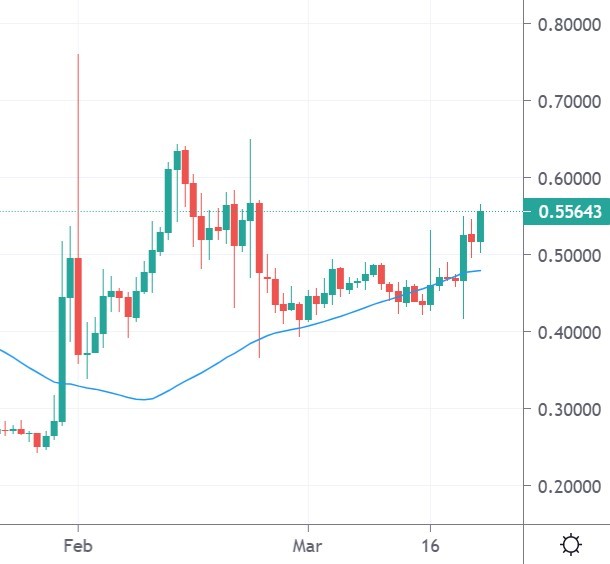
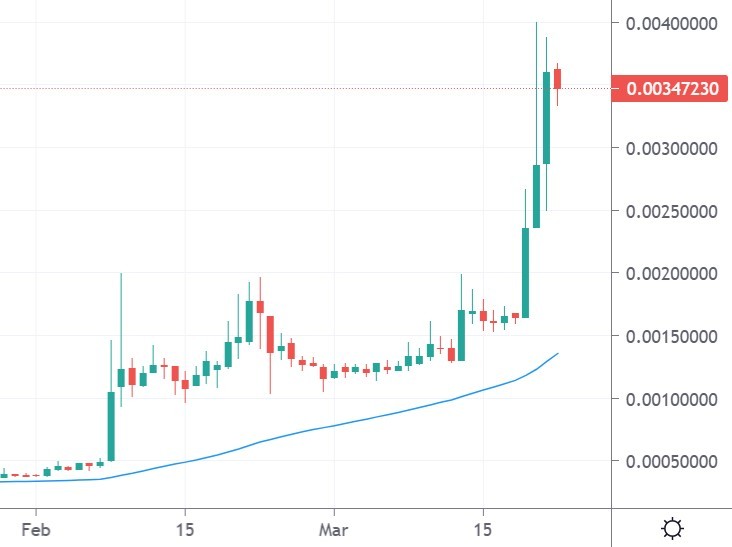
“So far, the platform successfully predicts the movement of other currencies, as well. You can see for yourself”, says the investor.

“You can make money on speculation, but this is a big risk, you need to have knowledge and skills to predict cryptocurrency movements. I remain loyal to Ethereum cryptocurrency, so much so that 20% of my assets are invested in ETH. But now there is a more interesting and reliable option – CryptoTrader. I will continue to follow the development of this platform and its results. I can afford not to stretch for yield,” concluded Kelly.

Register now

Go to Source

How Protected Is a Bitcoin Casino from Hacks and Thefts?

However, anybody considering visiting a Bitcoin casino will appropriately have worries about wellbeing. 

Gambling itself is a hazardous business, and there have been a few prominent hacks and burglaries in the cryptographic money market. 

In spite of this, gambling with Bitcoin isn’t really pretty much as unsafe as you might suspect. It could even be contended it’s safer than gambling with fiat money. 

Why utilize a Bitcoin casino? 

Gambling with Bitcoin rather than regular monetary forms brings an entire host of benefits. 

Perhaps the greatest advantage is the speed at which you can get to your rewards. 

Creating a withdrawal in a traditional currency can take around seven days to finish because of the administration in question. 

A Bitcoin withdrawal, then again, can be finished inside the space of minutes because there is no requirement for exchanges to be affirmed by an outsider. 

Another advantage is low expenses. Since there is no outsider endorsement measure, clients can send and get Bitcoin immediately for an immaterial expense. This is an unmistakable difference to traditional online casinos, where move expenses can be high. 

A few groups likewise like the protection that a Bitcoin free bonuses on allvideoslots. You can store, pull out, and play in complete namelessness. 

Security 

Despite the fact that hacks and burglaries are normal in the cryptographic money market, it merits calling attention to these are to a great extent restricted to crypto trades. 

There still can’t seem to be a significant burglary at a Bitcoin casino. Indeed, Bitcoin casinos could be viewed as more secure than traditional casinos because of Bitcoin’s cryptographic nature. 

Bitcoin exchanges are scrambled and confirmed a few times at various focuses on the organization. The private keys utilized in moves are amazingly extensive, making them difficult to decipher and, apparently, more secure than utilizing a Mastercard. 

Spotting rebel casinos 

Having said all that, there are acceptable and awful Bitcoin casinos out there – similarly as there are acceptable and awful traditional casinos. 

There are at present three Bitcoin casinos on the ‘boycott’ at Casino.org: Euro Play Casino, Grand Reef, and Balzac Casino. They are considered risky because of issues, for example, obnoxious strategic policies, uncertain client issues, free gameplay in free mode, moderate installment time, and no data on licenses. 

Given the plenty of Bitcoin casinos accessible, it merits doing your due persistence to guarantee you pick one you feel totally great with. 

The principal thing to pay special mind to is legitimate accreditation and certificate. In the UK, that implies checking the Bitcoin casino has a permit from the UK Gambling Commission. 

Generally protected and permit Bitcoin gambling administrators in the UK would likewise join forces with true capable gambling associations, like Game Care or Gamblers Anonymous. 

Different strides to incorporate understanding audits and evaluations from free survey locales, exploring the invite reward cautiously, guaranteeing games are fueled by trustworthy programming suppliers, and searching for a casino with a huge assortment of games. 

You may likewise need to go with a casino that offers a framework called ‘probably reasonable’. This is an apparatus that empowers you to confirm each move result and guarantee you’re not being cheated by the casino. 

Beginning 

Whenever you’ve discovered a Bitcoin casino you trust, you’ll need to set up a Bitcoin wallet to store your Bitcoin reserves. 

Wallets come in three structures: online, programming (disconnected), and equipment. It’s essentially all around acknowledged that equipment wallets are the most secure type of wallet while online wallets are simpler to utilize. 

Whenever you have your wallet set up, you can set aside your installment by entering the online casino address in your wallet. The supports will show up in your casino balance in practically no time, and you would then be able to begin playing. 

End 

In principle, a Bitcoin casino isn’t any less protected than a traditional online casino – and from numerous points of view, it could really be safer. 

The main thing to check is that the site is respectable – this is particularly imperative given the unknown, irreversible nature of Bitcoin. Luckily, there are heaps of autonomous survey locales that can assist you with evaluating every casino’s authenticity. 

With the advantages that Bitcoin gambling offers – namelessness, rapid stores and withdrawals, low charges, and provably reasonable gaming – it’s not difficult to perceive any reason why Bitcoin casinos are getting on quick.

Go to Source

“Unbanking” The Planet: Examining The Blockchain’s True Calling

As Q1 2021 rolls towards its inevitable close, all eyes are on Bitcoin and its crypto brethren. Will the market hold onto its remarkable gains for the first quarter of 2021? Will the market crash in Q2, shedding exponential percentage points in an ever-dipping barrage of red candlesticks? Is all this speculation just fueled by hype, or can the crypto market gain enough traction to come to rival the established institutional stock and commodity markets? 

These are the questions that define the cryptocurrency community in 2021, and these are the questions that mainstream media outlets, venture-capitalist billionaires and institutional investors want answered. But, answering these questions is nearsighted, and the future of cryptocurrencies, decentralized finance (DeFi), and the crypto-revolution will have little to do with the profits produced during Q1 2021. Right now, the cryptoverse has developed some seriously speculative “gain-fever”, and the potential of swelling marketcaps has stolen the show away from the fundamental purpose of blockchain technology. 

The truth is, cryptocurrency technology was never meant to post quarterly gains. The idea of getting rich by speculating on the market value of utility tokens or decentralized currencies is just a side effect of the real purpose of cryptocurrency technology. Crypto was invented to fix money, not to make money. I won’t bore you with the “ideologies” that fueled the early crypto-boom, you’ll just have to trust me when I say that blockchain technology was invented to bring financial security to an entire planet through radical change. How, you ask? By eliminating centralized banks and poisonous government policies, not by giving retail and institutional investors yet another market to be manipulated for their benefit, only to have the value liquidated back into broken fiat currencies.

So, if you really want to know if Q1 2021 means anything, you must forget about the moon, your next lambo, or what Elon Musk thinks about anything, and examine the idea that spawned Bitcoin in the first place: Unbanking the planet.

Banking the Unbanked – The First Step

According to a 2019 report from the US Federal Reserve, some 22% of American adults are either “Unbanked” or “Underbanked”. These terms define a subsection of the population that either relies solely on cash transactions, or supplements their lack of financial inclusion via payday loan services, pawnshop loans, paycheck advances, tax refund advances, or auto title loans.

Zooming out to the global picture, a whopping 1.7 billion adults were unbanked as of 2017, according to the World Bank’s Global Findex report. This means that almost a ¼ of the world’s population lacks the means to access the credit services, savings security, digital value transfer services, or other financial tools needed to effectively bootstrap themselves out of the vicious cycle of poverty.

As we can see in the above chart from the “FDIC’s National Survey of the Unbanked and Underbanked”  the primary reason individuals are unbanked is a simple lack of capital. Not having enough money makes you unbankable in the eyes of profit-focused bankers. Interestingly, low income is followed closely behind by a slough of reasons including mistrust of banking institutions, privacy concerns, high or unpredictable account fees, and ID problems. It would seem that while not having enough money to open a bank account is a direct result of banks gatekeeping the impoverished out of the financial system, many of the unbanked choose to remain unbanked because of a much more fundamental reason; mistrust of banks and their unfair practices. 

This is where crypto and decentralized finance come in. You may have heard the word “trustless” thrown around while you were scanning subreddits and “top gainer” lists in your most recent quest for the next shitcoin to bet your stimulus check on, but the cryptoverse has largely lost sight of this term, and how revolutionary it truly is. “Trustless” means what it sounds like it means, ie. you don’t need to trust one single entity with your value transactions, the whereabouts of your money, your access to your money, or how it is used while stored in the bank. Instead, blockchains and cryptographic algorithms provide a network that allows trust to be distributed amongst all members of a network, such as the miners, stakeholders, consumers, and developers. Simply, crypto-adoption will make you your own bank. 

This trustless ecosystem is far better than the centralized monetary ecosystem we use today, as the “rules” that govern it are not designed to benefit a single, centralized party (like a government or bank), but rather designed to maintain consensus and trust in the network and to give everyone the freedom to bank on their own terms. This idea boils down to an alternative way to bank, one that utilizes simple communication technologies like the internet, LAN, or even SMS to allow individuals to use and store value on a decentralized ledger, in a cold storage wallet, without the need to be vetted by a “gatekeeper” institution or government.

The unbanked populations of the planet will be ground zero for the application of decentralized currencies and DeFi banking services. With any luck, by Q4 2021, the swelling market caps of the top cryptocurrencies will fund the first real applications of these technologies, as proof-of-concept becomes the only way for projects to maintain their value when the speculative fervor subsides.

We can see how trustless technologies solve many of the stated problems facing the world’s unbanked populations, and while one could delve deep into the nuances of the many iterations of the technologies that are popping up as the blockchain / DeFi space explodes with innovation, it is easy to see that the potential to bring financial inclusion to the unbanked is achievable through the development of DeFi services. But why stop at bringing the unbanked into the DeFi ecosystem? Why not do away with banks entirely?   

Unbanking the Banked – The Revolution

The “moonbois” and John Mcafees of the world are not really the spokespeople we need to spur the true crypto revolution. The aforementioned individuals could care less if banks treat us fairly, or if governments are fiscally responsible, or if transactional data for taxpayer money is transparent on a public ledger. The Cryptonauts of Q1 2021 only care about one thing; gains. But, generating wealth for a downtrodden generation isn’t the crypto-revolution we need, it’s just some mutated crypto-mantra fueled by greed. The real crypto revolution entails getting people off of fiat currencies, forever.

In order to achieve this, cryptocurrencies and DeFi technologies need to offer a stable, reliable form of value, something that cannot be achieved so long as Bitcoin and Alts are traded like pogs at a 1990’s 6th birthday party. So long as “marketcap vs circulating supply” is the defining factor for the success of a cryptocurrency, and not transaction fees, network performance, or scalability, we will never see adoption truly take off, and thus, we will never see the unbanked or the banked enabled to switch from fiat to crypto. 

Decentralized Finance – How Do We Get From Here to There?

If the point of decentralized blockchain technology is trustless finance and not speculative markets, how do we convince governments, bankers, and consumers to make the switch? The answer is simple but surprising – we don’t, they are convincing themselves. Right now, money is flowing into Bitcoin and alts from every direction as institutions and individuals gamble on the speculative value of these technologies, causing immense volatility –  but behind the scenes, fundamentals are solidifying.

In a January 2021 interview with Forbes, Marshall Hayner, the CEO and founder of digital asset payment solution Metal Pay, said he thinks BTC has entered a fourth stage of adoption:

Bitcoin has reached all-time highs over the past few months, and with this meteoric rise, institutions, hedge funds, and major corporations have begun to add digital assets to their balance sheet. As the oldest, most liquid, and most well-known cryptocurrency, bitcoin is rapidly becoming a hedge against rampant inflation of fiat currency (USD, EUR) – This is what I’m calling ‘the fourth wave’ of cryptocurrency adoption. The first three waves were exuberance, speculation, utility and finally acceptance.

– Marshall Hayner, CEO of Metal Pay

While I feel it is too early to say we have transcended the “utility” phase of adoption, I agree with Hayner – we are certainly seeing acceptance, and that is a big deal.

As big players like PayPal, Elon Musk, Mark Cuban, MicroStrategy, JP Morgan, and a plethora of others begin to store value in Bitcoin, the utility of the token is becoming apparent. Bitcoin is a great tool to store value. It might never become the “electronic currency” it was meant to be, but the fundamental principles beneath it make Bitcoin the perfect financial tool for storing value. When the dust settles, speculators will be rewarded with their very own piece of one of the greatest stores of value ever discovered, whether or not this utility justifies today’s explosive BTC valuations is yet to be seen.

With Bitcoin enticing an influx of capital into the greater crypto-market, emerging DeFi technologies, represented by their own digital tokens, are finding the traction they need to develop their platforms and showcase the potential of blockchain tech. At some point, the bubble and hype will subside, leaving behind an established DeFi ecosystem, and a wasteland of bad ideas, Ponzi schemes, and broken dreams. Q1 might be the height of speculative mania, but somewhere beneath it all, there is a shortlist of viable projects that are building the underpinnings of a financial revolution unlike the world has ever seen.

Go to Source

Instagram Influencer Charged for Allegedly Stealing Millions of Dollars in Bitcoin From Followers

A popular Instagram personality has been charged in the U.S., accused of stealing bitcoins worth millions of dollars from his followers. He allegedly convinced the “victims to sell him their bitcoin at attractive, but inflated, values” but he never wired them the money for the coins sent to him.

Instagram Influencer’s Bitcoin Scam

The U.S. Department of Justice (DOJ) announced Wednesday that a popular Instagram personality known as “Jay Mazini” has been charged with wire fraud related to a bitcoin scam. The Justice Department wrote:

A complaint was filed in federal court in Brooklyn yesterday charging Jegara Igbara, also known as ‘Jay Mazini,’ with wire fraud related to a scheme in which the defendant allegedly induced victims to send him bitcoin by falsely claiming to have sent wire transfers of cash in exchange for the bitcoin.

The DOJ explained that “In reality, Igbara never sent the money, and stole at least $2.5 million worth of bitcoin from victims.”

Acting U.S. Attorney Mark Lesko described that Igbara “used his immense social media popularity to dupe his followers into selling him bitcoin … at attractive, but inflated, values.” IRS-CI Special Agent-in-Charge Jonathan Larsen similarly noted that “This defendant allegedly used his online popularity to defraud those seeking to exchange bitcoin for cash above the market value.”

According to the complaint, up until March this year, “Igbara, under the name ‘Jay Mazini,’ maintained a popular Instagram account with nearly one million followers where he would post videos depicting himself handing out large amounts of cash to individuals as gifts.” The DOJ detailed:

Beginning in or around January 2021, Igbara began posting videos to his Instagram account offering to buy bitcoin from other Instagram users at prices 3.5% to 5% over market value.

“Igbara claimed that he was willing to pay above-market prices because the traditional bitcoin exchanges were limiting how much bitcoin he could purchase,” the Justice Department added.

When the victims agreed to the sale, Igbara “sent them documents that included images of purported wire transfer confirmation pages that falsely confirmed Igbara had sent a wire transfer for the promised amounts,” the complaint details. The victims then transferred their bitcoin to Igbara but “the promised wire transfers never arrived.”

FBI Assistant Director-in-Charge William Sweeney pointed out that “There was nothing philanthropic about the bitcoin transactions Igbara engaged in with his victims,” emphasizing that a quick online search “will reveal an entirely different image of this multimillion-dollar scammer.”

This investigation is still ongoing, and the authorities urge anyone who thinks they may have been a victim of this scheme to file a complaint with the FBI. If convicted, Igbara faces up to 20 years in prison.

What do you think about this bitcoin scam case? Let us know in the comments section below.

Go to Source

Bitcoin Price Stalls at $60,000, XRP Could See Re-Listings, ADA, BTT, Mar. 22

BTC

BTC Price Index

Bitcoin has pulled back from the recent highs above the $60,000 level, but the pullback has been limited and the coin traded at $58,300 on Monday. The coin could move higher again this week, but risk markets are on alert over bond yields after the Fed’s inaction saw them test the 1.70% level. Recent talk of stimulus billions flowing into BTC has not seen a big move in the coin and this could be down to its recent surge, with investors looking around for larger risk/reward plays.

Securities and Exchange Commissioner Hester Peirce talked of regulation on a virtual conference call last week, saying that “evidence-based rulemaking is not yet the norm in crypto-regulation”.

Peirce was talking to an event hosted by the British Blockchain Association. According to a transcript, Peirce displayed a positive stance on cryptocurrencies, noting that authorities spend too much time focusing on the “illicit” use of the technology.

Perhaps, government officials should pause to consider the flip side of crypto—its value in protecting people from illicit activity. Because of its ability to reach people without intermediaries and its ease of storage, transport, and access, crypto can be an important part of the survival story of people living under the threat of harm by their families, people in their communities, or repressive governments.

The comments come after recent statements from the former head of the CFTC, and incoming head of the U.S. Securities and Exchange Commission (SEC) Gary Gensler, who is also seen as “pro-crypto”.

Gensler said:

Bitcoin and other cryptocurrencies have brought new thinking to payments and financial inclusion, but they’ve also raised new issues of investor protection that we still need to attend to. If confirmed at the SEC, I’d work with fellow commissioners to both promote the new innovation, but also at the core to ensure investor protection.

It is likely that some form of action will come soon after ECB Chief Christine Lagarde previously called for “global regulation” on the industry. Last week saw a sell-off in BTC on rumours that the Indian government was set to ban cryptocurrencies. 

Bitcoin could make a move for the $60k level again this week but US GDP on Thursday, followed by inflation on Friday could bring the risk of a pullback with stocks. 

XRP

XRP was facing its own brush with regulators over the claim that XRP is a security issued by Ripple- a claim which the developers refute. The coin is up almost 10% on Monday after lawyers from the SEC suggested that the exchanges which de-listed XRP, would be able to relist the coin without violating guidelines. 

The recent discovery hearing into the case saw the agency saying that “only Ripple and affiliates of Ripple” could have illegally sold the coin. This was in response to a judge’s statement that everyone who sold XRP, including retail investors, would be selling illegal securities. The SEC lawyer rejected this notion and responded on the record by saying:

No, under Section 4, only Ripple and affiliates of Ripple can have sold XRP illegally. Listen again, the SEC said that only Ripple and employees of Ripple can illegally sell XRP.

This means that only the Ripple employees and executives would be violating regulations by selling the coin and it could give reassurance to exchanges such as Coinbase, which suspended trading in XRP. It has been suggested that XRP whales, which make up the top 0.01% of XRP holders, have added 37.5 million XRP in response to the latest comments.

The XRP coin was a long-time holder of the third-largest coin spot, but it has recently dropped to the seventh spot. 

XRP Price Index

The price of XRP is seeing support, with a move to the $0.55 level and this could build on the recent news if exchanges look to relist the coin. XRP is still below its November high around $0.78 and has missed out on the gains of other coins in the recent Bitcoin-driven rally.

BTT

BTT Price Index

BitTorrent was one of the best performing coins on the week with a 118% rally. The move adds to gains seen from mid-February, where the coin traded at $0.0005 but has vaulted to $0.0035, for a gain of 300%.

One of the drivers for the coin was the inclusion of BTT in a Binance trading competition of Justin Sun’s projects, which the Tron founder tweeted to followers.

Sun’s Tron Foundation acquired BitTorrent, the peer-to-peer file-sharing software, in 2018. The BTT token runs on the Tron protocol and users of the BitTorrent network are rewarded for sharing files. Another recent boost for BTT has been a coming addition to the DLive streaming community, which is a blockchain home for content creators and viewers. BTT will soon be available on DLive for gifts, subscriptions, and user rewards.

BitTorrent is now ranked at number 32 in the list of coins with a market cap of $3.5bn.

ADA

Cardano’s ADA coin saw an 18% gain on the week after it was revealed that the coin was now trading on Coinbase Pro and the retail exchange.

Founder Charles Hoskinson said of the news:

This marks another significant milestone in the development of Cardano, allowing Coinbase’s extensive user base to access ADA for the first time.

Cardano fans have long been calling for a Coinbase listing and it adds another element to the volumes in ADA. The listing on the Pro exchange could be a game-changer for the coin as professionals rotate out of coins like BTC and ETH.

Cardano briefly held the number three spot in the list of coins by market cap, but it has been nudged lower to fifth by BNB and Tether. ADA has a market cap of $38 billion, while Binance Coin has a $3bn advantage. The coin’s arrival on Coinbase could see it take the number three spot again in the near future.

ADA Price Index

The coin is seeing resistance at the $1.40 level and it could pullback with BTC if stock markets move lower.

Go to Source

Crypto Volatility: Why Volatility is Important in the Cryptocurrency Market

This article explores the concept of crypto volatility and why volatility is important in the growing cryptocurrency market.

The great market crash in 2018 is a hard lesson for many in the cryptocurrency market on the extreme volatility of cryptocurrencies. Within a space of 2 years, the prices of cryptocurrencies have vigorously fluctuation from end to end, with many considering cryptocurrencies to be a highly unstable market full of speculation and uncertainty. The first and largest cryptocurrency based on market capitalization – Bitcoin – experienced massive growth in 2017, growing from $700 to almost $20,000! That’s a staggering 27,000% rate of return in merely 12 months.

It is no surprise that many jumped on the cryptocurrency bandwagon. However, the market soon became too unstable once it grew to massive levels, and thereafter experienced a massive collapse for the whole of 2018. The market capitalization of cryptocurrencies fell from an all-time high of $813 billion to a mere $100 billion, with the general prices of all coins falling close to 90%.

Cryptocurrencies are seen as a complex, disruptive and elegant technology that has made lots of people rich. It is therefore not surprising that many are attracted to the allure and risky state of cryptocurrencies.

Let us explore the important market concept of volatility and how it is an integral component in the cryptocurrency market.

(See more: 4 Types of Coins to Diversify Your Crypto Portfolio & Manage Risks)

What is Volatility

In traditional finance, volatility is defined as the statistical measure of dispersion of an asset’s price. Simply put, volatility describes the extent to which an asset’s price fluctuates over time. An investment is considered volatile if its prices move aggressively up or down daily, as can be seen in the cryptocurrency market. Here’s an illustration of volatility:

Low-volatile assets such as gold or government bonds are extremely stable, with prices fluctuating in a steady manner and doesn’t change as frequently. High-volatile assets, on the other hand, moves up and down in value rapidly and more aggressively.

(Read also: Will A Crash in Bitcoin’s Price Lead to Its Demise?)

Volatility and Risk

Volatility is a vital concept to understand since it measures risks. For investors and traders, understanding their risk tolerance is always the first step before engaging in any form of investments. Different individuals possess a different level of risk tolerance, and this affects their choice of investments. For instance, a 50-year-old retired pensioner would probably have a very low-risk tolerance since their main priority would be to preserve their wealth. The types of investments they would be looking at would be pension funds, mutual funds, low-yielding government bonds or highly-stable blue-chip stocks that pay-out a sizable dividend income. Alternatively, a 25-year-old fresh from university would probably have higher risk tolerance and would consider investing in riskier investments that include cryptocurrencies and technology stocks.

Here’s a look at the varying levels of risk appetite.

It must be mentioned that the level of risks that one chooses to undertake is highly correlated to the potential returns that he would acquire. In other words, a higher risk investment is associated with a greater probability of generating higher returns while a low-risk investment would yield a smaller rate of returns. This is called the risk-return trade-off.

The varying levels of risks associated with different investments require you to understand your risk tolerance and then proceed to assess if the volatility of the asset you’re interested to invest in is aligned to your risk profile. Cryptocurrencies are the riskiest asset that you can put your hard-earned money on; it can give you a significant rate of returns but conversely, you must be prepared for the possibility of a huge loss, given the extreme volatility of cryptocurrency prices. We have already seen the aftereffects of the 2018 market crash where prices tumbled by close to 90%.

(See also: Is it Too Late to Buy Bitcoin and Is It too Late to Invest in Cryptocurrency?)

What Causes Volatility in the Cryptocurrency Market?

There are multiple reasons that contribute to the highly volatile and unstable environment. Let’s take a look at the major factors.

1) Infant Market

A young market backed by a new technology would be much more volatile than traditional investments that are mature and have been time-tested. Just as when the internet was a revolutionary back in the 1990s and Internet-related companies were generating significant rates of returns, the cryptocurrency market is currently in a similar cycle. New technologies take time to be perfected and adopted by the general masses, and there is a high risk of failure since there are many things that can go wrong. The possibility of future disruptions and adoption creates the perceived value in the market, which is primarily fueled by speculation due to the absence of solid, quantifiable metrics relating to the technology’s fundamentals.

Since cryptocurrencies haven’t reached mass adoption, its values is still fueled by hype and speculation. That is why they possess a high risk-return trade-off.

(Read more: A Guide To Fundamental Analysis For Cryptocurrencies)

2) Low Liquidity (relative to other markets)

Liquidity refers to the ease of buying or selling an asset in the open market. A market with a high volume of transactions with a vibrant number of market participants (buyers and sellers) is known as a highly liquid market. Unfortunately, the relative infancy of the cryptocurrency market means that its liquidity is currently very low. Looking at the trading pairs of many coins, you can see that the daily trading volume is nothing as compared to the values of other traditional investments such as the stock markets.

(Source: InsiderPRO)

A low liquidity market – such as the cryptocurrency market – is easily susceptible to sudden and aggressive fluctuations in prices, since a single large order can move the markets and send the price soaring or crash in an instant. This is because there is an insufficient number of market participants and orders in the market to buffer against potentially large orders that can move the markets. Additionally, market manipulation is extremely rife in a low-liquidity environment. The relatively low liquidity of the cryptocurrency market makes it a hotbed for volatile price swings.

(See more: Guide to Cryptocurrency Liquidity: How to Measure Liquidity & Trade Well)

3) Unregulated Markets

The cryptocurrency market is largely unregulated due to the complexity and the difficulty in regulating an open-source and decentralized technology. With an absence of regulations, there is an influx of bad actors that would manipulate the markets since there is no supervision. There have been frequent numerous reports on the entities explicitly manipulating the cryptocurrency markets. They can range from a coordinated pump-and-dump scheme by a collective to the manipulation of trading volume by cryptocurrency exchanges.

Market manipulation makes the general market unstable and highly volatile since the large orders created by these entities with the intent of manipulation would significantly cause sharp fluctuations in the market. This will induce panic and will lead to even more chaos and volatility, given that the cryptocurrency market is easily moved by news and sentiments.

(Read more: Understanding SEC Regulations on ICOs: What You Should Know)

4) Speculation

In an infant market with no regulations, the only thing driving the values of cryptocurrencies is speculation. Normally, the value of any asset is dependent on its utility and adoption. At the moment, speculation is rife since it is extremely difficult – almost impossible – to quantify the values of any cryptocurrency based on traditional fundamental analysis. Therefore, the best way to value any coin or token is to speculatively bet on the future use cases, adoption and traction of a coin instead of fundamental metrics which are currently unquantifiable.

The cryptocurrency has often been seen as a hotbed for speculation, which induces market instability. This creates an environment filled with tremendous risks.

(See more: Dangers in Cryptocurrency Investing)

Is Volatility Good?

Volatility means different things to different people in the markets. It all depends on a person’s tolerance for risk. A risk-averse individual would avoid high-volatility investments since they are more concerned about stability and preserving their wealth. Those who participate in the cryptocurrency market are considered to be risk-takers. In fact, close to 60% of Bitcoin buyers are aged between 15-34-year-olds. It is also interesting to point out that males significantly dominate the cryptocurrency market by over 70%.

(Source: Bloomberg)

These statistics prove that young millennials are more attracted to high-risk investments such as cryptocurrencies, as compared to their older counterparts. A more volatile market generates bigger price moves, which in turn may provide greater opportunities to earn a tremendous rate of returns on investments. Lesser volatility equates to lesser price movements and therefore, a lower probability of earning the desired returns. The ability to potentially make significant amounts of money is perhaps the biggest draw for many investing in cryptocurrencies. The sheer volatility of the market allows for the potential of higher returns, presenting a great opportunity for traders and investors to exploit the volatility of the market to make money in any direction of the market.

(Read also: Guide on Identifying Scam Coins)

How Do We Measure Volatility?

There are several indicators in the market that measures the volatility of cryptocurrencies. Out of that, thereare a sizeable number of indicators that measure the volatility of only Bitcoin since it is the largest cryptocurrency in the market and represents a credible indicator for the rest of the market in general. Let’s take a look at the different volatility indicators:

1) BuyBitcoinWorldwide Bitcoin Volatility Index

BuyBitcoinWorldWide provides the volatility for Bitcoin, measuring the standard deviation of Bitcoin’s prices. Standard deviation represents the variation of a set of values (in this case, prices). A higher standard deviation means that Bitcoin is more volatile since its prices are much more spread out.

2) Bitvol Bitcoin Volatility Index

Bitvol.info tracks the volatility of Bitcoin on a percentage basis, as can be seen above. There are metrics for 30-day, 60-day, 120-day an252-dayay volatility measurements for Bitcoin.

3) Bitgur Volatility Index

Bitgur volatility index measures the top 10 largest cryptocurrency according to market capitalization. It is one of the few index that measures the volatility of other cryptocurrencies. Unlike the first two indexes, the Bitgur index uses a range from 0-100; a volatility figure closer to 100% signify a higher level of volatility.

(See also: Guide to Forks: Everything You Need to Know About Forks, Hard Fork and Soft Fork

Summing It All Up

Volatility is an important market concept for any investor or trader to understand before engaging in different types of investments. The cryptocurrency market is a highly volatile market that is a double-edge sword; it has the potential to generate massive amounts of returns but you also face a high risk of losing a significant amount of capital. Ultimately, you should be aware of your own risk appetite to assess if you’re prepared for the worrying level of risks that the market has to offer.

(You might also be interested in: Cryptocurrency Guides: Comprehensive List of Crypto Guides For Beginners)

Beneficial Resources To Get You Started

If you’re starting your journey into the complex world of cryptocurrencies, here’s a list of useful resources and guides that will get you on your way:

Trading & Exchange

  • Crypto Guide 101: Choosing The Best Cryptocurrency Exchange
  • Guide to Bittrex Exchange: How to Trade on Bittrex
  • Guide to Binance Exchange: How to Open Binance Account and What You Should Know
  • Guide to Etherdelta Exchange: How to Trade on Etherdelta
  • Guide To Cryptocurrency Trading Basics: Introduction to Crypto Technical Analysis
  • Cryptocurrency Trading: Understanding Cryptocurrency Trading Pairs & How it Works
  • Crypto Trading Guide: 4 Common Pitfalls Every Crypto Trader Will Experience

Wallets

  • Guide to Cryptocurrency Wallets: Why Do You Need Wallets?
  • Guide to Cryptocurrency Wallets: Opening a Bitcoin Wallet
  • Guide to Cryptocurrency Wallets: Opening a MyEtherWallet (MEW)

Read also: Crypto Trading Guide: 4 Common Pitfalls Every Crypto Trader Will Experience and Guide To Cryptocurrency Trading Basics: Introduction to Crypto Technical Analysis.

Sponsored Ad: Your dog deserves to be healthy & happy


Enroll in our Free Cryptocurrency Webinar now to learn everything you need to know about crypto investing.

Get our exclusive e-book which will guide you on the step-by-step process to get started with making money via Cryptocurrency investments!

You can also join our Facebook group at Master The Crypto: Advanced Cryptocurrency Knowledge to ask any questions regarding cryptocurrencies.

The post Crypto Volatility: Why Volatility is Important in the Cryptocurrency Market appeared first on Master The Crypto.

Go to Source

Category of Cryptocurrency Market: Decentralized Data Storage Coins

This guide looks at the different category of cryptocurrency market, focusing on the ninth category which represents decentralized, data storage coins. This is the ninth part of the series that breaks down the crypto market into 12 major categories.

This article looks at the ninth category in the Top 100 of the cryptocurrency market, which features the different types of coins that are backed by a decentralized, data storage network.

Ninth Market Category: Decentralized Data Storage Coins

It is no surprise that traditional data storage is often handled by large companies like Facebook and Google that manage centralized servers capable of storing massive amount of data. There’s no denying that a centralized data storage architecture is extremely efficient. However, centralized databases are always vulnerable to network failure due to hacks or data breaches. A centralized system is prone to a single-point-of-failure attack which will compromise the entire network. With numerous high-profile data breaches suffered from giants like Facebook and Equifax, blockchain technology offers a transparent and secure architecture for data storage.

An open-source, decentralized data storage network makes loss of data almost impossible by distributing your files to numerous nodes (computers) that hold tiny pieces of your data. Many nodes maintain copies of the same file, which significantly reduces a single-point-of-failure scenario A distributed architecture makes the network much more secure.

Let’s take a look at the different coins that are focused on data storage:

(See also: Guide to Blockchain Protocols: Comparison of Major Protocol Coins)

Byteball (GBYTE)

Byteball is a decentralized data storage network built on Directed Acyclic Graphs (DAG), which uses a distributed technology that is different than blockchain technology. DAGs are much more scalable compared to traditional blockchains, using a liner structure that enables high-performance, fast transactions. Byteball offers immutable, tamper-proof data storage for any type of data. A unique feature of Byteball is its conditional payment structure that leverages on customizable smart contracts, which opens the door to an extensive array of use cases for businesses.

Additionally, Byteball facilitates the storage and transfer of a wide variety of asset class that include stocks, bonds and currencies. It is also worth mentioning that Byteball allows payments to be private and anonymous.

(Read more: Analyzing Cryptocurrency Risk: Existing Coins vs ICO)

Siacoin (SC)

Siacoin is an open-source cloud storage platform that is the decentralized version of legacy storage providers like Amazon, Dropbox and Microsoft. Siacoin is a peer-to-peer storage network that work by distributing encrypted files to thousands of users (clients) who get paid for renting out their disk space. Siacoin allows anyone to rent out their hard disk space and earn native tokens for their service. Transactions on the Sia ecosystem is secured by filing contracts (smart contracts that define the rules of engagement between the host and user) and storage proofs (cryptographic proof of stored data). In comparison to its centralized competitors, Sia is a much cheaper alternative and allows for a more secure network that can facilitate private transactions.

Sia works similar to Storj, with the main difference that Sia has its own native blockchain with smart contract functionalities.

(See also: Crypto Beginners Guide: 5 Things Crypto Newbies Should Know)

Maidsafecoin (MAID)

MaidSafe is a decentralized data management network that stands for Massive Array of Internet Disks, Secure Access for Everyone. Maid has a more generic focus of decentralizing the internet and uses a novel technology called Proof-of-Resource (POR), which allows transactions to be verified without the need to know the underlying data. Users in the Maid network are rewarded with native tokens by contributing computing resources – in the form of processing power, disk space and connectivity – to store chunks of encrypted data.

Maidsafe is one of the oldest cryptocurrency projects in the cryptocurrency market but progresses slower than the rest of its competitors.

(Read also: Guide to Market Capitalization: Everything You Need to Know About Market Cap)

Storj (STORJ)

Storj is a decentralized cloud storage network that is perhaps the leader in the space. Storj boasts a significant community of users (uploaders) and farmers (storage providers). The Storj network facilitate fast, cheap and private transactions suing sharding, where encrypted files are shredded into smaller pieces (called ‘shards’) and stored in a distributed manner across many nodes in the network. Shredding significantly increases the security of the network since no one node would have a complete copy of the entire data structure, since they are divided into smaller shards and distributed across the network.

Storj is now working towards a reputation-based system for storage providers (farmers) that will give priority to honest farmers.

(You might also be interested in: Guide to Cryptocurrency Liquidity: Understanding Liquidity & Its Importance)

Beneficial Resources To Get You Started

If you’re starting your journey into the complex world of cryptocurrencies, here’s a list of useful resources and guides that will get you on your way:

Trading& Exchange

  • Crypto Guide 101: Choosing The Best Cryptocurrency Exchange
  • Guide to Bittrex Exchange: How to Trade on Bittrex
  • Guide to Binance Exchange: How to Open Binance Account and What You Should Know
  • Guide to Etherdelta Exchange: How to Trade on Etherdelta
  • Guide To Cryptocurrency Trading Basics: Introduction to Crypto Technical Analysis
  • Cryptocurrency Trading: Understanding Cryptocurrency Trading Pairs & How it Works
  • Crypto Trading Guide: 4 Common Pitfalls Every Crypto Trader Will Experience

Wallets

  • Guide to Cryptocurrency Wallets: Why Do You Need Wallets?
  • Guide to Cryptocurrency Wallets: Opening a Bitcoin Wallet
  • Guide to Cryptocurrency Wallets: Opening a MyEtherWallet (MEW)

Read also: Crypto Trading Guide: 4 Common Pitfalls Every Crypto Trader Will Experience and Guide To Cryptocurrency Trading Basics: Introduction to Crypto Technical Analysis.


Enroll in our Free Cryptocurrency Webinar now to learn everything you need to know about crypto investing.

Get our exclusive e-book which will guide you on the step-by-step process to get started with making money via Cryptocurrency investments!

You can also join our Facebook group at Master The Crypto: Advanced Cryptocurrency Knowledge to ask any questions regarding cryptos!


The post Category of Cryptocurrency Market: Decentralized Data Storage Coins appeared first on Master The Crypto.

Go to Source

Hut 8 Purchases $30M Worth of Nvidia’s GPU Miners, Looks to Push Capacity to 1,600 Gigahash

On Friday, the publicly listed firm Hut 8 announced the purchase of $30 million worth of Nvidia’s dedicated crypto mining GPUs called the Cryptocurrency Mining Processor (CMP). Nvidia CMPs mine the crypto asset ethereum and Hut 8 expects its aggregate operational power will be 1,600 gigahash.

Hut 8 Purchases $30 Million Worth of Nvidia’s Dedicated GPU Miners

On the heels of joining Foundry’s U.S. bitcoin mining pool, the firm Hut 8 Mining (TSX: HUT) revealed it has purchased $30 million worth of Nvidia CMPs. The Nvidia CMP HX product is described as a “dedicated GPU for professional mining.”

Nvidia’s web portal also details that the miner supports mining on the Ethereum (ETH) network and claims to be optimized for high performance. Nvidia CMPs offer four different versions which include the 30HX, 40HX, 50HX, and 90HX. The top Nvidia CMP claims to obtain 86 MH/s while the low-end version does around 26 MH/s.

Hut 8 details that with the purchase of the new Nvidia CMPs, the company will get “approximately 1,600 gigahash” and miner alternative blockchains. The firm aims to expand its mining business while “maintaining the benefit of payouts in bitcoin.”

Hut 8’s Bold Moves

The CEO of Hut 8, Jaime Leverton, said that the company looks forward to adding the new CMPs to the fleet. The Hut 8 executive hopes the purchase will allow the mining operation to continue “long- and short-term plans for increased and diversified revenue streams.”

“The adoption and the development of applications interacting with various blockchain networks have never been stronger, opening many possibilities across a variety of industries,” Leverton said.

Hut 8 refers to the purchase as a “bold move” as the company has invested in a great number of bitcoin miners in recent times. In June 2020 the company announced the acquisition of 275PH/s of mining capacity.

The following month it was revealed that the fund manager Fidelity International holds a stake in Hut 8. However, before the crypto bull run took off, in August the Canadian miner reported that second-quarter revenue dropped in comparison to the year prior.

What do you think about Hut 8 purchasing $30 million worth of Nvidia CMPs? Let us know what you think about this subject in the comments section below.

Go to Source

DoJ Arrest Instagram Influencer Over Fraudulent Bitcoin Scheme

The Department of Justice (DoJ) announced the indictment of famous Instagrammer, Jegara Igbara, popularly known as “Jay Manzini”, in a Wednesday release.

Manzini Gets $2.5 Million Worth Of BTC

According to the agency, the 25-year old allegedly duped his followers of millions in Bitcoin. The DoJ is charging him with wire fraud after the accused deceived victims into parting with their digital assets.

The DoJ said that Jay Manzini carved up a reputable status by posting videos of him giving out cash to random people on the road and promoting his business ventures. This behavior made him popular, as people flocked to his pages on account of his supposed benevolence.

Manzini began soliciting Bitcoin from his one million followers, saying the regular crypto exchanges were unwilling to satisfy his BTC demand.

He promised to pay 3.5 to 5% more than the present BTC market value to induce his victims. The illicit activity began in or around January 2021, and until his subsequent arrest in March, he was able to make over $2.5 million from his criminal activities.

When his victims eventually transferred the BTC asset, they did not get the promised ROI. According to the DoJ investigation, Manzini was able to convince his victims by posting fake receipts of bank wire transfer.

Federal investigators also conducted a check into his bank account and discovered that Manzini never had the cash equivalent for the Bitcoin he fraudulently obtained from his victims.

Manzini, who is scheduled to appear in the Eastern District of New York, is just one of a growing number of criminals seizing on the crypto wave to defraud ignorant crypto owners.

Crypto Growth Attracting Criminals

A recent report from fraud prevention company Bolster discovered that over 400,000 crypto scams were in operation in 2020. The information which showed a 40% increase from 2019 predicted a 75% increase in 2021.

Bolster said cryptocurrencies surge played a pivotal role as criminals were attracted to the growth of digital assets like Bitcoin. Bitcoin, which made a significant ATH of $61,000 about a week ago, has become synonymous with crypto.
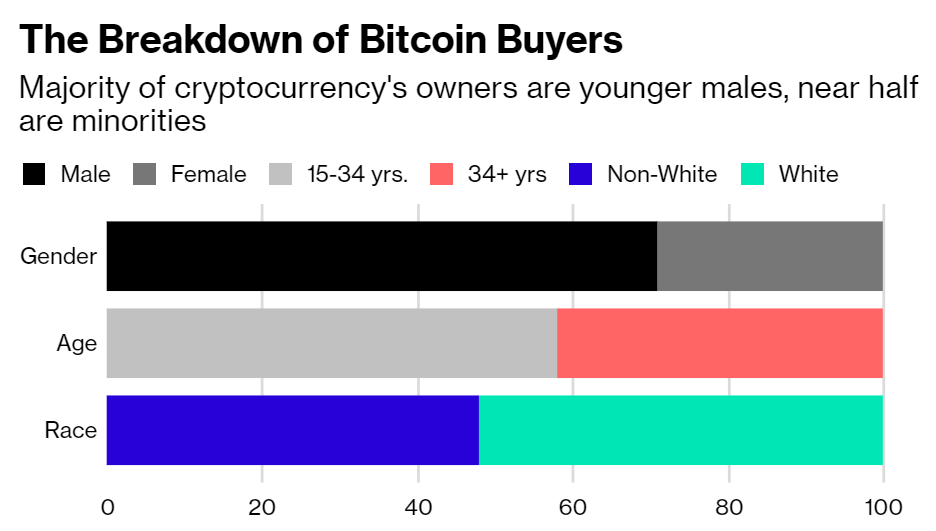
Per the report, these criminal masterminds even go as far as impersonating celebrities to defraud their victims.

These growing concerns have led many government agencies like the US Securities and Exchange Commission (SEC) to clamp down most crypto companies.

In an April 2019 Investment Alert document, the SEC cautioned crypto investors about investment scams promised ROI of 20 to 50% with little or no risk.

The alert, which is part of the agency’s education initiative, said these fraudsters are known to promise their victims a significant stake in their project in exchange for their money. The fraudster would only get the hard-earned money of their victims and disappear into thin air.

The agency warned US investors to be careful and observe due diligence before parting with their money.

Go to Source

ETHbox Public Sale is Taking Place on Duckstarter

Ethbox, an Ethereum security escrow platform, has announced the start of its token’s public sale via DuckStarter on March 25th of 2021.

The sale will see a total of 1.625 million EBOX tokens available at a price of $0.055, with 250 wallets being whitelisted every 5 minutes to participate in the sale. The team behind the sale announced that over 2.1k wallets had registered to participate in the sale so far.

Duckstarter, a community-led crowdfunding platform created by DuckDao, has been one of the most successful platforms for the funding of decentralized platforms by crypto investors, with DuckDao members being eligible to receive a special discount.

By holding 10 DDIM or 1000 DUCK tokens, DuckDao members can save to 10% on service fees or 25% if they hold 10k DDIm or 200k DUCK tokens, further incentivizing their participation in the public sale.

Once the sale is complete, the token will be listed in Uniswap for holders and late investors to trade in the Decentralized Exchange, which will create new opportunities for those looking to invest on EBOX.

A Major Milestone for The Project

The private sale of the EBOX token represents a major milestone in the roadmap of the project as it will see the start of the distribution of the governance token to interested parties, effectively marking the beginning of the decentralized governance process by allowing users to participate in the decision making.

The EBOX token will also provide holders with up to 50% of the revenue generated by the platform from fees, which can be paid by using EBOX or other cryptocurrencies to facilitate adoption.

While a total supply of 65 million EBOX will be minted, only 35% will be allocated to token sales and the rest will be distributed to other uses like marketing, liquidity pool, bonuses, etc.

At a time when Ethereum gas prices continue to increase and errors in transactions become more costly, interest in projects like ETHbox (and therefore its cryptocurrencies), continue to grow.

The results of this private sale will sure to have an impact on the future of the platform in different areas beyond the economics, which has caused supporters of the project to take advantage of this earlier stage to increase their profits.

ETHbox Aims to Make Transactions Easier and Safer

ETHbox is a smart contract-based digital escrow platform designed to help crypto investors to interact with the Ethereum Blockchain more easily and safely by avoiding the possibility of errors that could result in financial losses.

The crypto ecosystem is known for being challenging for beginners and veterans alike due to the complex User Interfaces (UIs), lack of centralized authorities, and immutability of the transactions, which often results in big losses when an error is made when transacting.

According to Luka Schiefer, ETHbox co-founder, the interest in the token has been overwhelming which reflects the need for such a platform in the ever-growing crypto ecosystem.

“Based on preliminary data, our interest form showed that there was actually 12 times more interest than we could actually offer on the initial private sale round during the first 24 hours, post-announcement. One week after, we had already been subscribed for more than 20 times of our token allocation “, Schiefer stated.

The platform also offers its users the opportunity to use its staking and revenue sharing features to generate passive income, further increasing the investment strategies they can use in the crypto market easily and conveniently.

The platform also makes use of obfuscation algorithms to increase privacy in all transactions, which has become an increasing issue on popular blockchain networks for well-known crypto addresses due to the pseudo-anonymity that surrounds them.

The post ETHbox Public Sale is Taking Place on Duckstarter appeared first on Blockonomi.

Go to Source

Please enter CoinGecko Free Api Key to get this plugin works.
Exit mobile version