Jack Dorsey’s Crypto Open Patent Alliance Joined By BitPay

BitPay, a prominent crypto payments processor, has officially joined up with the Crypto Open Patent Alliance, or COPA. Through this, BitPay agrees to share various open-source projects and take part within a shared patent library. This was announced by BitPay on Wednesday the 14th of April, 2021.

The Mandatory Public Statements

Square, the FinTech payments firm headed by Twitter’s Jack Dorsey, stands as the founder of COPA. The Alliance was formed back in September of last year in a bid to make the foundational technologies of cryptocurrencies accessible to everyone in the world. This would, in turn, support the growth of the industry at large, as well.

Stephan Pair stands as the CEO of BitPay and gave a public statement within the press release. He explained that BitPay supporting and partnering with COPA stands as a testament to the payment processor’s belief that blockchain technology is standing at an inflection point. He explained Bitpay believes that Crypto is becoming mainstream, which will change the way consumers and businesses receive and otherwise spend payments forever.

Helping Jumpstart The Crypto Space

COPA provides an open patent library, allowing for various obstacles in the way of crypto technological innovation to be completely removed. Anyone can take part in this alliance, without even needing their own patents.

Kirupa Pushparaj stands as the Chairman of the COPA Board, and gave a public statement about the matter as well. Pushparaj explained that the entire goal of COPA is to eliminate the warriors surrounding innovations, and patents stand as a potential of becoming one. Pushparaj openly welcomed BitPay, predicting that it will provide many contributions to the payments and blockchain space.

A New Age For Crypto Industry

Jagruti Solanki stands as the CFO of BitPay, and gave a statement about the crypto space at PYMNTS. Solanki explained that the crypto space is gaining a large amount of momentum as an emerging industry, and both regulators and businesses are now forced to navigate this territory and learn the overall process. As such, Solanki stressed that the key to moving the crypto space forward is to ensure cooperation and collaboration. She explained that if people teach and learn together, they will grow together as well

As for what BitPay does, it allows for the use of cryptocurrencies to ensure borderless payments. This, in turn, reduces the risks of potential fraud and decreases the overall costs of processing the payments, as well.

Go to Source

Romanian university plans to accept crypto payments for admission fees

The academic institution with a student body of roughly 11,000 said the addition of crypto payments was part of a plan to support local businesses like Elrond.

A public university in the Romanian city of Sibiu in Transylvania has said it will allow students to pay for their admission fees in crypto.

According to an announcement from Lucian Blaga University of Sibiu, or LBUS, on Wednesday, the institution plans to implement crypto payment methods for its more than 11,000 students starting in July. Students will reportedly be able to pay for admission fees — tuition is roughly $1,000 per year for undergraduates — using Elrond (EGLD), which the university will then convert to Romanian leu.

“Our university has been and will continue to be a supporter of the community and local business, and the decision to develop this partnership with Elrond is part of this strategy,” said university Rector Sorin Radu.

Starting as an initial exchange offering from the Binance Launchpad in 2019, Elrond has offices in the Transylvanian town of more than 400,000 people and its team contains many graduates of the local university. The project said it plans to carry out other collaborations with LBUS in the future, including research.

According to legislation implemented in July, exchange providers that monitor the purchase of crypto with fiat currency and vice versa must now be authorized if they operate in Romania. Many crypto users handling digital assets in the country are required to use exchanges that incorporate Know Your Customer requirements and comply with both domestic and foreign Anti-Money Laundering provisions.

Elrond has recently seen some significant changes, including its mainnet swap last year as the ERD token became EGLD. At the time of publication, the price of EGLD is $231, having risen more than 13% in the last 24 hours.

Go to Source

Top 5 cryptocurrencies to watch this week: BTC, XLM, MIOTA, XMR, XTZ

Traders appear to be waiting for a trigger to start the next leg of Bitcoin’s uptrend and if that happens, XLM, MIOTA, XMR and XTZ could join the party.

Bitcoin’s (BTC) hesitation near the all-time high suggests that the bulls and the bears are waiting for a trigger to start the next trending move.

The bulls are searching for a positive catalyst to thrust the price above the overhead resistance. On the contrary, the bears may be standing by in anticipation of any signs of weakness that could confirm a short-term top.

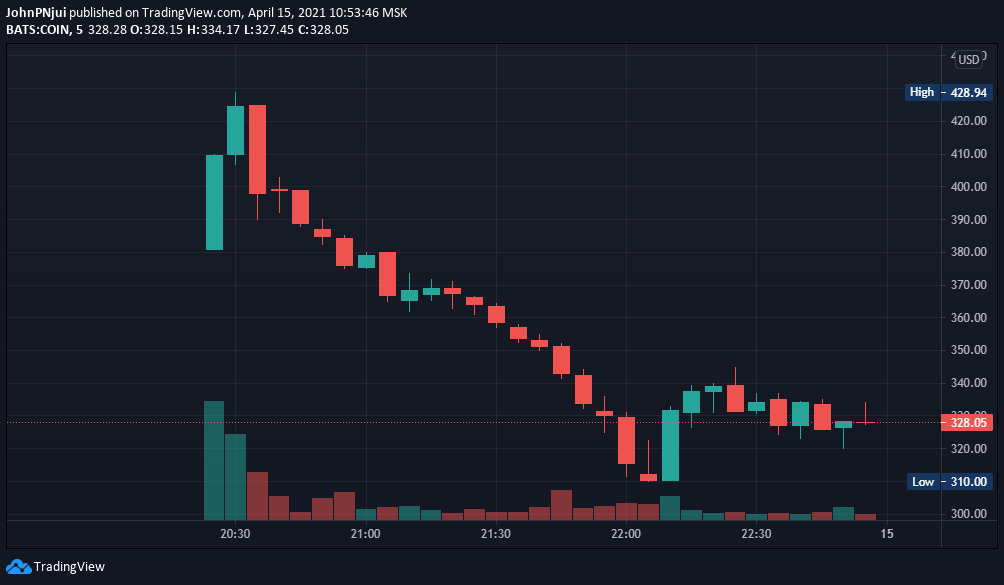
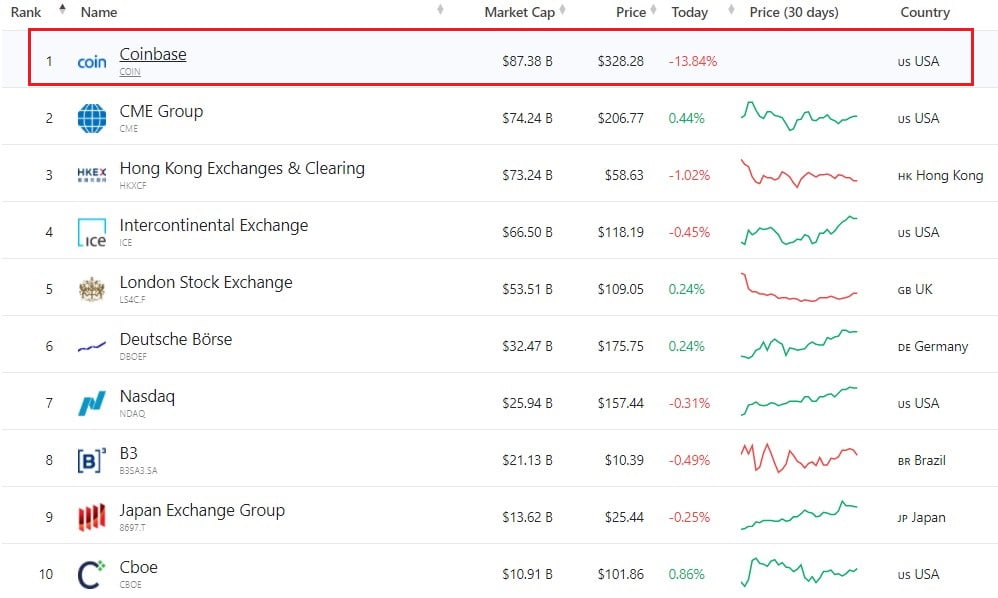
The event that may act as a trigger is the Nasdaq listing for Coinbase’s COIN stock on April 14. A successful listing is likely to be cheered by the crypto bulls because that could signal increased crypto adoption by traditional investors in the future. Conversely, a tepid reception to the Coinbase listing could embolden the bears.

Crypto market data daily view. Source: Coin360

Onchain indicator HODL waves suggests that both the long-term investors and the short-term speculators are not booking profits as they expect higher levels in the future. An increase in the number of HODLers is generally a bullish sign but could become an overhang if fresh money dries up and the market starts to reverse direction.

If that happens, the short-term speculators are likely to panic first and dump their positions. That may hit stops of the swing traders and intensify the selling, paving way for a deeper correction.

As markets wait for a trigger, let’s analyze the charts of the top-5 cryptocurrencies that could benefit from a bullish sentiment.

BTC/USDT

Bitcoin soared above the $60,000 overhead resistance on April 10 and reached $61,301.21, just short of the all-time high at $61,825.84. However, the bulls continue to find difficulty in keeping the price above $60,000, indicating stiff resistance from the bears.

BTC/USDT daily chart. Source: TradingView

The price has yet to close above $60,000 which means the inverse head and shoulders pattern is still not complete.

The bears will try to capitalize on the small window of opportunity and pull the price down to the 20-day exponential moving average ($57,513). A strong bounce off this support will increase the possibility of a break above $61,825.84.

If that happens, the BTC/USDT pair could start the next leg of the uptrend that could push the price to $69,540 and then $79,566.

On the other hand, if the bears sink the price below the 20-day EMA, the pair could challenge the critical support at the 50-day simple moving average ($54,723). A break below this support will be the first indication of a possible change in trend.

BTC/USDT 4-hour chart. Source: TradingView

The 4-hour chart shows the bears are active above $60,000. However, the positive sign is that the bulls have not allowed the price to sustain below the 20-EMA. This means the bulls are buying on every minor dip.

If the bulls can once again push the price above $60,000, the pair may challenge the all-time high. On the contrary, if the bears sink the price below the 20-EMA, a drop to $57,600 is possible. If this support cracks, the next stop could be $55,600.

XLM/USDT

Stellar Lumens (XLM) broke above the $0.60 resistance today and rose to a new 52-week high at $0.65. Whenever an asset hits a new 52-week high, it is a sign of strength because it shows that traders are in a hurry to buy as they expect the price to rise further.

XLM/USDT daily chart. Source: TradingView

The upsloping 20-day EMA ($0.46) and the relative strength index (RSI) in the overbought territory suggest the bulls have the upper hand. If the bulls can propel the price above $0.65, the XLM/USDT pair could start the next leg of the uptrend that could reach $0.72 and then $0.85.

However, the long wick on today’s candlestick suggests that the bears have other plans. They are trying to trap the aggressive bulls and pull the price back below $0.60. If the bulls do not allow the price to dip below $0.55, it will suggest accumulation on dips. That will keep the sentiment positive.

Contrary to this assumption, if the bears sink the price below $0.55, a drop to the 20-day EMA is possible. A break below this support will indicate that the bulls have lost their grip.

XLM/USDT 4-hour chart. Source: TradingView

The 4-hour chart shows the pair closed above $0.60 but the bulls could not build upon this strength. The bears pounced on the opportunity and have pulled the price back below the breakout level at $0.60.

However, if the bears fail to sink the price to the 20-EMA, it will suggest the bulls are accumulating on dips. That will increase the possibility of the resumption of the up-move. Conversely, a break below the 20-day EMA may tilt the advantage in favor of the bears.

MIOTA/USDT

IOTA (MIOTA) is in an uptrend. The bulls pushed the price above the psychologically important level at $2 on April 10. If bulls can sustain the breakout, the up-move could reach the next target objective at $2.35 and then $2.60.

MIOTA/USDT daily chart. Source: TradingView

The upsloping 20-day EMA ($1.66) and the RSI near the overbought zone suggest the bulls have the upper hand.

However, if the bulls fail to sustain the price above $2, the bears may try to pull the price down to the 20-day EMA. The bulls have successfully defended this support since the start of the current leg of the rally in March.

Hence, if the price again rebounds off the 20-day EMA, it will suggest the sentiment remains positive and the bulls are buying on dips. Alternatively, a break below the 20-day EMA will suggest that the bears are making a comeback.

MIOTA/USDT 4-hour chart. Source: TradingView

The 4-hour chart shows profit-booking above $2. The MIOTA/USDT pair could now drop to the 20-EMA, which is sloping up. If the price rebounds off this level, it will enhance the prospects of the resumption of the uptrend.

On the contrary, if the bears sink the price below the 20-EMA, the pair could extend its decline to the 50-SMA. Such a deep correction could delay the start of the next leg of the up-move.

XMR/USDT

Monero (XMR) broke above the $268.60 resistance on April 10, indicating the possible resumption of the uptrend. If the bulls can sustain the breakout, the altcoin could rally to the next target objective at $334 and then $384.

XMR/USDT daily chart. Source: TradingView

The rising 20-day EMA ($258) and the RSI above 75 suggest the path of least resistance is to the upside.

However, if the bulls fail to sustain the price above $288.60, the XMR/USDT pair could drop to the 20-day EMA. A strong bounce off this support will suggest the sentiment remains positive and the bulls are buying on dips. The bulls will then make one more attempt to resume the uptrend.

On the other hand, if the bears sink the price below the 20-day EMA, it will suggest a possible change in sentiment. That could result in a drop to the 50-day SMA ($232).

XMR/USDT 4-hour chart. Source: TradingView

The 4-hour chart shows the bears attempted to stall the rally near the psychological resistance at $300 but the bulls did not give up much ground. They purchased the dip to the 20-EMA and pushed the price above $300.

The rising moving averages and the RSI near the overbought zone suggest the bulls are in control.

This positive view will invalidate if the price turns down and breaks below the moving averages. Such a move will indicate the demand has dried up and traders are booking profits. That could pull the price down to $250.

XTZ/USDT

Tezos (XTZ) is in a strong uptrend. It broke above the stiff overhead resistance at $5.64 on April 5 and completed a successful retest of the breakout level on April 7 and 8. The altcoin resumed its uptrend and made a new all-time high at $7.21 on April 10.

XTZ/USDT daily chart. Source: TradingView

The 20-day EMA ($5.42) is sloping up and the RSI is near the overbought territory, indicating advantage to the bulls. In a strong uptrend, corrections usually last between one to three days as traders buy every minor dip aggressively.

The long tail on today’s candlestick suggests traders are buying at lower levels. If they can drive the price above $7.21, the XTZ/USDT pair could rally to the next target objective at $8.14.

The major support on the downside is the 20-day EMA. If the price rebounds off this support, it will suggest the sentiment remains bullish. The buyers will then again try to push the price above $7.21. Conversely, a break below the 20-day EMA will suggest the bullish momentum has weakened.

XTZ/USDT 4-hour chart. Source: TradingView

The 4-hour chart shows the bulls are trying to arrest the pullback at the 20-EMA. If they can push the price above $6.85, a retest of $7.21 is possible. A breakout of this resistance will start the next leg of the up-move.

Contrary to this assumption, if the pair breaks and sustains below the 20-EMA, it may drop to the 50-SMA. The bulls are likely to defend this support aggressively because the price has not dipped below the 50-SMA since March 29.

However, if the bulls fail to arrest the decline at the 50-SMA, the slide could extend to $5.40 and then to $4.60.

The views and opinions expressed here are solely those of the author and do not necessarily reflect the views of Cointelegraph. Every investment and trading move involves risk, you should conduct your own research when making a decision.

Go to Source

BTC December futures reach $73,500 — Is everyone flipping ultra bullish?

Bitcoin’s three-month futures premium reached a record-high of 50%, signaling market inefficiencies.

Bitcoin (BTC) has been struggling to break the $60,000 resistance for almost a month. But despite the impasse, BTC futures markets have never been so bullish. While regular spot exchanges are trading near $59,600, the BTC contracts maturing in June are trading above $65,000.

Futures contracts tend to trade at a premium, mainly on neutral-to-bullish markets, and this happens on every asset, including commodities, equities, indexes, and currencies. However, a 50% annualized premium (basis) for contracts expiring in three months is highly uncommon.

BTC futures curve, in USD. Source: bitcoinfuturesinfo.com

Unlike the perpetual contract — or inverse swap, these fixed-calendar futures do not have a funding rate. Thus, their price will vastly differ from regular spot exchanges. Fixed-calendar futures eliminates eventual funding rates’ spikes from the buyers’ perspective, which can reach up to 43% per month.

On the other hand, the seller benefits from a predictable premium, usually locking longer-term arbitrage strategies. By simultaneously buying the spot (regular) BTC and selling the futures contracts, one gains a zero-risk exposure with a predetermined gain. Thus, the futures contracts seller demands higher profits (premium) whenever markets lean bullish.

The three-month futures usually trade with a 10% to 20% versus regular spot exchanges to justify locking the funds instead of immediately cashing out.

OKEx BTC 3-month futures annualized premium (basis). Source: Skew.com

The above chart shows that even during the 250% rally between March and June 2019, the futures’ basis held below 25%. It was only recently in February 2021 that such phenomena reemerged. Bitcoin surged by 135% in 60 days before the 3-month futures premium surpassed the 25% annualized level on Feb. 8, 2021.

While professional traders tend to prefer the fixed-month calendar futures, retail dominates perpetual contracts, avoiding the expiries’ hassle. Moreover, retail traders consider it expensive to pay 10% or larger nominal premiums, even though perpetual contracts (inverse swaps) are more costly when considering the funding rate.

BTC coin-based perpetual futures funding rate. Source: Bybt.com

While the recent 0.20% funding rate per 8-hour is extraordinary, it is definitely not unusual for BTC markets. Such a fee is equivalent to 19.7% per month but seldom lasts more than a couple of days.

A high funding rate causes arbitrage desks to intervene, buying fixed-calendar contracts and selling the perpetual futures. Thus, excessive retail long leverage usually drives the futures’ basis up, not the other way around.

As crypto-derivatives markets remain largely unregulated, inefficiencies shall continue to prevail. Thus, while a 50% basis premium seems out of the norm, one must remember that retail traders have no other means to leverage their positions. In turn, this causes temporary distortions, although not necessarily worrisome from a trading perspective.

While exorbitant funding rate fees remain, leverage longs will be forced to close their positions due to its growing cost. Thus, December’s $73,500 contract does not necessarily reflect investors’ expectations, and such a premium should recede.

The views and opinions expressed here are solely those of the author and do not necessarily reflect the views of Cointelegraph. Every investment and trading move involves risk. You should conduct your own research when making a decision.

Go to Source

Bitcoin mining company follows Tesla by setting up shop in Austin

Tech companies like Oracle, Tesla, Hewlett Packard, and now Blockcap are moving to Austin, causing many to call the state capital the Silicon Hills.

North America-based crypto mining company Blockcap announced over the weekend it would be establishing new offices in Austin, Texas.

In an announcement from Blockcap on Friday, the mining company claimed once its new facilities are operational in the Lone Star State’s capital, its hashing power will be roughly 3.5 exahash per second from a total of 42,000 rigs, reportedly doubling its capabilities. According to blockchain data, this would represent more than 2% of the hashrate for the entire Bitcoin (BTC) network, roughly 167 million terahash per second at the time of publication. However, Blockcap claims its total fleet will account for only 1% of the network’s hashing power.

“Austin is our home base from which we will pursue our mission and bring this great city closer to the center of the United States’ blockchain technology ecosystem,” said Blockcap chair and founder Darin Feinstein. “We also see the city as an ideal location from which to continue expanding our operations as we grow at both national and international levels.”

Blockcap cited electric car manufacturer Tesla setting up one of its “Gigafactories” in Austin in announcing the move. Tesla CEO and billionaire Elon Musk recently purchased a home in the Texas state capital for more than $3 million on Lake Austin west of the downtown area, while the firm is breaking ground on the Gigafactory on the east side closer to the Austin-Bergstrom International Airport.

The mining company did not immediately respond to questions regarding where it plans to establish its offices in the Austin area or how many jobs would be created as a result, though Feinstein said it would be “hiring locally.” Musk said in a tweet last month that the new Giga Texas location would bring in more than 10,000 jobs, effectively increasing the number of employees at the electric car manufacturing company by more than 14%.

Though some tech companies like Oracle and Hewlett Packard are moving to Austin — causing many to dub the city the “Silicon Hills,” in reference to Silicon Valley — the state capital has in many ways become a microcosm of the U.S. housing market. Many employees of these firms may be seeing all-cash buyers purchasing homes, making them unavailable to those with only the financial means of saving for a 20% down payment. Musk highlighted the dearth of Austin housing in an April 4 tweet, seemingly in reference to Tesla employees relocating there.

However, the addition of Blockcap and other blockchain firms to the Lone Star State has the support of former Texas governor Rick Perry, the Republican politician who once famously forgot the name of the Department of Energy as a federal agency he would eliminate if elected president. Perry claimed Texas had “become the premier location for forward-looking industries like blockchain” and that Blockcap would likely lead to job creation and economic growth in the state.

Founded in 2020 by a group of blockchain veterans, Blockcap now controls roughly 12,000 mining rigs generating more than 7 BTC daily, or $416,550 at the time of publication. The company raised more than $75 million in two funding rounds led by Off The Chain Capital and Foundry Digital. According to Blockcap, the firm recently acquired more than $500 million worth of Bitcoin mining machines.

Go to Source

XRP Price Prediction: XRP/USD Witnesses an Aggressive Price Upsurge Averaging a New All-Time Higher Level of $1.60

XRP Price Prediction – April 12
After a long-range-bound trading position recently experienced by the XRP/USD market valuation, the crypto has on April 5, beginning the northward move to set a new higher all-time trading zone near the resistance level of $1.60.

XRPUSD Market
Key Levels:
Resistance levels: $1.60, $1.80, $2
Support levels: $1, $0.80, $0.60

XRP/USD – Daily Chart
A long-awaited bullish candlestick has finally occurred on the XRP/USD daily trading chart at an upper range line signaling a breakout that puts the market line on a bullish journey now. The 14-day SMA trend-line and the bullish trend-line are below the current price trading spot pointing towards the north to still indicate an ongoing buying pressure around $1.30 level, The 50-day SMA indicator is located close to the recent-past upper range line of $0.60 to also point to the north direction. The Stochastic Oscillators have briefly reversed from the overbought region to now cross the hairs a bit over range 40 to the north. That also signifies that more buying potentials are still in the offing.

What could be the next direction in the XRP/USD market operations?
Virtually most trading indicators have showcased so much brighter back-up for the furtherance of XRP/USD bulls’ run in this crypto-economy. As a result, it would be technically okay that traders be on the lookout for any possible decent buy entry the moment price tends to push northward more. However, a little price drop is necessary to take place before considering joining while the market makes a reverse for continuation-move resumption..

As of writing, it is not technically safe to consider a sell-off trading situation for this crypto market in the near session. In other words, it will a little more time to have a more clear-cut outlook as regards the bearish formation pattern of XRP/USD. Therefore, bears will have to relax their efforts in gaining the grand against the crypto stance.

XRP/BTC Price Analysis
It is now apparent that the trading energy between Ripple XRP and BTC has been on the side of the base crypto as compared. There had been several attempts made in range-bound zones by the base crypto to push against the counter trading instrument lately. The 14-day SMA trading indicator has intercepted the 50-day SMA trend-line from the below to signal the dominance of XRP’s purchasing power over Bitcoin’s current trading situation in the market space of cryptos. The stochastic Oscillators have crossed the hairs near below range 80 to the north wearing a promising outlook in support of more northward pressures to come.

Go to Source

Keep Network unveils v2 specs for tBTC protocol

A second iteration of tBTC hopes to improve on the failings of the first.

The Keep Network has released details for the second iteration of its “trust-minimized” Bitcoin tokenization protocol, tBTC.

In an April 11 blog post, Keep Network developer, Evandro Saturnino, outlined several changes the protocol is considering to address it’s past issues with collateralization.

tBTC’s second iteration is expected to require stakers to only lock up KEEP rather than both KEEP and ETH, alongside introducing changes to its wallet generation mechanism. The protocol allows users to tokenize their Bitcoin for use on the Ethereum network.

While Saturnino notes the changes “will provide a way of greatly decrease[ing] the collateral ratio of the staking assets,” he warns of new risks associated with the proposed upgrades.

To offset a “small risk to the peg” resulting from the changes, Saturni advances uses insurance coverage pools to protect against malicious validators, describing the pools as “perfectly suited to ensure against fraud in tBTC v2.”

tBTC works with ETH collateral on a network of blockchain validators and parties that individually contribute to the minting and backing of the asset, with activity kept in check on the blockchain. Saturnino explained:

“In this mission that tBTC emerged to be the first solution to bring tBTC in the Ethereum Network in a trustless and truly decentralized way using Keep Network infrastructure which is able to store and compute data hidden even from itself.”

Once the user submits a request to mint tBTC and a deposit bond, a randomly selected signing group generates a public BTC wallet address to the user. Signing group members are picked from an eligible pool of signers who agreed to bond ETH as collateral.

The bonded ETH is an incentive to align the interests of the signers and can also be used to penalize members in the case of misbehavior. Signers must bond 150% of the total deposit size in ETH as collateral in a mechanism that is similar to the MakerDAO and Dai stablecoin system.

The developer acknowledged the team has learned a lot since the second launch of the tBTC mainnet in September 2020. Within just a few days of its initial launch in May 2020, Keep protocol was briefly shut down after a bug was detected in its redemption codes. The protocol also struggled to scale, added Saturnino.

Despite being backed by venture capital giant a16z and other big names, Keep’s tBTC has failed to gain traction among DeFi users with a circulating supply of just 1,293 tokens according to CoinGecko.

Existing Bitcoin tokenizations solutions have enjoyed significant growth and popularity over the past year, with the custodial Wrapped BTC currently ranking as the second-largest DeFi protocol with a TVL of $8.7 billion, according to DeFi Llama. Non-custodial competitor renBTC has also amassed a TVL of $926 million and currently ranks as the 27th top DeFi project.

Go to Source

Messari researchers slam Binance Smart Chain over centralized validators

With Binance Chain’s 11 validators hand-selecting Binance Smart Chain’s validators daily, analysts are warning of the protocol’s centralization.

Despite Binance supporters celebrating Binance Coin’s (BNB) chart-topping performance for Q1 2021, concerns are growing regarding the centralization of the Binance ecosystem.

On April 12, Messari researcher Ryan Watkins took aim at the centralization of Binance Smart Chain’s validators, stating: “Every cycle people get hoodwinked by the latest centralized solution to all blockchains problems.”

“Every cycle influencers pump these narratives so they can dump on naïve retail traders when it’s over.”

BSC uses Proof of Staked Authority (PoSA) consensus, with its 21 active validators being chosen daily by Binance Chain — a network that is governed by just 11 validators. BSC validators stake BNB.

“It’s hard not to presume that each Binance Chain validator is in some way connected or tied to Binance,” Messari’s Wilson Withiam speculated, adding: “They each take turns producing blocks in a seemingly predefined order. There doesn’t appear to be any stake-weighted mechanism to determine which one produces the next block.”

Watkins sought to address perceived misconceptions regarding BSC’s performance, asserting its speed advantages over the Ethereum main net are a product of “the magic of centralization” rather than “technological innovation.”

“BSC is an Ethereum fork with a centralized validator set. That’s it. Nothing more,” he added.

“If you really think BSC has achieved smart contract supremacy, and will become the world’s settlement layer, you are on crack.”

However, Twitter-user “earoshthime” rebutted the claim from Watkins and others that BSC others little more than clones of Ethereum-based DeFi legos, describing copying as inherent to technological innovation.

“When it comes to invention & innovation, copying is a feature not a bug. Copying is a sign that something there is worth exploring but it only takes one character difference to be better,” they said.“Mkt92z” also responded in defense of BSC, describing Ethereum’s recent high fees and scaling woes as driving users away to seek out alternative protocols.

“Mkt92z” also responded in defense of BSC, describing Ethereum’s recent high fees and scaling woes as driving users away to seek out alternative protocols.

Messari’s April 9 performance report for the first quarter of 2021 found that the BNB was the best-performing crypto asset ranked among the top ten by market cap, gaining 709% since the start of the year. BNB’s capitalization is now greater than that of major banks UBS and Banco Santander.

Go to Source

Solana (SOL) price rises as airdrops attract new users to the network

Solana price has rallied more than 50% this month as new projects conduct airdrops on SOL blockchain and high Ethereum fees push investors to seek cheaper alternatives.

Over the past six months blockchain projects that have issued token airdrops have re-emerged. Most notably, the airdrops by Uniswap (UNI) and MEME will be remembered as recipients were rewarded with gains ranging from $20,000 to $600,000 simply for holding the tokens.

One Ethereum (ETH) competitor that has seen numerous projects launch with airdrops in the past three weeks is Solana (SOL), an open-source project that focuses on utilizing blockchain technology to provide decentralized finance solutions.

While Solana isn’t explicitly making a concerted effort to launch these projects, the protocol’s main decentralized exchange Serum (SRM) was responsible for the recent COPE airdrop which distributed 2,000 tokens to users who participated in the joint DeFi hackathon held by Solana and Serum.

After the airdrop, COPE eventually listed on Serum for $0.50 on March 30 and the price of the token surged to a high of $5.43 on April 11, rewarding holders with a $10,860 reward.

SOL/USDT 4-hour chart. Source: TradingView

The success of the COPE airdrop prompted a series of token launches and airdrops with similar-sounding names including HOPE, ROPE and KOPE, whose launches on the Solana blockchain have coincided with a 55% rise in the price of SOL since the start of April.

Airdrops on the network may have played a small role in the recent price appreciation due to users needing SOL to receive airdropped tokens but this is not possible to ascertain based on the available data.

Interactions on the Solana blockchain, including the addition of new tokens to the Sollet wallet, require small amounts of SOL to complete the contract executions. Thus, users rushing to sign up for airdrops before they filled up would have needed to purchase SOL and fund their wallets in order to create new addresses for the airdropped tokens.

Analysts expect the airdrop trend to continue

For those worried that they missed out or that the ‘airdrop season’ is over, a recent tweet from Solana’s Twitter feed suggests that the Solana ecosystem is just getting started, meaning the likelihood of future airdrops remains high.

New users are the lifeblood of successful blockchain networks, and the use of airdrops continues to be one of the most utilized methods for drawing attention to fledgling projects and sapping liquidity from one protocol to another.

The views and opinions expressed here are solely those of the author and do not necessarily reflect the views of Cointelegraph.com. Every investment and trading move involves risk, you should conduct your own research when making a decision.

Go to Source

Reddit reminisces defunct ‘Bitcoin faucet’ website that gave away 19,700 BTC for free

It may sound shocking today, but in 2010 software developer Gavin Andresen was on a mission to give away free BTC in an effort to boost adoption.

Reddit’s r/Cryptocurrency community revived an interesting piece of Bitcoin (BTC) history on Sunday, with a new thread reminiscing about the time that American software developer Gavin Andresen gave away 19,700 BTC. 

A thread started by “uGroundbreakingLack78” took the Reddit community all the way back to June 2010 when Andresen first launched the so-called Bitcoin faucet website. Using the domain “freebitcoins.appspot.com,” Andresen gave visitors the opportunity to earn 5 BTC per day just by solving a captcha, which is a program intended to distinguish human from machine input.

User “uGroundbreakingLack78” explained:

“To fuel the first faucet, Andresen loaded it with 1,100 BTC of his own. After these were given away, the faucet was reloaded, with early bitcoin miners and whales also donating coins.”

The faucet’s creator announced his “really dumb” idea of giving away free BTC on the now infamous Bitcointalk forum in a post that appeared June 11, 2010. His motivation: “[…] I want the Bitcoin project to succeed, and I think it is more likely to be a success if people can get a handful of coins to try it out.”

Andresen played a major role in Bitcoin’s development during its formative days. He was the main software developer for BTC’s reference implementation, having joined the core development team in 2012 after Satoshi Nakamoto, Bitcoin’s pseudonymous founder, announced they would be leaving the project.

Although the Bitcoin faucet website is no longer functioning, a screengrab of the domain’s homepage revealed a very basic setup where users can earn BTC and set up their digital wallet. The Bitcoin faucet reportedly gave away 19,700 BTC to users just for solving a captcha. Those BTC are worth almost $1.2 billion at today’s prices.

The Bitcoin faucet website, as it appeared sometime in 2010. Image via Reddit

With Bitcoin in the midst of yet another bull market, many investors would love to get their hands on just 5 BTC. However, that’s easier said than done at current values. Given the apparent shortage of BTC on major exchanges, the flagship digital currency could be poised to go higher in the short term. On-chain data reveals that Bitcoin’s moonshot could still be months away, which means investors remain overwhelmingly bullish.

The Bitcoin price peaked just below $62,000 in mid-March before the rally paused and altcoins played catch-up. At current values, Bitcoin’s market capitalization exceeds $1 trillion. Major institutions and corporations have invested in the digital asset as a hedge against currency debasement, among other motivations.

Go to Source

World’s Wealthiest Annual Ranking Now Lists 12 Crypto Billionaires

The American business magazine Forbes recently published the company’s 2021 documentation of the wealthiest billionaires in the world. According to the list published annually every March, there are now 12 billionaires that work directly within the cryptocurrency industry and the list of crypto billionaires is 3x larger than last year.

Today’s Crypto Billionaires List

Since March 1987, Forbes has been publishing a list of the world’s wealthiest billionaires compiled in a list for the public to view. Back then the Japanese businessman and real-estate mogul Yoshiaki Tsutsumi was the richest person in 1987 with an estimated wealth of around $20 billion. Since then, and every year after, Forbes has deployed around 50 journalists to find and track the globe’s richest people. In 2021, Amazon’s Jeff Bezos is the wealthiest man in the world with an estimated $177 billion. Bezos was the first human on earth to be listed on Forbes as a centibillionaire.

Bezos is followed by the dogecoin (DOGE) fan and Tesla CEO Elon Musk with 151 billion. Then there is Bernard Arnault and his family who own companies like Sephora and Louis Vuitton and they hold around $150 billion in net worth. Those three are followed by Microsoft’s Bill Gates ($124B) and Facebook’s Mark Zuckerberg ($97B). In 2021, Forbe’s list of global billionaires now includes 12 crypto billionaires who are directly associated with the digital currency industry. Elon Musk could be considered a crypto billionaire, but most would say he’s more of a proponent than someone infused within the blockchain industry.

From top to bottom and left to right: Sam Bankman-Fried, Brian Armstrong, the Winklevoss Twins, Chris Larsen, Michael Saylor, Jed McCaleb, Fred Ersham, ChangPeng Zhao (CZ), Barry Silbert, Matthew Roszak, and Tim Draper.

Another person not mentioned among 2021’s crypto billionaires is Satoshi Nakamoto. Using today’s exchange rates, Nakamoto could be worth more than $59 billion. The 12 crypto billionaires noted in this year’s list work with digital currency exchanges or are venture capitalists who invest heavily in crypto startups. Forbes notes that the FTX Exchange CEO, Sam Bankman-Fried is the wealthiest crypto billionaire with $8.7 billion today. The CEO of Coinbase, Brian Armstrong, is the second wealthiest with around $6.5 billion. The next two people are the Winklevoss Twins, founders of the Gemini Exchange with a collective net worth of around $6 billion.

A Few Changes This Year Could Increase the 2022 Crypto Billionaires List

The cofounder of Ripple Labs Chris Larsen holds the fourth position with $3.5 billion in wealth. The CEO of Microstrategy Michael Saylor is noted in the list for having $2.3 billion. Another Ripple cofounder is also mentioned on Forbes’ 2021 billionaire list as Jed McCaleb is estimated to have around $2 billion. The cofounder of Coinbase Fred Ersham has around $1.9 billion and ChangPeng Zhao (CZ) from Binance holds the exact same amount as Ersham.

The last three people on the list include Digital Currency Group’s Barry Silbert ($1.6B), Bloq’s Matthew Roszak ($1.5B), and the well known venture capitalist Tim Draper. Alongside this, there may even be a number of crypto people that are not mentioned on the Forbes billionaire list.

Just recently, in an interview with Angie Lau from Forkast News, Roger Ver touched upon not making the list and said that it might not be accurate. Moreover, Ver explained that when a few companies he’s invested in go public, he plans to have “several billion dollars worth of capital” and $2 billion will be dedicated to the Bitcoin Cash network and spreading adoption.

It will be interesting to see how things look in the 2022 list written and published by the American business magazine especially for the number of crypto people listed. By then the size of the crypto economy may be much larger, a bitcoin exchange-traded fund (ETF) could get approved, and companies like Coinbase going public may happen a lot more often. All three of these factors will produce a lot more crypto billionaires next year if they come to fruition.

What do you think about the 2021 crypto billionaires listed this year? Let us know what you think about this subject in the comments section below.

Go to Source

Sri Lanka’s Crypto Regulation: Central Bank Warns of Cryptocurrency Risks, Unlicensed Exchanges

The Central Bank of Sri Lanka has published a warning notice about the risks associated with cryptocurrency as interest and trading volumes of bitcoin and other cryptocurrencies surge locally and globally.

Sri Lanka’s Central Bank Warns About Bitcoin

The Central Bank of Sri Lanka has published a notice regarding cryptocurrency. “Considering the recent inquiries on virtual currency usage in the international and domestic markets, the Central Bank of Sri Lanka (CBSL) wishes to inform the public of the risks associated with investing in virtual currencies,” the notice published Friday reads.

In describing what cryptocurrency is, the central bank explained that virtual currencies (VCs) “are also commonly referred to as cryptocurrencies,” noting that popular ones include bitcoin, ethereum, and litecoin. The Sri Lankan monetary authority cautioned:

There are no regulatory safeguards relating to the usage, investment or dealing in VCs in Sri Lanka. Therefore, investing or using VCs in Sri Lanka poses significant risks.

The central bank then highlighted some risks it sees as being associated with cryptocurrencies. The first is that “Users/investors will have no regulatory or specific legal recourse in the event of any user or transaction related issues or disputes.”

Next, the central bank says cryptocurrencies are highly volatile “as it is dependent on speculation,” and investors face “a risk of making large losses.” Furthermore, the monetary authority asserted that there is a “High likelihood of VCs being associated in financing terrorist activities and used by criminals to launder criminal proceeds.”

The Sri Lankan central bank also pointed out the potential “Violation of Foreign Exchange Regulations.” It detailed that as cryptocurrencies are traded as assets in exchanges, purchasing them from abroad would lead to a violation of Foreign Exchange Regulations, as they are not identified as a permitted investment category in terms of the Foreign Exchange Act No. 12 of 2017 (FEA). In addition, Electronic Fund Transfer Cards (EFTCs), such as debit cards and credit cards, are also not permitted to be used for payments in foreign currency related to virtual currency transactions in the country. The central bank concluded:

The public is therefore warned of the significant financial, operational, legal, customer protection and security related risks posed by investments in VCs to the users as well as to the economy.

This is not the first time the Central Bank of Sri Lanka has warned people about the risks related to cryptocurrencies. The bank similarly published a crypto warning notice in April 2018.

The central bank also emphasized that it “has not given any license or authorization to any entity or company to operate schemes involving VCs, including cryptocurrencies, and has not authorized any ICOs, mining operations or virtual currency exchanges.”

What do you think about the warning by the Central Bank of Sri Lanka? Let us know in the comments section below.

Go to Source

Rich Dad Poor Dad Author Robert Kiyosaki Predicts Bitcoin Price Will Be $1.2 Million in 5 Years

Robert Kiyosaki, the best-selling author of “Rich Dad Poor Dad,” has predicted that the price of bitcoin will increase to $1.2 million within five years. Kiyosaki revealed that he bought bitcoin at $9,000, adding that he may buy the cryptocurrency again “today or tomorrow just because I’m more bullish on it.”

Robert Kiyosaki Expects Bitcoin’s Price to Surpass $1 Million in 5 Years

Robert Kiyosaki has shared his prediction of how high he thinks bitcoin’s price would be. The Rich Dad Poor Dad author accurately predicted in December last year that the price of the cryptocurrency would reach $50,000 in 2021.

Rich Dad Poor Dad is a 1997 book co-authored by Kiyosaki and Sharon Lechter. It has been on the New York Times Best Seller List for over six years. Over 32 million copies of the book have been sold in over 51 languages across more than 109 countries.

Kiyosaki was asked in an interview with Kitco News last week if it is too late to buy bitcoin at the current price of between $50,000 and $60,000. Noting that “There is always the entry point,” the famous author proceeded to share: “I bought bitcoin at $9,000 and I thought I was being fleeced but the reason I bought it at $9,000 was because Covid shut down the world economy,” he said, adding that “I wish I bought it at 10 cents like a lot of people did.”

He continued, “But now I look like a genius,” given the price of bitcoin is currently around $60,000. He additionally pointed out that money printing by the government, excessive stimulus, and the devaluation of the U.S. dollar are what give bitcoin and gold their appeal. The Rich Dad Poor Dad author elaborated:

I think it’s going to $1.2 million in five more years.

Regarding his bullish BTC price prediction, he was further asked whether he thinks the government would intervene in one form or another. Several notable people believe that the government could take serious measures against cryptocurrency, including outlawing bitcoin, including Bridgewater Associates founder Ray Dalio, The Big Short’s Michael Burry, and Ron Paul.

“I think they [the government] will try,” Kiyosaki replied. “But, the problem is too big,” he exclaimed. “Our pensions are going bust. Baby boomers have no money. They shut down the economy. They’re gonna print … another $1.9 trillion. So, it has never worked. It’s Gresham’s law. Bad money drives out good money. So, when a guy like me gets my hand on bitcoin, I’ll never spend it.” He noted that as a real estate guy, like former President Donald Trump, when he needs money, he would borrow it and spend the “fake money.”

While affirming that he still advocates for bitcoin, Kiyosaki admitted: “I prefer gold and silver because bitcoin is still untested.” Nonetheless, he proceeded to explain: “But I have the wherewithal to withstand the hit if it goes down. But gold and silver are God’s money. I know because I’ve traveled the world looking for this stuff.” Clarifying that he is “not really religious,” the famous author reiterated: “I’m very much in favor of gold and silver because it’s God’s money. God put it here.”

Kiyosaki also revealed that he may buy bitcoin “again today or tomorrow just because I’m more bullish on it.” However, he opined: “I’m not bullish on gold over bitcoin. I’m just bearish on Biden and his communist gang. That’s what I don’t like. I don’t trust the academic elite that’s called Bernanke and Yellen and now we have Powell. These guys are communists. They’ll print money. They’re central bankers.”

What do you think about Robert Kiyosaki’s bitcoin prediction? Let us know in the comments section below.

Go to Source

Investment Manager Guggenheim Warns of Bitcoin Pullback, Calls It ‘Great Entry Point’ for Investors

Guggenheim CIO Scott Minerd has warned crypto investors about bitcoin’s pullback. He said bitcoin “clearly has gotten caught in a speculative bubble that Gamestop got into.” However, he noted that it will be a “great entry point” for long-term investors.

‘Great Entry Point’ for Bitcoin Investors

The chief investment officer (CIO) of Guggenheim Partners, Scott Minerd, talked about bitcoin in an interview with CNN last week. Minerd is also the chairman of Guggenheim Investments, the global asset management and investment advisory division of Guggenheim Partners. Guggenheim Investments has more than $246 billion in total assets across fixed income, equity, and alternative strategies.

Commenting on how fast bitcoin’s market cap has grown, Minerd said, “It clearly has gotten caught in a speculative bubble that Gamestop got into.” The Guggenheim executive elaborated:

When we get a risk-off moment, we could be seeing bitcoin pullback to somewhere between $20k-$30k. But I think for long-term investors, that will be a great entry point.

He then discussed how “Parabolic markets aren’t sustainable,” having previously warned about bitcoin’s parabolic rise. “That’s one of the reasons why I think bitcoin has gotten a bit ahead of itself in its long-term trend … But it’s hard to get short. That’s a dangerous game.” Nonetheless, Minerd noted that there are “a lot of markets that are going parabolic.”

The Guggenheim CIO appeared bullish about bitcoin in December last year, when he predicted that the price of BTC could reach $400K, which he later clarified will happen somewhere in the range of 10 to 20 years.

However, he subsequently focused on the negative aspect of the cryptocurrency, advising investors to sell their coins. Several people immediately pointed out on social media that Guggenheim had not bought BTC at that time.

The asset management firm’s filing with the U.S. Securities and Exchange Commission (SEC) to invest in bitcoin via Grayscale’s bitcoin trust became effective at the end of January. Then in February, Minerd made another bullish statement, stating that the price of BTC could rise up to $600K.

Do you agree with Guggenheim CIO Scott Minerd about bitcoin? Let us know in the comments section below.

Go to Source

Bitcoin (BTC) Price Prediction: BTC/USD Holds as Buyers Recoup Above $59,000 Support

Bitcoin (BTC) Price Prediction – April 11, 2021
Bitcoin price is consolidating below the $60,000 overhead resistance. The price action is now characterized by small body candlesticks namely Doji and Spinning tops. These candlesticks are indicating that buyers and sellers are undecided about the direction of the market.

Resistance Levels: $58,000, $59,000, $60,000
Support Levels: $40,000, $39,000, $38,000

BTC/USD – Daily Chart

Following its failure to break the $60,000 psychological price level and subsequent price fall, BTC/USD is consolidating below the overhead resistance. After rejection at the recent high, BTC price fell to $58,450 support but pulled back. The market pulled back above the $58,000 support. This is a very crucial level as price will resume upside momentum. If the bears have succeeded in breaking below the $58,000 support, the selling pressure would have continued on the downside. Presently, Bitcoin has resumed consolidation above the $59,000 support. The price movement is in a stalemate as the price action is now characterized by small body candlesticks. Meanwhile, Bitcoin is trading at $59,555 at the time of writing.

Bitcoin (BTC) Indicator Reading
Bitcoin is presently below the 80% range of the daily stochastic. It indicates that the crypto is in a bearish momentum. Presently, the downward move has been stalled as price indicates small body indecisive candlesticks. BTC price is at level 55 of the Relative Strength index period14. This indicates that the king coin has enough room to rally on the upside.

BTC/USD – 4 Hour Chart

Meanwhile, on April 10 uptrend; a retraced candle body tested the 61.8% Fibonacci retracement level. The retracement implies that Bitcoin will rise to level 1.618 Fibonacci extension. From the price action, the BTC price is still consolidating above the $59,000 support. Buyers will have to break the overhead resistance to attain the Fibonacci level.

Go to Source

Please enter CoinGecko Free Api Key to get this plugin works.
Exit mobile version