Apple seeks to hire ‘alternative payments’ manager with crypto experience

“The Apple Wallets, Payments, and Commerce (WPC) team is seeking an experienced Business Development Manager to lead Alternative Payments Partnerships,” the job post reads.

Global software giant Apple is recruiting for a new business development manager specializing in alternative payments, signaling that the iPhone maker is gravitating toward digital assets. 

The new job post for “Business Development Manager – Alternative Payments” was posted to Apple’s careers website on Tuesday. The new hire will be responsible for leading alternative payments partnerships and defining new commercialization streams.

Apple is seeking a business professional with more than 10 years of experience, including a five-year track record “with alternative payment providers, such as digital wallets, BNPL, Fast Payments, cryptocurrency” and others.

While the job posting is compelling, Apple remains largely on the sidelines of the cryptocurrency industry and has yet to signal definitive plans for expanding into this market. Interestingly, cryptocurrency exchange Coinbase recently overtook TikTok as the most downloaded app on Apple’s App Store.

Speculation about Apple entering the digital currency space has been rampant in recent months, as investors watched Tesla add billions of dollars worth of Bitcoin (BTC) to its strategic reserves. Beyond just adding BTC to its balance sheet, Apple could be in a position to permanently disrupt the nascent industry by entering the crypto exchange business, according to Paul Steves, an analyst with Royal Bank of Canada Dominion Securities. 

“If [Apple] decides to enter into the crypto exchange business, we think the firm could immediately gain market share and disrupt the industry,” Steves said in February. “The firm could unlock a multi-billion dollar opportunity with a few clicks.”

With a market capitalization of $2.1 trillion, Apple remains the largest company traded in the United States. The company had $192.8 billion in cash on hand during its most recent earnings quarter, down from $207.06 billion during the previous quarter.

Go to Source

3 convincing signs the Bitcoin bears have stopped selling

BTC price rebounding back to $40,000 is just one of the few signs that the bears may be exhausted.

The price of Bitcoin surged higher on May 26, breaching the $40,000 level for the first time in five days as traders brushed aside concerns about China’s crypto ban and the United States’ crypto tax proposal.

The benchmark cryptocurrency reached an intraday high of $40,855 before turning lower owing to profit-taking sentiment.

In the meantime, analysts such as Cheds and Korous AK expect BTC/USD to hit $42,000 in the short term but advised caution on extended upside positions unless the spot market confirms a clear bullish breakout.

Cheds, particularly, showed a bullish conviction if Bitcoin reclaims its 200-day simple moving average (200-day SMA), which is currently around $40,600. The wave has historically served as a strong price floor against long-term bearish trends.

Bitcoin briefly closed above 200-day SMA. Source: TradingView

More support for a bullish Bitcoin outlook came from on-chain data. At least three blockchain-focused metrics showed that the cryptocurrency bottomed out after crashing to $30,000 on May 19.

Bitcoin exchange deposits decline

On-chain analytics platform Glassnode revealed earlier on May 26 that the total number of crypto addresses sending Bitcoin to cryptocurrency exchanges declined on a seven-day average timeframe.

Previous 1-month low of 6,356.643 was observed on May 25. Source: Glassnode Alerts

The metric, dubbed “Number of Addresses Depositing to Exchanges,” illustrates the number of unique addresses that appear as a sender in a transaction sending funds to exchanges. Simply put, it shows a decline in the number of new Bitcoin traders who might want to transfer BTC to exchanges to sell it or trade it for other assets.

New traders/investors are prone to react more emotionally to wild crypto price swings. But with the Glassnode metric showing a plunge in unique Bitcoin depositors to exchanges, it signals a downtrend in potential selling pressure.

NVT reaches classic bullish reversal level

Meanwhile, the seven-day average output on Bitcoin’s network value-to-transaction (NVT) signal has dropped to a 14-month low, Glassnode data shows.

Bitcoin bearish sentiment seems to be exhausting as the NVT signal drops to March 2020 low. Source: Glassnode Alerts

Bitcoin’s price reacted bullishly when the NVT signal touched 500 on the hourly chart, as the chart above shows. Based on fractal sentiment alone, the metric now suggests a sharp bullish reversal in the Bitcoin market as it trades 36% above its previous bottom level of $30,000.

Accumulation address uptrend

Another Glassnode metric shows that the latest Bitcoin price dip has done very little in shaking investors’ long-term bullish sentiment. The “Number of Accumulation Addresses” claimed a record high just as the BTC/USD exchange rate hit $30,000 on May 19, taking the total to above 545,000.

Glassnode defines accumulation addresses as those that have at least two incoming Bitcoin transactions and that have never spent funds. The analytics service considers these addresses as long-term holders.

A spike in accumulation addresses during the BTC price crash that destroyed billions in leveraged positions shows that bulls with long-term setup absorbed the selling pressure. That marks another sign of bearish exhaustion as Bitcoin attempts to flip $40,000 into a new support level.

Go to Source

UK ad organization bans crypto exchange’s ‘time to buy’ Bitcoin advert

Luno exchange agreed not to post its Bitcoin ads in their current form again and promised to ensure that future ads would carry a proper risk warning.

A major advertising industry organization in the United Kingdom has ruled on an ad campaign telling people “it’s time to buy” Bitcoin (BTC).

The Advertising Standards Authority, a self-regulating ad organization, officially halted an advertising campaign by cryptocurrency exchange Luno for being misleading and irresponsible.

“The ads must not appear again in the form complained about,” the ASA said Wednesday, noting that ads like this should mention that Bitcoin investment is highly risky due to its extremely volatile nature.

Shown across the London Underground network and on London buses this year, Luno’s ad posters contained an image of Bitcoin saying: “If you’re seeing bitcoin on the Underground, it’s time to buy.”

Source: Financial Times

The ASA said that it had received several complaints regarding Luno’s ad, with people stressing that their posters failed to illustrate the risk of Bitcoin investment. “We considered that consumers would interpret the statement ‘it’s time to buy’ as a call to action and that the simplicity of the statement gave the impression that bitcoin investment was straightforward and accessible,” the ASA said.

Instead, Bitcoin investment is “complex, volatile, and could expose investors to losses and considered that stood in contrast to the impression given by the ad, that investment was simple and conventional,” the authority wrote.

The ASA said that Luno agreed not to post its Bitcoin ads in their current form again and promised to ensure that future ads would carry a proper risk warning.

The latest regulatory action comes against the backdrop of extreme volatility on crypto markets, with Bitcoin dropping from its all-time high above $64,000 to around $31,000 in mid-May.

As previously reported by Cointelegraph, crypto advocates have been distributing more Bitcoin ads around the world. Last September, the Bitcoin Association of Hong Kong launched the “Bitcoin Tram” ad campaign in Hong Kong, with some ads placed right in front of HSBC headquarters and showing the words “be your own bank.”

Go to Source

MATIC is up by 123x YTD, Inches Closer to the Top 10 on Coinmarketcap

  • The digital asset of MATIC has gained by a factor of 123x since the beginning of 2021
  • MATIC rebranded to Polygon and is on its way towards becoming a top 10 digital asset in terms of market cap
  • Mark Cuban has also invested in Polygon (MATIC) which is now listed on his company website

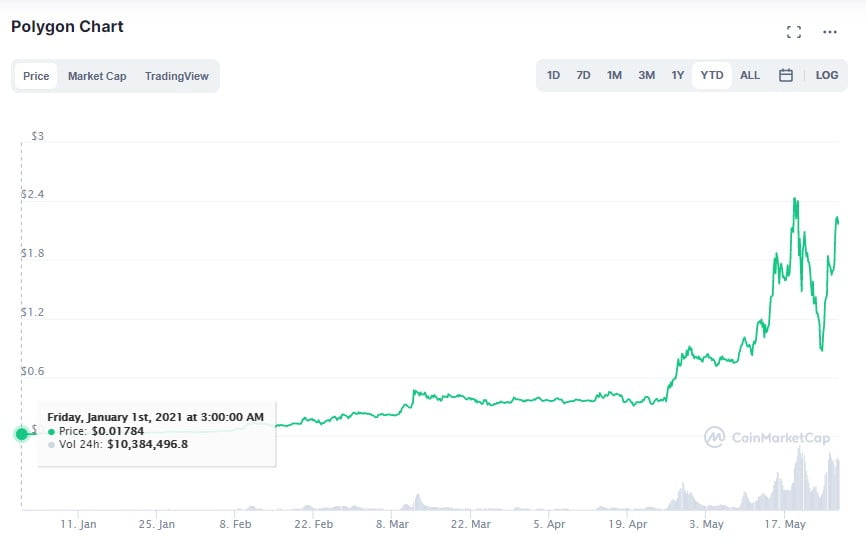
The digital asset of Polygon (MATIC) has increased in value by a factor of 123x since the year began.

On January 1st, MATIC was trading at roughly $0.01784. At the time of writing, the same MATIC is trading at $2.20 signifying a growth in value worth 123.3x or a return on investment of 12,231%. The chart below courtesy of Coinmarketcap provides a visual cue of MATIC’s remarkable price growth since the beginning of the year.

MATIC Rebrands to Polygon

To note is that MATIC rebranded to Polygon (MATIC) in early February in what the team explained as an evolution to embrace new goals of ‘extending the scope of the Matic platform in a bid to transform it into the swiss-army-knife of Ethereum scaling and infrastructure development’.

The rebranding also coincided with the crypto-wide bull run that saw Bitcoin double in value from $32k in early January, to an all-time high of $64,863 set in mid-April.

Mark Cuban Invests in Polygon (MATIC)

The price growth of MATIC and the developments since rebranding to Polygon to increase Ethereum’s functionality have resulted in Mark Cuban investing in the project. Polygon (MATIC) is now listed on Mark Cuban’s website as part of his company portfolio. The team at Polygon made public Mark Cuban’s investment in the project through the following Tweet.

Polygon (MATIC) is On a Path Towards Becoming a Top 10 Digital Asset

As earlier mentioned, MATIC is currently trading at $2.20 and looks set to retest the $2.70 all-time high set earlier this month, but only if Bitcoin provides a stable environment.

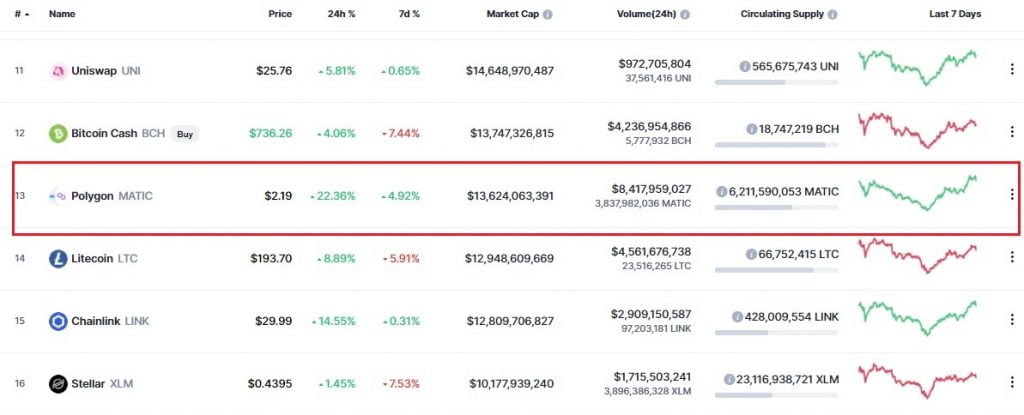
In addition, the impressive growth of Polygon (MATIC) in the crypto markets, has assisted the digital asset in rising up the ranks in terms of market capitalization as seen in the screenshot below courtesy of Coinmarketcap.com. Also from the screenshot, it can be observed that MATIC has edged out crypto heavyweights such as Chainlink, Litecoin, and Solana, on its path towards becoming the 13th most valuable digital asset in the crypto-verse.

Go to Source

Can Bitcoin Hold Above $40K, Should You Buy Now?

Bitcoin transactions have dipped in recent weeks in a reflection of the bearish price action since it topped out at an all-time high.

Trading as high as $65,000 in mid-April, Bitcoin’s valuation dropped to the lowly $30,000 price mark, after reports of China’s crypto payment ban. But despite the price swings, Bitcoin’s has rallied over the past few days, currently trading around the $40,000 mark. Will it sustain and possibly surpass the $40k resistance level? Market data suggests so.

Bitcoin Transactions Still Thriving Despite Slump

Crypto research firm Coin Metrics said in a report titled ‘Bitcoin’s Big Shift: A Data-Driven Analysis Of the May 2021 Crypto Crash’ that Bitcoin adoption continues to grow.

This is despite certain top altcoins getting significant attention due to their environmentally sustainable mining process.

According to the report, the number of addresses holding small amounts of BTC has grown by 710,000 since the start of the year till date. Coin Metrics defines small amounts of Bitcoin as values between 0.01 to 1 BTC. To put this in context, last year, only 610,000 wallet addresses held this amount in 2020 in total.

Coin Metrics researchers found that even though other altcoins are sharing the spotlight with Bitcoin, BTC’s network metrics continue to improve.

Buy Bitcoin Now

Bitcoin has dropped under $40K but could become rangebound around the high $30,000, with the price currently at the $39,200, seeking support to consolidate on its gains and break through $40K.

Institutional buyers will likely continue to buy the Bitcoin dips though. Institutional crypto exchange LMAX Digital registered a record daily volume of $6.6 billion on Bitcoin’s “Black Wednesday”. LMAX is the largest institutional exchange with over 450 institutional investors signed up on its platform.

Even former crypto critics and Wall Street veterans are reportedly turning their financial sails towards crypto land.

One such new convert is Bridgewater Associates founder Ray Dalio, who noted that the US greenback might face stiffer competition for the world’s reserve currency role from its Chinese counterpart and possibly lose some of its value.

According to Dalio, this makes Bitcoin a more attractive proposition for storing value, given its deflationary tendency. Noting in an interview at the Consensus conference organized by CoinDesk, Dalio said that he holds “some Bitcoin”.

Dalio, who has long been a skeptic of the digital asset class, said in a January letter to investors that he believes Bitcoin may soon become an alternative store of value alongside traditional fiat currencies.

Fintechs Look To Bitcoin For Revenue Growth

Payment networks don’t want to miss out on the tech innovation to drive down costs and the revenues from crypto transactions that could be brought to their balance sheets. Many of these trusted networks are starting to integrate with cryptocurrencies.

In the recently concluded earnings season, payment giants Visa, Mastercard, and PayPal mentioned the impact crypto payments have on their financial statement.

PayPal CEO Dan Schulman said the company could see more activities on its mobile division since supporting crypto payments.

But it’s not just these trios that are making moves in the Bitcoin-governed industry.

Remittance business MoneyGram announced a partnership with point-of-sale crypto firm Coinme to enable customers to trade BTC. Paysafe, an online payments firm, said it would be looking to its crypto suite of products to grow its revenue in Q2, 2021. FIS, a decentralized finance (DeFi) protocol, pointed to its cryptocurrency offering as an area of strength.

These efforts will not end anytime soon as most fintech firms partner with blockchain companies to attract a new customer segment. As more and more people adopt Bitcoin, it will increase its use case and invariably, create more positive sentiments for the asset. We might experience another bull’s run earlier than expected.

Looking to buy or trade Bitcoin (BTC) now? Invest at eToro!

Buy Bitcoin Now

75% of retail investor accounts lose money when trading CFDs with this provider

Go to Source

Bitcoin Price Prediction: BTC/USD Reclaims $40,000 after Brutal Crash

Bitcoin Price Prediction – May 26

The Bitcoin price is now up nearly three percent over the past 24 hours, currently trading at $39,307 after touching the daily high of $40,855.

BTC/USD Long-term Trend: Bearish (Daily Chart)

Key levels:

Resistance Levels: $48,000, $53,000, $58,000

Support Levels: $31,000, $26,000, $21,000

BTCUSD – Daily Chart

According to the daily chart, BTC/USD is heading northwards as the coin moves past $40,000 levels during the European session. Meanwhile, at the time of writing, the Bitcoin price is hovering at $39,307 above the 9-day moving average. For the past 3 days, Bitcoin has proved to investors that it can come out of the ditch it fell into last week by gaining considerable ground to $40,000.

Bitcoin Price Prediction: What is the Next Direction for BTC?

The increasing skepticism in the market limits Bitcoin’s ability to continue with the uptrend as the daily chart reveals. Meanwhile, the Bitcoin price corrected from highs around $40,000 resistance but secured support at $36,500. In the meantime, the Bitcoin price has recoiled above $39,000 and is in the process of brushing shoulders with $40,000. Therefore, a confirmed break above $40,000 is required to validate the uptrend towards the resistance level of $50,000.

However, since the Bitcoin price has managed to reach a daily high close of $40,900. The main resistance levels may be found at $42,000 and $44,000. The technical indicators provide some bullish signs as the Relative Strength Index (14) is likely to cross above 36-level to generate more bullish signals. Once this is down, the resistance levels of$48,000, $53,000, and $58,000 may come to play.

In other words, if the Bitcoin price crosses below the lower boundary of the channel, it could therefore move to touch the critical supports at $31,000, $26,000, and $21,000 respectively.

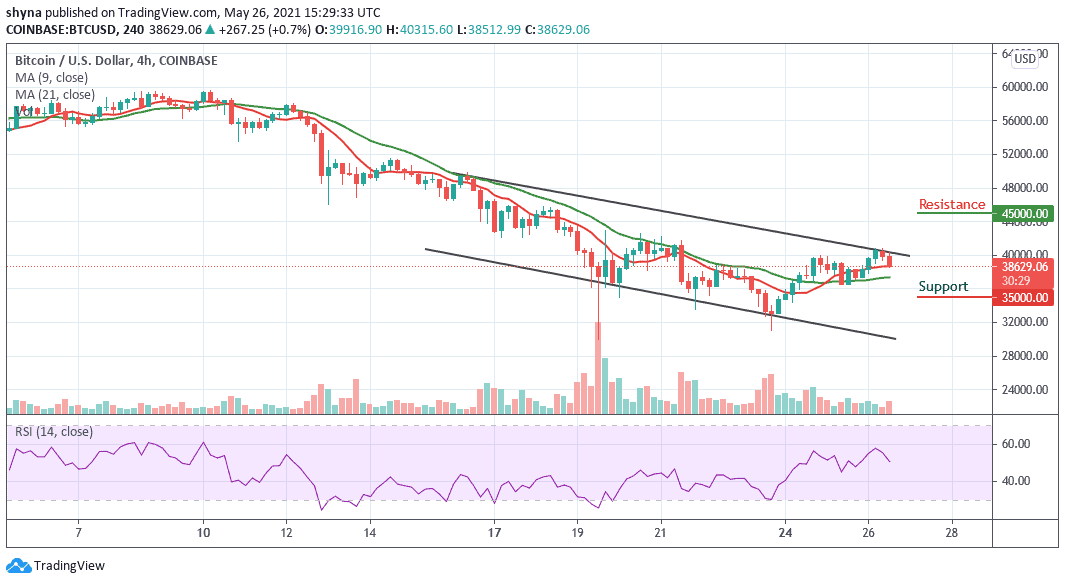
BTC/USD Medium – Term Trend: Bearish (4H Chart)

The 4-hour chart reveals that the Bitcoin price failed to cross above the upper boundary of the channel and if the price continues to fall further and cross below the 9-day and 21-day moving averages; it could reach the supports at $35,000 and below.

BTCUSD – 4 Hour Chart

Moreover, if the buyers push the coin above the upper boundary of the channel, the Bitcoin price could reach the nearest resistance level at $45,000 and above. On the other hand, the technical indicator Relative Strength Index (14) is seen moving below the 50-level, further bearish movement may welcome negative signals into the market.

Go to Source

UK Bans ‘Time to Buy’ Bitcoin Ads on Buses and Underground for Being Misleading

The British Advertising Standards Authority (ASA) has banned a bitcoin ad campaign put up across the London Underground network and on London buses by cryptocurrency exchange Luno. The UK advertising regulator says the ads are misleading and irresponsible.

‘Time to Buy Bitcoin’ Ads Banned in the UK

A bitcoin advertising campaign put up across London Underground and on buses has been banned by the U.K. Advertising Standards Authority (ASA). The ads contained an image of a bitcoin with the words “If you’re seeing bitcoin on a bus, it’s time to buy” or “If you’re seeing bitcoin on the Underground, it’s time to buy.” They were put up in February.

The ASA said it received four complaints. Three complainants “believed the ad failed to illustrate the risk of the investment” and “challenged whether it was misleading.” One complainant “challenged whether the ad took advantage of consumers’ inexperience or credulity,” the regulator detailed.

“We considered that consumers would interpret the statement ‘If you’re seeing bitcoin on the Underground, it’s time to buy’ as a reference to buying bitcoin as an investment,” the ASA affirmed, elaborating:

The ad appeared across the London Underground and London buses networks, which were untargeted media, and was therefore likely to have been seen by consumers who did not have extensive financial knowledge and experience of bitcoin, and would expect that the exchange of bitcoin would be regulated, with legal protection in place for investment activities.

A bitcoin ad by Luno on the London Underground. Source: ASA

“We understood that neither Luno nor the bitcoin market in general was regulated within the UK, and therefore consumers could not seek recourse to services such as the Financial Services Compensation Scheme or the Financial Ombudsman Service,” the ASA noted, adding:

We therefore concluded that the ad was misleading.

The agency further said: “We considered that consumers would interpret the statement ‘it’s time to buy’ as a call to action and that the simplicity of the statement gave the impression that bitcoin investment was straightforward and accessible.”

However, the advertising regulator stated that “Bitcoin investment was complex, volatile, and could expose investors to losses and considered that stood in contrast to the impression given by the ad, that investment was simple and conventional.” The agency then detailed:

We concluded that the ad irresponsibly suggested that engaging in bitcoin investment through Luno was straightforward and easy, particularly given that the audience it addressed, the general public, were likely to be inexperienced in their understanding of cryptocurrencies, and was therefore in breach of the Code.

Luno Money Ltd., which put up the ads, told the ASA that “the ads would not appear again in the form complained about,” adding that “their future ads would feature an appropriate risk warning.”

What do you think about the ASA’s reasons for banning these bitcoin ads? Let us know in the comments section below.

Go to Source

US Regulators Urgently Working on Joint Cryptocurrency Regulation: Fed’s Quarles Says It’s ‘High Priority’

U.S. government agencies are urgently working together on a joint regulatory framework for cryptocurrencies, Federal Reserve Vice Chair of Supervision Randal Quarles has confirmed. “We along with the OCC and the FDIC are engaged right now in what we are calling a sprint in seeking to pull together views on” crypto regulation.

US Agencies Collaborating on Joint Regulatory Framework for Cryptocurrencies

Federal Reserve Vice Chair of Supervision Randal Quarles talked about regulators’ efforts on cryptocurrency supervision on Tuesday, Reuters reported. Answering a question from a member of the Senate banking committee about cryptocurrency and its illicit use, Quarles referenced work done by the Office of the Comptroller of the Currency (OCC) and the Federal Deposit Insurance Corporation (FDIC) on this topic.

He confirmed that U.S. financial regulatory agencies are working together on addressing issues related to cryptocurrency, stating:

We, along with the OCC and the FDIC, are engaged right now in what we are calling a sprint in seeking to pull together views on exactly that.

Quarles noted that the discussions that regulators are having include a common regulatory framework, capital treatment, and operational treatment. Emphasizing that a joint framework for supervision is a “high priority,” he said that he expects to have some results “soon.”

Quarles’ statement on Tuesday reiterates what he told Representative Tom Emmer during a Hearing at the House Committee of Financial Services. Quarles and the new Acting Comptroller of the Currency, Michael Hsu, acknowledged that multiple agencies are coordinating regulatory approaches to cryptocurrencies. Hsu, who has asked for a review of all crypto standards at the OCC after he took office, told the committee:

This is a really really important issue. I think the rise of crypto has garnered a lot of attention.

The new OCC chief revealed that prior to the meeting, he discussed with Quarles and Chair Jelena McWilliams from FDIC “about potentially putting together an interagency policy sprint team just on crypto because of exactly the concerns” the committee has raised.

Quarles also said at the time:

We’re focused very intently on these crypto issues with the aim of having answers, joint views, fairly quickly. I’m sure that will be achievable.

In addition, the new SEC chairman, Gary Gensler, recently said that cryptocurrency exchanges need more regulation. However, Congressman Jim Himes said this week that Congress is not ready to take action regarding cryptocurrency and he does not expect crypto legislation passed in Congress anytime soon.

What do you think about U.S. regulators working on a joint framework for cryptocurrencies? Let us know in the comments section below.

Go to Source

ABEYCHAIN 2.0: Driving the Next Generation Blockchain Ecosystem

Scalability is one of the problems facing public blockchains like Bitcoin and Ethereum. This is because their architecture is not sufficient to handle the increased number of users. Ethereum, in particular, has been plagued with slow confirmation times and high transaction fees leading many to search for alternatives.

ABEYCHAIN 2.0 seeks to be an alternative to popular public blockchains as a platform where anyone can build solutions and launch projects. The blockchain platform is built on a highly scalable architecture and is set to become the home of web 3.0 applications.

How does ABEYCHAIN 2.0 work

To help understand how ABEYCHAIN 2.0 works, it is important to note that most public blockchains use one consensus protocol. ABEYCHAIN 2.0 uses a hybrid of Delegated Proof-of-stake and Proof-of-Work to achieve census on its blockchain.

You may already know that proof of work packages transactions into blocks that are solved by miners using computing power. In contrast, proof of stake involves users staking a certain amount of tokens to stand a chance of producing a block.

ABEYCHAIN 2.0 combines these two systems to achieve a hybrid consensus that ensures scalability and maintains decentralization. This unique architecture means that developers can build products on one of the fastest and safest public blockchain. It is also the first third-generation blockchain to solve the ‘’impossible Triangle’’ conundrum.

Decentralized storage ecosystem

ABEYCHAIN 2.0 provides one of the best-decentralized storage systems called ABEY Storage Network (ASN). ASN is built on the ABEYCHAIN 2.0 using an incentive layer built within the IPFS network. Its architecture consists of nodes spread globally and offers high-quality, fast-speed data storage for users.

This decentralized storage rivals that of Filecoin, and miners are rewarded with Abey Storage Tokens (AST). AST can also be exchanged to Filecoin at a 1:1 parity and can be traded on the XSwap decentralized exchange. ASN is also fully decentralized, and miners are not subjected to censorship or draconian rules.

Decentralized finance

Decentralized finance is one of the most significant sectors in the blockchain industry and has transformed how we think about finance. As a third-generation blockchain, ABEYCHAIN 2.0 has several DeFi features for users. The major DeFi hub is called XSwap. XSwap is a decentralized exchange that offers extensive features for traders.

Traders can take advantage of options like staking, lending, vaults, yield farming and more. It also has an inbuilt wallet for traders to store their tokens safely. Digital assets developed within the ABEYCHAIN 2.0 ecosystem can be exchanged at no extra cost on the exchange.

Another DeFi feature is the aCash Token (ACT) which serves as the native stablecoin of the ABEYCHAIN 2.0 blockchain. The stablecoin is pegged to the USDT and has a control mechanism that regulates its price.

Anytime a user buys ACT using another crypto, the equivalent amount is mined. Once the transaction is reversed, the token is burnt by the blockchain and serves as a deflationary control mechanism. Additionally, ABEYCHAIN 2.0 features an aPay service that can be used to swap ACT to USDT within the ABEY 2.0 wallet.

NFT Marketplace

NFTs are the trend in the crypto world, and ABEYCHAIN 2.0 has a dedicated section for NFTs. This is powered by an NFT marketplace where anyone can create, auction, and sell NFTs.

With a focus on Music and Entertainment through Music.Net, artists and brands will be incentivized to launch limited NFTs that will be auctioned in the marketplace. Some part of the proceeds goes to the artist, while the rest is redistributed. Also, NFTs can be deposited and withdrawn into the built-in NFT wallet.

Conclusion

ABEYCHAIN 2.0 is an innovative project that has been designed to solve real problems prevalent in the crypto space. Decentralized storage is a remarkable piece of blockchain excellence and is likely to be adopted by top firms in the future.

The ABEY Token currently trades on www.zbx.com and www.zbx.plus. To learn more about ABEYCHAIN 2.0 blockchain, visit the website at http://www.abey.com


This is a sponsored post. Learn how to reach our audience here. Read disclaimer below.

Go to Source

Gamestop NFT Website Discovered With Hidden Easter Egg Retro Game

Following the infamous Wallstreetbets story a few months ago, the company Gamestop is doing much better than it did a year ago. Now a new website called nft.gamestop.com indicates that the firm is dipping its feet into blockchain technology via non-fungible tokens built with Ethereum.

‘Power to the Players’

The publicly listed company Gamestop (Nasdaq: GME) has seemingly launched a new website dedicated to non-fungible tokens (NFTs). The public isn’t fully aware of what the web portal means because Gamestop has not officially announced the project. However, on April 8, 2021, Gamestop revealed it was hiring a security analyst but was looking for someone experienced with blockchain, cryptocurrency, and NFTs. Following the offer, it was suspected that Gamestop would be leveraging blockchain technology in some fashion.

The website was discovered by a number of Ethereum community members and the news went viral on Twitter. The website dubbed nft.gamestop.com is very retro-looking and shows an Ethereum-like cartridge being inserted into a Gameboy-like portable gaming device. The device says: “Power to the players, power to the creators, power to the collectors.” The website also shows an Ethereum smart contract address as well.

The smart contract is called “Gamestop” and was created on May 25, 2021. There’s already been a few transactions sent to the ETH smart contract according to Etherscan. The website also notes that the company is “building a team.”

“We welcome exceptional engineers (solidity, react, python), designers, gamers, marketers, and community leaders,” the website says. “If you want to join our team, send your profile or something you’ve built to: nfteam@gamestop.com.”

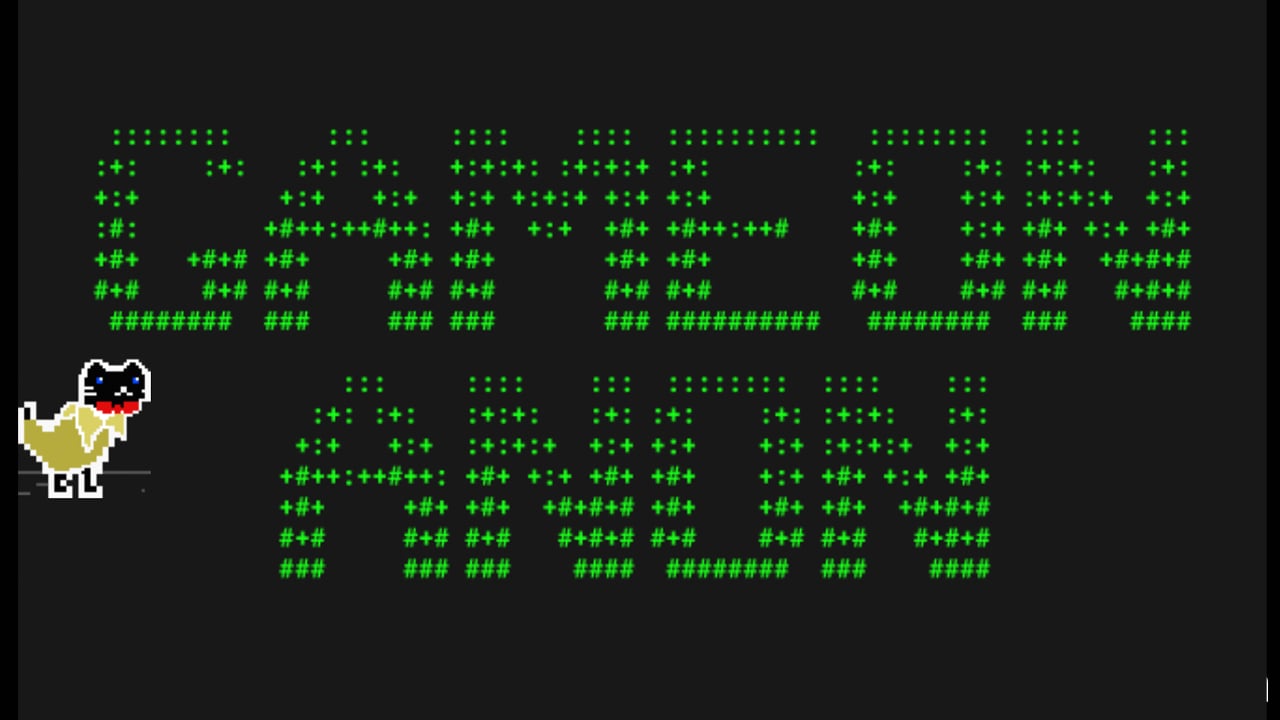
The landing page also has a small white dot on the upper right-hand side of the page which leads to an interesting surprise game. In order to play the game, the player must leverage the space key on a keyboard to start the race. Gamestop shares have been doing well recently and shares are up 16% and swapping for $209 on Wednesday.

What do you think about the Gamestop NFT website? Let us know what you think about this subject in the comments section below.

Go to Source

Crypto Crash: Disaster For Coinbase Or A Helping Hand?

Has the crypto crash come at the worst possible time for Coinbase or could it be a major beneficiary as actual and would-be competitors fall by the wayside?

The crypto boom has led to many investors making huge profits, while crypto exchanges have seen their trading volumes shoot through the roof.

Coinbase is undoubtedly one the big exchange winners as one of the five largest exchanges based on trade volumes, and the first publicly traded Bitcoin exchange.

It opened trading on Nasdaq at $382 with a market valuation of $100 billion, in a valuation that seemed to be indicative of how cryptocurrencies had finally broken into mainstream finance. However, Coinbase’s share price since its direct listing has been somewhat short of inspiring, falling in tandem with the bitcoin price.

Coinbase Not Living Up To The Hype

After a month on the Nasdaq stock exchange, Coinbase’s stock price is still struggling.

Bitcoin, which has served as the poster-child for crypto, suffered a major slump after being criticized by Tesla boss Elon Musk. It then lost 50% of its valuation after the Chinese government said it would no longer permit crypto payments.

Bitcoin trading has generated the bulk of the earnings for US crypto exchange Coinbase as its stock price is tied to the premier digital asset market’s movements. In a crypto boom, which is always Bitcoin-centric, its share price would be likely to rise. The inverse applies to crypto crashes, as we saw last week – its share price dropped.

Get Free Trading Signals Now!

This is because Coinbase generates most of its revenue from trading fees, which always follow a bullish market, but recently, things have not worked out in its favour.

Centralized exchanges like Coinbase have also suffered downtimes during peak trading hours, resulting in loss of revenue and reputation. Coinbase is gradually becoming the exchange you don’t want to trade in when Bitcoin is rising.

Crypto Crash An Eye-Opener into Coinbase’s Growth

However, the crypto crash may be the ideal environment for Coinbase to diversify in, according to experts. In its recent earnings statement, Coinbase reported that it generates about 5% of its revenue from institutional customers, with the bulk of the revenue comes from retail traders.

In a recent interview with MarketWatch, Wall Street Analyst Kyle Voigt argued that Coinbase could look into monetizing its large customer base. According to Voigt, Coinbase can generate as much as $100 million from Eth 2.0 staking. Another area Coinbase could generate revenues is the institutional market.

Coinbase understands the ongoing dynamics and is reportedly taking steps to ensure it thrives in whatever season it finds itself.

To further Coinbase’s growth, the Bitcoin exchange is reportedly planning to acquire asset management firm Osprey Funds, and for good reasons.

The recent expansion of the exchange’s prime brokerage service is also a step in the right direction if diversification is the end goal. The new service will enable large banks and trading firms to trade, store, and borrow through its revamped Prime Brokerage Services.

For now though, Coinbase’s growth is tied to its ability to move beyond the retail trading frenzy. COIN is currently trading at $244.

Get Free Crypto Trading Signals – 82% Win Rate!

Get Free Signals Now!

3 Free Crypto Signals Every Week – Full Technical Analysis

Go to Source

Why ‘Digital Fiat’ Is The Main Threat to Bitcoin – Should You Still Invest in Crypto?

The recent gains in Bitcoin and the wider crypto market have shown that there is a future for digital currencies and that they could be the preferred way in which commerce is conducted.

This year, Bitcoin gained acceptance as a means of payment at Tesla, the leading electric car manufacturing company. However, this breakthrough turned out to be a false dawn. Within weeks of the decision Tesla’s CEO Elon Musk did a u-turn, citing concerns over the impact of Bitcoin mining on the environment.

It was never reported how many people actually used bitcoin to buy a Tesla. It is precisely these difficulties with bitcoin as a means of payment that has spurred on central banks to fill the void by leveraging the benefits of digital currencies while eradicating the downside of extreme price volatility.

Limitations of Bitcoin is digital fiats’ opportunity

The crypto market has expanded, and now it is not just about Bitcoin and cryptocurrencies. Governments are looking into blockchain technology and how they can leverage it to transform the economy.

One of the greatest limitations of Bitcoin and other cryptocurrencies is that they are hard to regulate precisely because they are decentralised. Also, the anonymity associated with blockchain-based value transfer and the volatility of cryptocurrencies adds to the difficulties from the point of view of governments. However, one of the ways for governments to leverage blockchain and is through ‘private’ (permissioned) blockchains with digital fiat built on top.

Get Free Crypto Signals!

Another limitation of Bitcoin is its Proof of Work (PoW) framework. This mechanism poses a great risk to the environment because it consumes high levels of energy. Bitcoin’s devastating effects on the environment may to be solved through a shift to renewable energy sources, but this is yet to happen.

Digital fiat will not be launched as public blockchains (some may not even be on blockchains), and are unlikely to include a mining mechanism and therefore will not have the energy consumption issues of Bitcoin. This is one of the factors that will give digital fiat an edge over Bitcoin.

Race is on to launch CBDCs

Digital fiat, also known as a Central Bank Digital Currency (CBDC), is a digital currency developed, controlled, and managed by the government. These tokens are believed to appeal more to users because they will offer more protection to investors than cryptocurrencies because their value will be legged to the non-digital fiat, thereby removing volatility risk seen with crypto.

CBDCs are moving from just being experiments and pilots to becoming a reality. Many countries have started creating CBDCs, and some are even in the final phases of development. This shows that the launch of digital fiat may happen very soon.

China is taking the lead in launching digital fiat. The country may be launching a digital yuan at the Winter Olympics if rumours are to be believed. Large-scale trials have already been conducted and when it does launch it is expected to make waves in the global economy.

The digital yuan could one day overtake the dollar in economic dominance as it competes for acceptance as reserve currency. If the digital yuan assists the ‘internationalisation’ of the currency, then it could pose a threat to Bitcoin and the crypto market as well as the US dollar.

CBDC pros and cons for consumers, companies and governments

Digital fiat could become popular with consumers as it would displace banking intermediaries and reduce costs. However the other side of the equation is that it would represent an invasion of privacy, because the central bank would know about all of your transactions. It is this level of control that is thought to be one of the major attractions of CDBCs for the Chinese government.

More generally central banks in general see the benefits of being able to directly program money and use that to implement monetary policies and track progress in realtime.

However, with those benefits might come unforeseen consequences, and that explains why central banks are moving relatively cautiously.

In effect a CBDC could mean that each taxpayer has an account at the central bank. If that were the case, then it would at a stroke destroy the businesses of commercial banks and many other financial intermediaries.

Get Free Crypto Signals – 82% Win Rate!

Get Free Crypto Signals!

3 Free Crypto Signals Every Week – Full Technical Analysis

Go to Source

Polygon debuts SDK for building Ethereum-compatible chains

Polygon developers are set to launch tools to enable the creation of Ethereum-compatible standalone chains and layer-two protocols.

Polygon has announced the launch of its SDK stack that will allow developers to easily deploy their own Ethereum-connected blockchains. SDKs, or software development kits, are single installation packages containing tools necessary for seamless app creation.

According to an announcement on Wednesday, the Polygon SDK contains several plug-and-play modules with custom-made solutions for parameters like consensus and synchronization.

Apart from consensus and synchronization, the Polygon SDK also contains other modules like TxPool, JSON RPC and gRPC. As part of the announcement, Polygon revealed that its SDK was designed to mirror a “Polkadot on Ethereum” approach, which could see the emergence of a multichain network for Ethereum.

The Polygon SDK will reportedly exist in two iterations, with the first version allowing developers to create standalone chains that have complete interoperability with the Ethereum network. In the second Polygon SDK iteration, developer teams will be able to create actual layer-two protocols directly connected to the Ethereum mainnet.

Beyond these two iterations, the Polygon developers are also reportedly keen on enabling open-source collaboration for the SDK. The release announcement stated that there are plans to develop a plugin framework to allow developers to contribute additional modules to the Polygon SDK.

According to Sandeep Nailwal, co-founder of Polygon, the Polygon SDK will play an important role in the future of Ethereum multichain efforts as well as layer-two advancements, stating:

“With advanced ‘Layer 2’ solutions, Ethereum 2.0 all coming online now or soon, the need for a comprehensive interoperability framework is stronger than ever. With the Polygon SDK, we are solving pressing needs for Ethereum’s multi-chain future, including ease of deployment and inter-L2 communication.”

Polygon, formerly known as Matic, has been growing in popularity of late, especially as a major platform for scaling Ethereum. Earlier in May, Cointelegraph reported that the protocol’s user base had grown by 75,000 as more users continue to interact with Polygon-based decentralized applications.

Polygon’s meteoric rise has also reportedly caught the eye of billionaire Mark Cuban, with the Dallas Mavericks owner identifying the protocol’s speed and growing user base as major selling points.

Go to Source

Museum of Crypto Art to launch MOCA token, plans acquisition spree

The community-governed museum is toying with new economic models amid a period of uncertainty for art institutions.

According to some estimates, coronavirus-related strains may soon force upward of one in every eight physical museums to permanently close, but despite the struggles, one metaverse-native museum is raising funds to transition to a community-governed model. 

The Museum of Crypto Art announced today the launch of the MOCA token, a Polygon-based governance and utility asset. The token will be used to vote on pieces added to the museum’s Genesis Collection and future exhibits, allow for community curation of museum assets, and establish a runway for the museum via a $1.5-million raise.

Of the total MOCA supply, 5% will be airdropped to wallets that collected on OpenSea prior to December 2020, and another 5% will be available via a liquidity mining program.

MoCA, which is free to visit in virtual reality via Somnium Space, has had success in the past in fostering and showcasing cryptoart culture. In an interview with Cointelegraph, MoCA co-founder Colborn Bell said that the museum has highlighted seven solo artist shows via an incubator program, and he hopes that with expanded resources, the MoCA foundation can become a commons for artists to help define NFT standards and institute policies, such as mandatory royalties on secondary sales — part of a wider effort to use the museum and its art to better define the crypto space.

“There is an art movement here that is putting a visual language to the ideals of the cryptocurrency movement, and it’s making tangible and visible something that is inherently difficult to understand,” he said.

Part of that definitional work is gathering and presenting the art that made the NFT movement what it is today — a task of deliberate storytelling that Bell believes decentralized autonomous organizations are especially well-suited for.

“We’re a museum — we’re meant to work slowly.” 

It remains to be seen, however, if and how a community-organized museum can survive — let alone thrive. 

Ideals and Ideology

While $1.5 million may seem like a paltry war chest (especially given the eye-watering sums nonfungible tokens have sold for as of late), the museum has an unusual acquisition model: 50% of the total MOCA token supply will be solely dedicated to growing the collection. 

Collectors will apply to sell art to the museum’s Genesis collection in exchange for tokens. Submissions will be reviewed by Bell as well as two seven-member committees of artists and collectors for merit, and if approved, the team at Nonfungible.com will give a final appraisal of the value of pieces.

Bell said that MoCA, which has a legal entity as a nonprofit in the Caymans, has an “explicit obligation” to never sell the works accepted into the collection, and eventually, that inability to sell will be hardcoded into the DAO.

It’s an idealistic vision that runs contrary to the money-crazed attitude that has taken over certain pockets of the space. Bell said he even wants to avoid the token becoming a speculative asset itself — in part because NFT collectors largely don’t need more speculation.

“All the value I want to bring to the project will be through the token itself. I want to make sure it’s captured there,” said Bell. “There’s been enough wealth generation in this community that there’s no chance, broadly, that people will let this project fail.” 

Ultimately, Bell wants to move away from narratives about crypto being used for drugs and, instead, highlight art that represents the highest ideals of the space: Ethereum as an open-market access system, enabling freedom of identity, privacy and data sovereignty. Early NFT artists and collectors worked within these notions as artists sought to express them in their own terms — an “organic” and “collaborative” effort.

“How do we paint the beautiful picture here, and how do we leverage the early, global creators to do that?” 

Community Critics

While the appraisal system will start out with semi-centralized committees, the MOCA token will eventually be used to enable permanent, decentralized criticism and curation. Reneil, a tech and strategy lead at MoCA, noted that a blockchain can be used to permanently record how a community reacts to art, and not just the art itself. 

While the specifics are still in the planning stages, the team is plotting a reputation-based system that takes into consideration attendance at events, attention spent on the art, and MOCA token holdings to grant users the ability to write the history of the pieces in the collection — community-managed museum blurbs.

If the MoCA ever lends out art, the museums receiving it will be required to include these labels as part of the art.

“We want to conserve the early history of the crypto art space in an immutable way,” said Reneil. “Create an objective reality, an immutable reality from many opinions.”

Partner projects will also be invited to sponsor and curate their own museum wings. Projects with strong cultures and followings will be able to tell their stories on their own terms and experiment with governance parameters specific to their collection. The team is already exploring the possibility of a wing with Aavegotchi — an asset-backed NFT project with a cult-like following.

Bell ultimately believes these collaborative, experimental efforts are why virtual museums will continue to flourish while meatspace collections flounder.

“I anticipate that the legacy museum and gallery system will also increasingly have an ‘audience’ problem as the younger generations will demand digital and social experiences around art,” he said. “More Meow Wolf and less Metropolitan or Gagosian.”

Go to Source

Women-led events may encourage long-term female participation in blockchain

By women and for women: Crypto industry leaders take action to bring equality to the blockchain sector by developing female-centric initiatives.

The tech industry is notorious for its male-dominated culture, and unfortunately, the blockchain space may still be exhibiting this, at least for the time being. 

Although female cryptocurrency investors are on the rise, men still make up the majority of job positions within the blockchain sector. This could be due to a number of reasons, such as a lack of funding for female-led blockchain companies or the ever-present gender wage gap in tech. According to recent data collected by AI-driven marketplace Hired, female candidates for tech jobs received wages that were 3% lower than their male counterparts.

While discouraging, women leaders in the blockchain space are taking action to ensure equality by allowing females to have their voices heard at industry events.

A blockchain event for women

Specifically speaking, events run by women for women are becoming a popular concept within the blockchain sector. Most recently, Anne Fauvre-Willis, chief operating officer of Oasis Labs — a privacy-enabling blockchain platform — hosted a virtual “Blockchain Leaders Mentorship” event with two panels featuring women in blockchain.

Panelists came together to discuss their involvement in blockchain, resources for learning about the sector and ways to drive female participation moving forward. Fauvre-Willis told Cointelegraph that the goal of the event was to help other women while serving as a resource for those looking to get involved in the blockchain industry:

“We think these events will definitely help drive women to get more involved in the space and seek out opportunities to help them advance. Being able to hear other successful women in the industry discuss how they got involved in this ‘unusual’ space shows younger women who want to learn more or get involved how to do so.”

According to Fauvre-Willis, the Blockchain Leaders Mentorship event was specifically targeted at women looking to break into the blockchain and crypto space, along with those looking to transition from trade finance to fintech. 

Fauvre-Willis further mentioned that more high-caliber talent is required in order for the cryptocurrency and blockchain sector to advance. As such, she believes that an event for women hosted by women can help make this path more accessible while giving panelists the chance to network with one another.

In addition, recent research from blockchain consulting firm BDC Consulting found that it’s necessary for women to speak at crypto conferences in order to attract female participation in the space.

Inspiring insights shared from female leaders

While it’s important to recognize the necessity of including women speakers at blockchain events, a number of inspiring insights were shared during Oasis Foundation’s Blockchain Leaders Mentorship panel.

For example, Bridget Greenwood, founder of The Bigger Pie — an organization focusing on supporting women in blockchain and emerging tech — mentioned during the second panel that she joined the blockchain space due to financial inclusion. “There was a financial crisis in 2008 where trusted, centralized systems failed many people,” said Greenwood. Although financial inclusion prompted Greenwood to get involved with Bitcoin (BTC), she also noted that there weren’t many other women doing the same, which she found discouraging:

“There are some really amazing women in the space, and I want to continue to help the next group of people come in. I can see that we will have another generational transfer of wealth, and I don’t want any generation left out. I see my role as making sure these amazing women are seen and supported.”

While financial inclusion has proven to be a driving factor for getting involved with blockchain, it’s interesting to note that some of the panelists joined the space for other reasons. For example, Nadia Hewett, project lead for blockchain and digital currency at the World Economic Forum, explained during the second session that she entered the blockchain sector due to her background in supply chain management:

“I entered the blockchain space as part of the digitization wave that we’ve been seeing over the past years, where companies look at emerging technology and digitization to solve social and business problems. When I started reading about blockchain, I couldn’t stop because I understood how it could solve supply chain challenges.”

Hewett mentioned that she eventually began to work with the blockchain team at the shipping giant Maersk to develop the TradeLens blockchain platform. “Blockchain is just one tool to enable new commercial and business models that couldn’t be done previously,” she said. Since then, Hewett explained that she has been working on a number of projects with the World Economic Forum specifically focusing on data sharing and privacy protocols.

In addition to discussing how each panelist became involved in the blockchain sector, many of the women shared advice for newcomers looking to enter the space. 

Vanessa Grellet, head of portfolio growth at CoinFund — a crypto asset-focused investment firm — mentioned during the first panel that the “openness” of information within the crypto space is key for allowing both men and women to contribute information to the sector. Grellet also remarked that many Telegram and other social media groups allow individuals to connect directly with others in the industry, which creates an encouraging atmosphere for those looking to get involved.

Panelist Layne Lafrance, co-founder of CryptoKitties and flow product lead at Dapper Labs, further mentioned that female newcomers must also gain a sense of comfort when it comes to discomfort. “Being comfortable with not knowing is important. If you are joining this panel today as a participant, you probably know more than you think,” she remarked.

Inspiration to get involved

Given the discussions that took place during the Blockchain Leaders Mentorship event, Fauvre-Willis hopes that these panels will serve as another resource to help females discover like-minded women in blockchain. She also noted that these discussions can encourage women who don’t already have a tech background to get involved.

Other females in the blockchain sector feel the same. For example, Maria Sabando, Miami community leader, told Cointelegraph that she is organizing a women’s event during the Bitcoin 2021 Conference taking place at the start of June in Miami. The event is called “Mermaid Night,” and it aims to highlight women in the Bitcoin sector. 

According to Sabando, female attendance at Bitcoin 2021 will most likely be less than 15% as this is often the case with other crypto conferences and is the case in the representation of speakers. She said:

“The mermaid happy hour event endeavors to be the ‘must attend’ event for the crypto community to directly connect with their favorite #cryptotwitter female persona. Given that the space is already underrepresented, we wanted to create an approachable environment during the conference days to raise the interest from women that may be curious but intimidated.”

Echoing Sabando, Anna Vladi, founder of Women4blockchain and genesis of decentralized finance fund ForceDAO, told Cointelegraph that although the blockchain and decentralized finance sectors are hot right now, the space is still male-dominated.

Vladi is aware of the intimidation women may feel when it comes to learning about blockchain and DeFi, which is why events and educational courses for women are crucial. Vladi said: “As a woman in DeFi, it’s our responsibility to bring others along with us. We need other women to lead the way to show that this sector isn’t complicated and intimidating.”

Go to Source

Please enter CoinGecko Free Api Key to get this plugin works.
Exit mobile version